

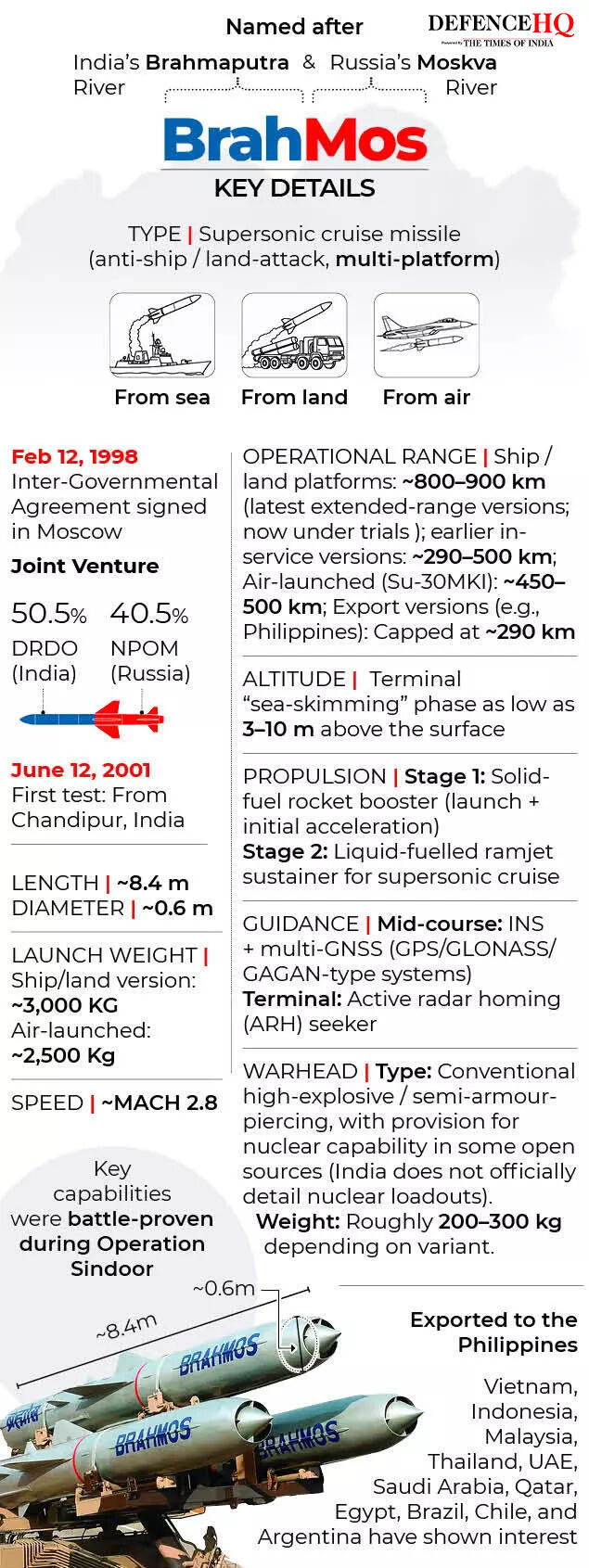
The Brahmos missile, a weapon that has proven to be the Brahmastra for India in Operation Sindoor. The missile struck key Pakistani air bases rendering them unserviceable, therefore grounding Pakistani fighters, a key factor in getting Pakistan to come to sue for peace. The missile capable of flying at Mach-3 was unstoppable by Pakistan’s Chinese origin air defences, as it was designed to do. The missile, which was first test fired 25 years ago, was first envisioned by India after watching how the American’s had used their Tomahawk cruise missiles to dismantle Saddam Hussein’s command and control infrastructure in 1991 during the first Gulf War, bypassing what was considered one of the most comprehensive air defence networks at that time. The Tomahawk cruise missile has since then been one of America’s primary instrument of aggression, especially in the opening moves of a conflict as exhibited in Iraq, Afghanistan, Yugoslavia, Bosnia-Herzegovina, Yemen, Nigeria, Somalia, Sudan, Libya and Syria.India looked at Russia for support to develop a similar weapon and in 1998 an inter-government agreement signed in Moscow, paved way for the Brahmos corporation, that would make this missile. India was then not a signatory to the Missile Technology Control Regime (MTCR), which India eventually became a member of in 2016. This meant that India could not be provided with a system with a range exceeding 300 km and a payload exceeding 500km. This is why the range of the initial version of the missile was capped at 290km and the range of the export variant of the missile still remains the same. Then payload of the missile at 300kg is still far below the threshold of 500kg. The reach of the Extended Range (ER) version of the missile has been increased to 800 km and this variant will soon be inducted in the armed forces. In October last year, Defence Minister Rajnath Singh had stated that every inch of Pakistan could be reached by the Brahmos.The missile’s name is or portmanteau mixture of the Brahmaputra river and the Moskva river. The missile is derived from the similar looking P-800 Oniks (Onyx) missile.
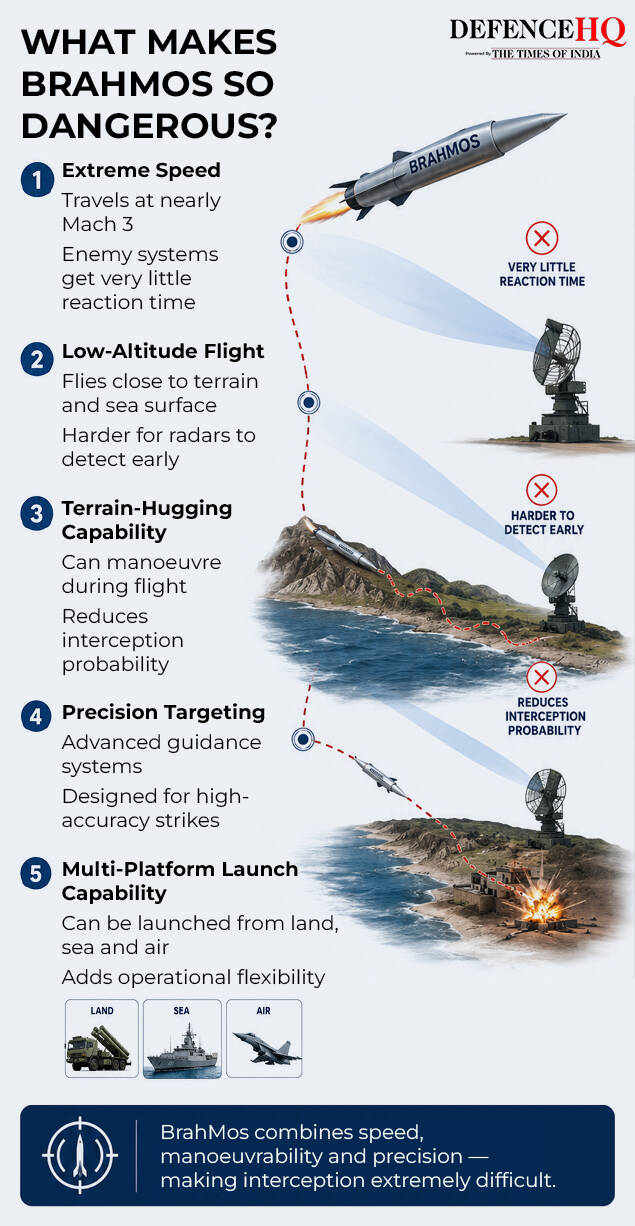
The missile was designed in a manner, which would make it nearly impossible for air defence systems to intercept it. For the Pakistanis, this means that the air defence radar for their Swiss-origin Oerlikon air defence gun, will be able to acquire the missile on its radar when it is at a range of 8km. For a missile travelling at a speed of Mach 3 as it flies close to the surface of the earth, or near 3,600 km an hour, it would take the gun crew around eight seconds to identify, classify, track, lay the gun on target and engage the hostile projectile before it passes over their heads.
When the Brahmos was inducted , the missile had a range of 290km. Since then we have increased the range of the weapon – first to 400km and now to about 800km. The range has been increased by making hardware and software changes. This was done without making any changes to the airframe. The missile does not loose its effectiveness as range increases. We are now working at making the Brahmos NG, this missile will be lighter, faster and have a greater range. The Brahmos missile has proven its combat effectiveness during Op Sindoor. That is the reason why nations like Philippines, Vietnam, Indonesia, UAE and more have bought or are in the process of doing so.
Lt Gen PR Shankar, Professor, Aerospace Dept IIT Madras and former DG Artillery
The tricks up Brahmos’ sleeve
The missile takes a three pronged approach to beat air defences. The first of these is raw speed, as discussed above. The second element here that works for the missile is the extremely low altitude it flies at, this delays the distance at which the missile is picked up on radar, as radar waves follow the principle of line of sight. Based on this principle, the higher an object flies, the earlier it would be tracked, this principle works on the concept of radar horizon and i dictated by the curvature of earth. Thus shielding a low flying missile such as the Brahmos and the Tomahawk from air defence systems, fighters and helicopters in combat also fly low for the same reason. The third element that works for the Brahmos is its low Radar Cross Section, or how detectable an object is on radar. With a low RCS, the missile does not easily show up on radar.
Brahmos and the armed forces
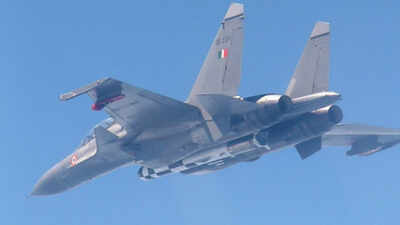
The missile is one of the very few systems that has been deployed with all three services. The missile can be deployed by ground based Transporter Erector Launcher (TEL) vehicle, by ship, by aircraft and a submarine launched variant of the missile has also been developed and was tested in 2013. Of the three services, the Indian Navy was the first organisation to induct the Brahmos, and the missile was deployed on the lead ship of the guided-missile destroyer INS Rajput in an inclined configuration in 2005. In newer vessels, the missile is deployed in Vertical Launch System (VLS) cells. In the latter configuration, a ship can fire the missile in any direction, regardless of the direction in which the ship is travelling.The army on the other hand raised its first Brahmos regiment in 2007. The missile gives the army to hit important targets, such as command & control centres, ammunition depots, logistics nodes, critical infrastructure, fuel storage sites, among other targets, deep inside enemy territory. This element reduces the army’s dependency on the air force, which can have two important effects during combat. The first is that the army can, with the help of this missile, have greater freedom and flexibility and freedom over its own missions and secondly, it can free up critical air force assets to focus on other, different missions, this is more important now than ever as the air force is facing a shortage of both fighter aircraft and fighter squadrons.The Indian Air Force operates the Brahmos in two different categories. In the first mode, the Brahmos can be launched from TELs, identically to how the army operates these weapons. In the second mode, the air force can deploy these weapons from especially modified Sukhoi-30 MKI fighter aircraft. These aircraft can carry a single Brahmos missile. Two squadrons of the IAF, the 15 Squadron (Flying Lancers) and 222 Squadron (Tigersharks) have the ability to deploy this missile from air. The Brahmos, which were exclusively deployed by fighters during Operation Sindoor.“When India fired Brahmos at Nur Khan airbase, Pakistan’s military had only seconds to determine if it was nuclear. That’s a dangerous situation,” Rana Sanaullah, special assistant to Prime Minister Shehbaz Sharif, said weeks after the conflict. The Brahmos is not capable of carrying a nuclear warhead, but the quote sums up the fear the missile has on an adversary’s psyche. Pakistan too has announced acquiring a Mach-3 capable cruise missile monikered Fatah-3, which is said to be China’s HD-1 supersonic cruise missile. India, during Op Sindoor had shot down a Pakistani CM-400 AKG supersonic cruise missile launched by a JF-17 fighter.
Brahmos: An export success
Philippines and Indonesia have both ordered the supersonic cruise missile from India. With Philippines already operating the weapon. The missile, with its sea skimming capability and eye watering speed is perhaps the most potent anti-ship weapon available. Both Indonesia and the Philippines are currently at the receiving end of China’s expansionist aspirations in the maritime domain, where the Brahmos is an effective defensive platform for both these countries. Vietnam too has demonstrated keen interest in the missile system.
The way forward: making the deadly, even deadlier
Not sitting on its remarkable laurels, the Brahmos corporation is continuously working to improve the weapon system. The company is now developing a Next-Generation (NG) version of the missile. The Brahmos NG will be a faster and lighter missile that will be capable of being fired by aircraft. Unlike today, when only the massive and powerful Su-30 MKI can carry the missile, the Brahmos NG is being designed to be carried by lighter aircraft such as the Tejas.The Brahmos is one of the most effective missiles in its category, with continuous modifications and improvements this missile is increasingly becoming even more potent, ensuring that India remains at the cutting edge of this critical technology which will shape the future of warfare.