
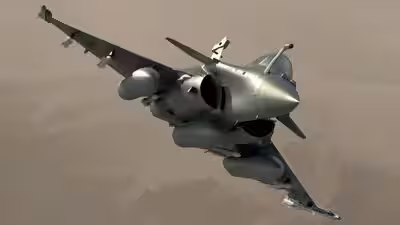

NEW DELHI: India last week moved a step closer to acquiring 114 Rafale fighter jets for the Indian Air Force, with French aerospace major Dassault Aviation submitting its technical and commercial proposal to New Delhi for the proposed Rs 3.25 lakh crore deal.The proposal, submitted in response to India’s Letter of Request issued in May, envisages extensive local production and technology transfer under the Intergovernmental Agreement framework.The Defence Acquisition Council, chaired by defence minister Rajnath Singh, had accorded Acceptance of Necessity for the procurement in February.Once the remaining acquisition procedures are completed, the deal will require approval from the Cabinet Committee on Security, chaired by Prime Minister Narendra Modi.The requirement comes against the backdrop of India’s continuing shortage of fighter squadrons and the time needed for indigenous programmes such as the Tejas Mk-2 and Advanced Medium Combat Aircraft to mature. The 114 Rafales are therefore being positioned not just as an expansion of the existing fleet, but as a bridge between India’s present combat capability and its future indigenous fighter force.
France’s proposal
Under the proposed arrangement, 18 Rafales are to be delivered in fly-away condition, while the remaining 96 would be assembled in India. More than 80% of the aircraft would consequently be domestically assembled, with indigenous content expected to increase from an initial level of around 30% to more than 60% as the production line matures.The Indian Air Force has specified 88 single-seat and 26 twin-seat aircraft. Dassault is expected to work with Indian private-sector partners for assembly and systems integration. India has also sought the integration of indigenous weapons and systems, including secure data links that can connect the fighters with Indian radars, sensors and other battlefield networks.
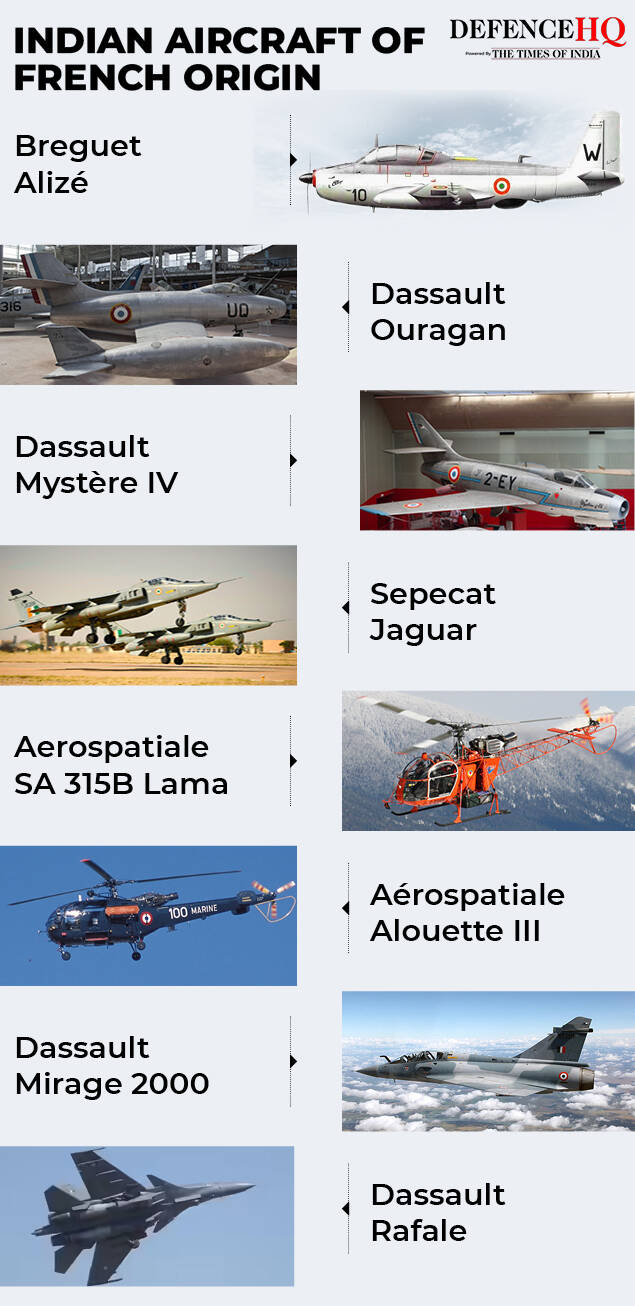
French aircraft that have been a part of the Indian inventory.
The proposal also includes technology transfer covering the aircraft’s airframe, engines and avionics. French companies including Dassault, Safran and Thales are expected to play a role in building the industrial ecosystem around the programme.A proposed maintenance, repair and overhaul facility for Safran’s M88 engines in Hyderabad could further expand India’s ability to maintain and support the fleet domestically.The latest proposal comes amid a broader deepening of India-France defence cooperation. During Prime Minister Narendra Modi’s visit to France in June, India and France elevated their relationship to a Special Global Strategic Partnership. The two sides also discussed greater cooperation in co-design, co-development and co-production of advanced defence technologies.Earlier in June, IAF chief Air Chief Marshal AP Singh visited France and held discussions with General Jérôme Bellanger, Chief of Staff of the French Air and Space Force, as well as senior representatives of Dassault Aviation, Thales, Safran and MBDA.
What makes the Rafale important for India
The Rafale is a twin-engine, multirole fighter designed to perform a wide range of missions, including air superiority, interception, ground attack, reconnaissance and maritime strike. Its ability to perform several roles during the same sortie is particularly relevant for India, which has to maintain combat readiness across its western and northern fronts as well as its maritime approaches.
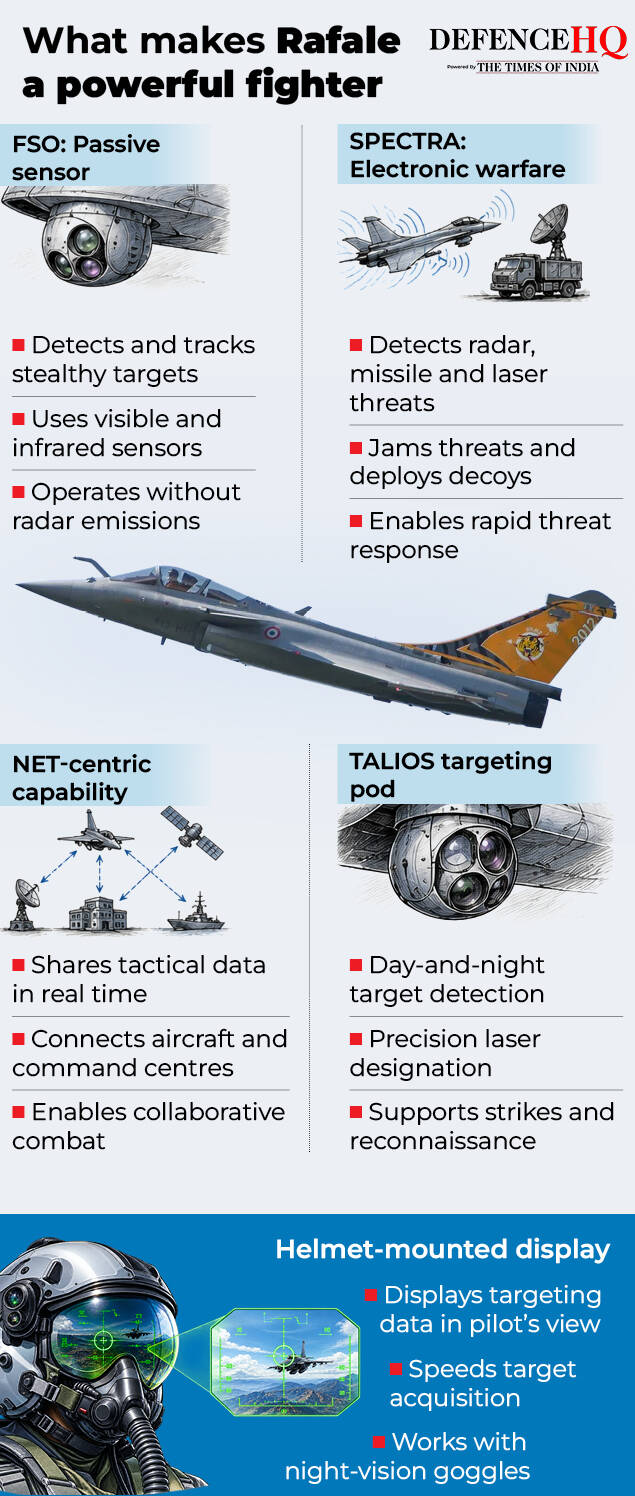
What makes Rafale a powerful fighter
The aircraft combines a delta-wing design with close-coupled canards and digital fly-by-wire controls, giving it high manoeuvrability. Its integrated avionics architecture allows information from different sensors and systems to be combined and presented to the pilot, improving situational awareness and reducing the workload during complex missions.
- Advanced radar and sensor suite: One of the Rafale’s key systems is the Thales RBE2-AESA active electronically scanned array radar. The radar can detect and track multiple air targets in both look-up and look-down conditions and is designed to operate in different weather conditions and severe electronic jamming environments. The radar can also generate three-dimensional terrain maps for terrain-following missions and high-resolution ground maps for navigation and the detection, identification and designation of ground targets. It can detect and track multiple naval targets, giving the Rafale capabilities beyond conventional air-to-air combat. The RBE2-AESA is also compatible with the Meteor beyond-visual-range air-to-air missile, allowing the aircraft’s radar and long-range weapon system to work together during air-combat missions. The Rafale also has a passive sensing capability through its Front Sector Optronics system. The FSO uses visible and infrared sensors to detect, identify and track targets without relying on active radar emissions. This can provide the aircraft with a long-range surveillance and identification capability while reducing the risk of revealing its position through radar emissions.
- Electronic warfare and self-protection: The Rafale’s SPECTRA electronic warfare suite is another important part of its survivability. Developed by Thales and MBDA, the system is designed to detect, identify and locate threats from enemy radars, missiles and laser-based systems. SPECTRA provides multi-spectral warning and can help the pilot respond to threats through electronic jamming, electromagnetic and infrared decoys and evasive manoeuvres. Its threat library can also be updated to account for new battlefield threats. The combination of the RBE2-AESA radar, FSO and SPECTRA gives the Rafale both active and passive ways to detect and respond to threats. This is particularly important when operating in environments where enemy air-defence systems and electronic warfare capabilities could make conventional operations more difficult.
- Networked combat capability: The Rafale is also designed to operate as part of a wider network rather than as an isolated fighter. Depending on the customer, it can use Link 16 or a customer-specific data-link solution to share tactical information. Its open architecture allows the aircraft to use multiple broadband data links and exchange information in real time with other aircraft, airborne and surface command-and-control centres, tactical air controllers and other friendly assets. For India, such network-centric capability can help connect the Rafale with the wider ecosystem of radars, airborne early warning and control aircraft, command centres and other combat platforms. This allows information gathered by one platform to be shared with others, improving the overall picture of the battlefield.
- Precision targeting and reconnaissance: The Rafale can also use the TALIOS targeting and laser designation pod for day-and-night surveillance, target identification and laser designation. The system provides targeting information for precision-guided weapons and can support reconnaissance missions. This allows the aircraft to combine surveillance, target acquisition and strike functions during a single operation. The ability to gather information and then use that information for precision engagement is particularly useful for missions requiring stand-off attacks and accurate targeting. Helmet-mounted display: The aircraft can also be equipped with a helmet-mounted display that places targeting and tactical information directly in the pilot’s field of view. This can help pilots acquire and designate targets without having to constantly look down at cockpit displays. The system can also be used alongside night-vision goggles, supporting operations in low-light conditions and improving the pilot’s ability to maintain situational awareness during air combat.
- Built for upgrades: Another important feature for India is the Rafale’s upgrade potential. The aircraft has an architecture designed to allow its sensors, weapons, communications systems and software to be progressively upgraded during its service life. India is seeking the latest F4 standard and is also looking at capabilities associated with the upcoming F5 standard. These upgrades are expected to bring improvements in areas such as radar and sensors, electronic warfare, communications, satellite connectivity, data links and pilot assistance. This upgrade path matters because the proposed 114 Rafales would be expected to remain in service for several decades. The ability to introduce newer sensors, weapons and software without replacing the entire aircraft would allow the fleet to evolve as threats and technologies change. For India, the Rafale’s importance therefore goes beyond its individual performance as a fighter. Its combination of an AESA radar, passive infrared sensing, electronic warfare, precision targeting, network connectivity, advanced weapons and upgrade potential makes it a platform that can operate as part of a broader combat network.
The aircraft’s multirole design also means the same fleet can be used for air defence, long-range interception, precision strike, reconnaissance and maritime missions. This flexibility is one of the key reasons the Rafale is being considered for a large-scale expansion of India’s fighter fleet.
The weapons Rafale can carry
The Rafale’s combat value is closely linked to the range of weapons it can carry. Its air-to-air arsenal includes the Meteor beyond-visual-range missile and MICA missiles, giving it both long-range and close-combat capabilities.
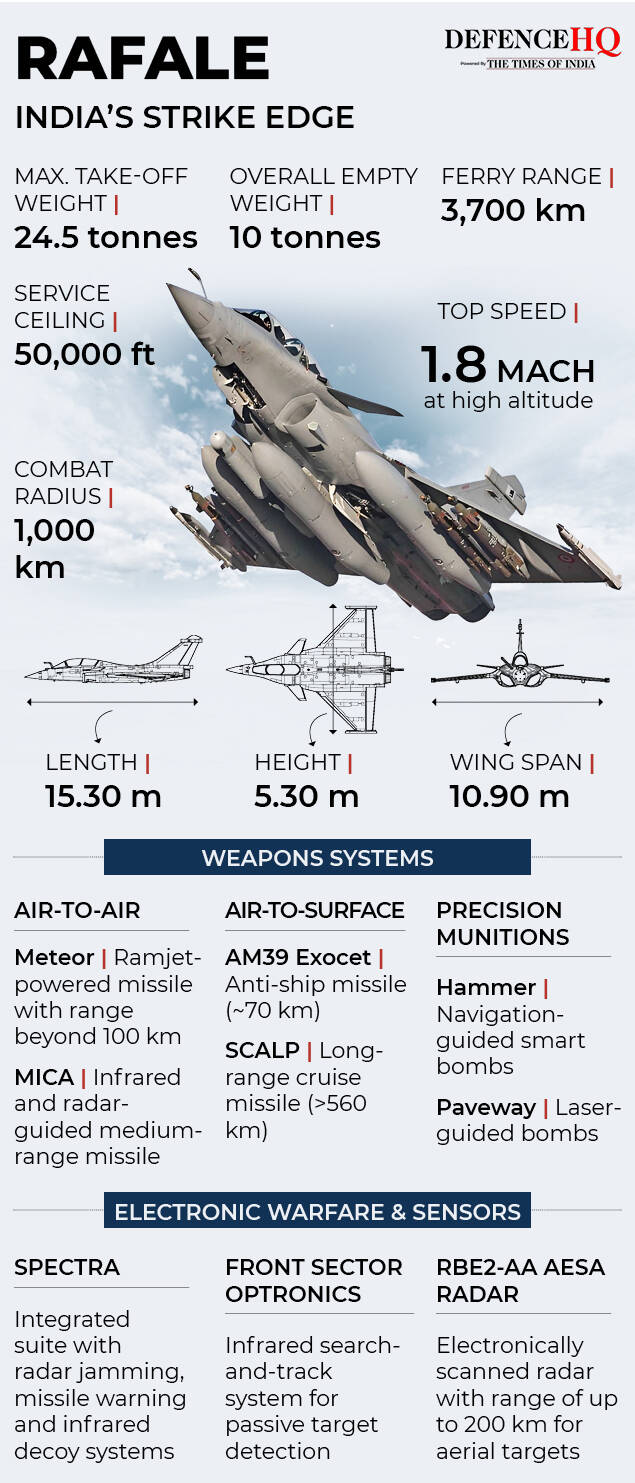
Specifications of the Rafale.
For deep strikes, the aircraft can carry SCALP cruise missiles, while AASM Hammer precision-guided weapons provide a capability for precision attacks against ground targets.The Rafale can also undertake anti-ship missions using the AM39 Exocet missile. Its weapon system is designed to allow air-to-air and air-to-ground missions to be carried out during the same sortie.The aircraft carries a 30 mm internal cannon and can carry weapons and equipment across multiple external hardpoints. Its sensor and mission systems allow information collected by the aircraft to be shared with other friendly platforms, making it part of a wider network rather than operating as an isolated fighter.The combination of Meteor, SCALP and precision-guided weapons has also strengthened the Rafale’s position within India’s combat fleet. Its operational experience during Operation Sindoor has further added to the aircraft’s importance in India’s assessment of future fighter requirements.
Why India needs 114 more Rafales
India currently operates 36 Rafale fighters with the Indian Air Force, divided between 17 Squadron at Ambala and 101 Squadron at Hasimara. The fleet has given the IAF a modern multirole fighter capability, but its size remains limited against India’s broader requirement for combat aircraft across its western and northern fronts.The proposed acquisition of 114 additional Rafales comes as the IAF faces a continuing shortage of fighter aircraft. The phased retirement of the ageing MiG-21 fleet will further reduce the number of operational fighters, even as the induction of newer indigenous platforms is still some years away.
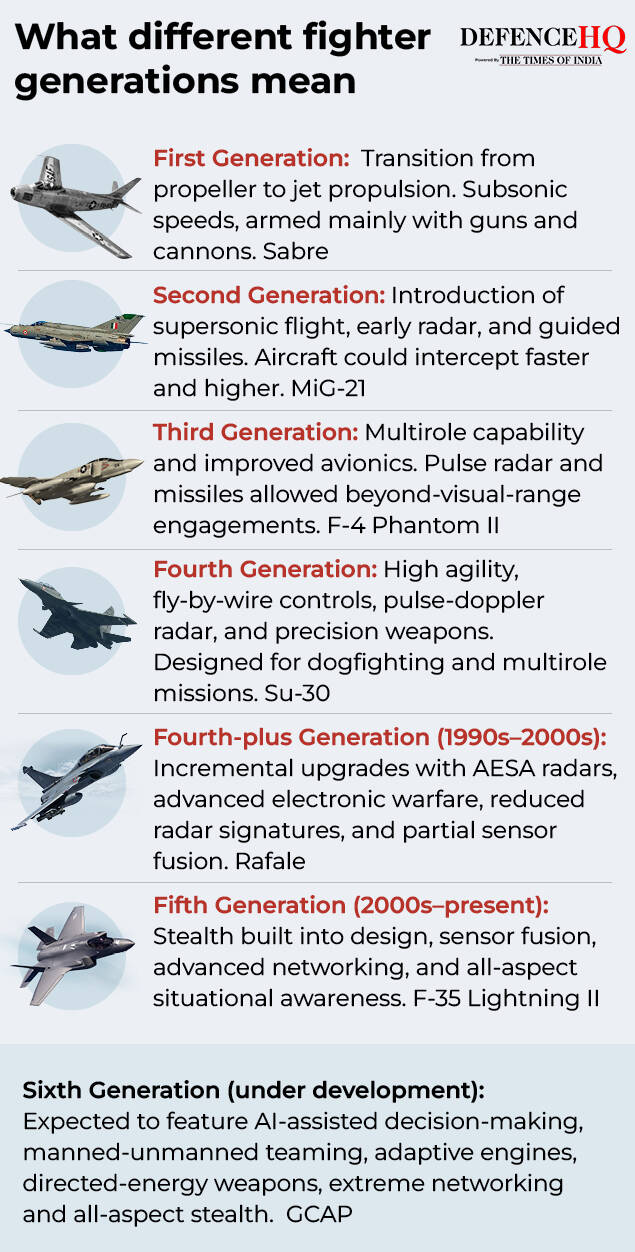
How each generation of fighter jets is different from the others.
The Rafale acquisition is therefore intended to bridge the capability gap between the retirement of older aircraft and the arrival of India’s next generation of indigenous fighters. The Tejas Mk-2 and Advanced Medium Combat Aircraft are expected to form an important part of the IAF’s future combat fleet, but their development, testing, production and induction will take time.With the AMCA not expected to enter service before the mid-2030s, the IAF needs an established platform that can be inducted in relatively large numbers while indigenous programmes mature. The Rafale provides an already operational multirole fighter capable of carrying advanced air-to-air and air-to-ground weapons.If the proposed acquisition is cleared, India’s Rafale inventory would eventually rise to 176 aircraft across the Air Force and Navy. The IAF would operate 150 Rafales, comprising the existing 36 fighters and 114 additional aircraft, while the Navy has separately ordered 26 Rafale-Marine fighters.The additional Rafales would allow the IAF to establish more squadrons equipped with a common fighter platform, increasing the depth and flexibility of its combat fleet. The aircraft would operate alongside platforms such as the Su-30MKI and Tejas Mk-1A during the transition towards a larger indigenous fighter fleet.The acquisition is particularly relevant as India seeks to maintain adequate fighter strength while replacing ageing aircraft. The 114 Rafales would not replace the need for indigenous fighters, but would provide the IAF with a modern combat capability during the years required for India’s next-generation fighter programmes to mature.
Make in India – major part of the deal
The proposed Rafale acquisition is different from India’s 2016 purchase of 36 aircraft because the new programme places much greater emphasis on manufacturing in India.Of the proposed 114 aircraft, 96 are to be assembled domestically. This would create a much larger Indian industrial footprint around the Rafale than the earlier direct purchase from France.The programme could involve Indian companies in aircraft assembly, systems integration, components, maintenance and aerospace manufacturing. The transfer of technology is also expected to cover areas such as airframes, engines and avionics.The proposed M88 engine MRO facility in Hyderabad could add another layer to India’s aerospace ecosystem by creating domestic capability for the maintenance and overhaul of the Rafale’s engine.The indigenous content is expected to rise from an initial 30% to around 55-60% or more as the transfer and manufacturing programme matures. This is important because the value of the programme extends beyond the 114 aircraft themselves.A large-scale Rafale production line could help Indian companies develop capabilities in precision manufacturing, aerospace structures, avionics, engine support and systems integration. It could also create an industrial base that can support future Indian fighter programmes.For India, the objective is therefore not simply to buy more aircraft from France, but to use the Rafale programme to deepen domestic aerospace manufacturing while acquiring an advanced combat platform.
India’s Rafale fleet so far
India’s first Rafale agreement was signed with France in 2016 for 36 aircraft for the IAF. The first five aircraft arrived in India in July 2020.The fighters were subsequently inducted into 17 Squadron at Ambala and 101 Squadron at Hasimara. They gave the IAF a modern multirole fighter equipped with advanced radar, electronic warfare systems and precision weapons.The proposed 114-aircraft acquisition would take the IAF’s Rafale fleet to 150 aircraft if the entire order is delivered. This would make the Rafale one of the most important fighter types in India’s combat inventory.The expansion would also simplify the logistics and training ecosystem because India would be operating a much larger fleet of the same basic aircraft family rather than adding another completely different fighter type.
Rafale-Marine: The naval dimension
India’s Rafale requirement is not limited to the Air Force. The Indian Navy signed an Inter-Governmental Agreement with France in April 2025 for 26 Rafale-Marine aircraft at a cost of approximately Rs 63,000 crore.
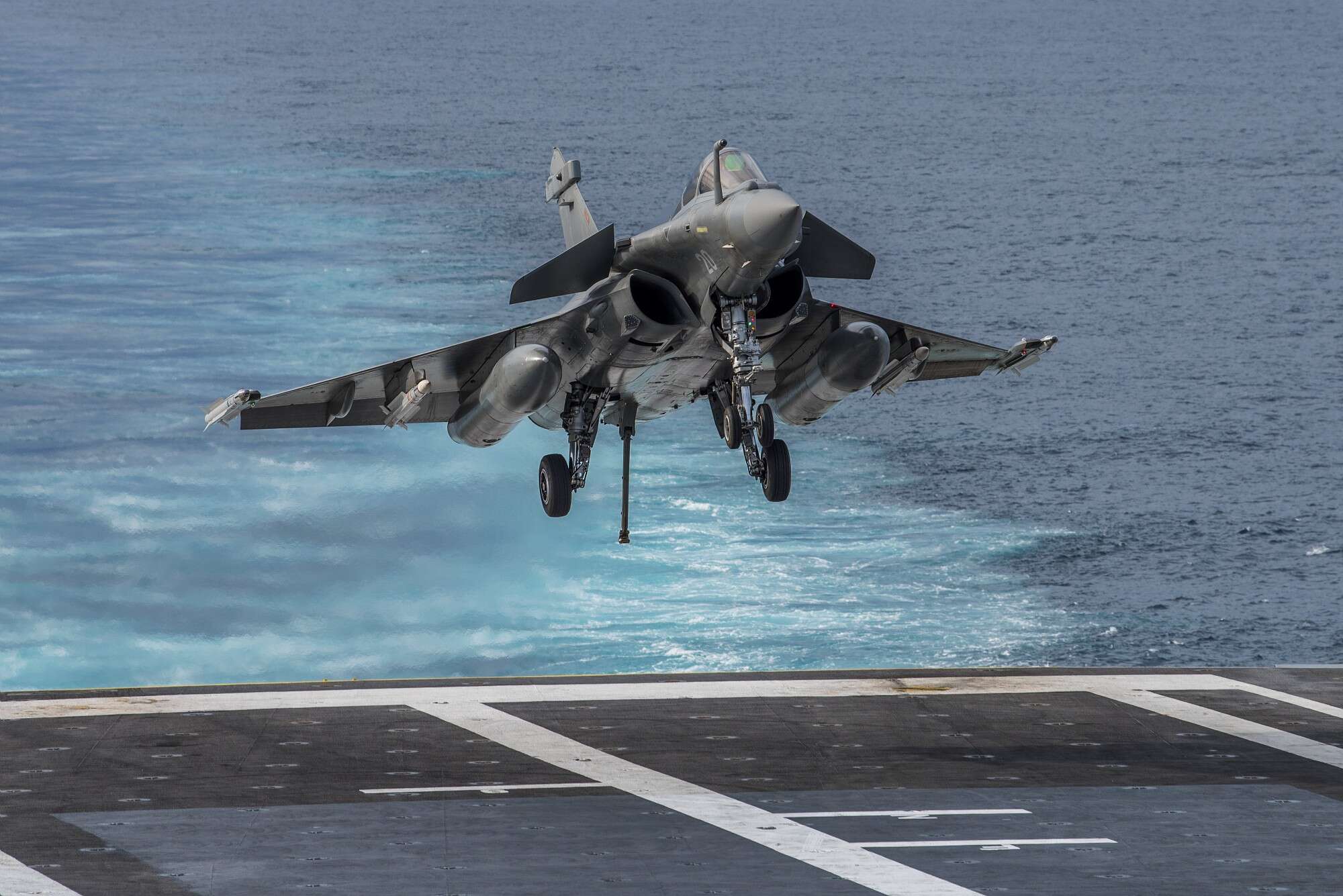
Rafale M, the aircraft’s naval variant.
According to the ministry of defence, the agreement covers 22 single-seat and four twin-seat aircraft, along with training, simulators, associated equipment, weapons and performance-based logistics. It also includes additional equipment for India’s existing IAF Rafale fleet.The Rafale-M is designed specifically for aircraft-carrier operations. It has reinforced landing gear, an arrestor hook and other structural modifications required for take-offs and landings at sea.The Navy plans to operate the aircraft from INS Vikrant and INS Vikramaditya. The jets will provide capabilities including fleet air defence, maritime strike, reconnaissance and attacks against targets ashore.The PIB has also stated that the agreement includes Transfer of Technology for the integration of indigenous weapons in India, in line with the government’s thrust on Aatmanirbhar Bharat.The 26 Rafale-M aircraft are intended to strengthen naval aviation while India continues work on its indigenous Twin Engine Deck Based Fighter. The naval Rafale will therefore provide the Navy with a modern carrier-borne fighter during the period before the indigenous platform becomes operational.