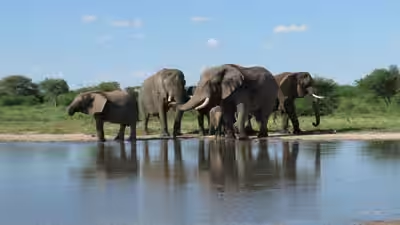
South Africa released 11 formerly captive elephants onto wild reserves; five years later, their behaviour closely matched elephants that had never lived in captivity

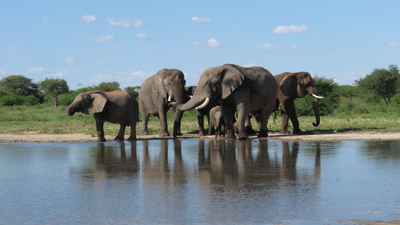
South Africa released 11 elephants that had spent years in captivity into protected reserves. Five years later, researchers found that their behavior was very similar to elephants that had always lived in the wild.The study showed that even after spending years under human care, the elephants successfully adjusted to natural environments. Their behavior closely matched that of wild elephant herds, providing important evidence that long-term captive elephants can regain their independence and live successfully in the wild.The research was published on July 29, 2026, in the journal PLOS One. The study, titled Investigating the adaptive coping mechanisms of rewilded elephants: A comparison of behavioural and physiological variables with wild elephants, was led by Tenisha Roos and Tamara Eggeling from the Elephant Reintegration Trust of South Africa, along with Brett Mitchell and other researchers.
Tracking behavior and stress levels
To understand how well the elephants adapted after being released, researchers followed 11 elephants living across four fenced reserves in South Africa. The group included adult females, adult males, and younger female elephants. At the time, these 11 animals represented more than half of South Africa’s rewilded elephant population.Researchers observed each elephant for three-week periods at least once every year during the five-year study. They recorded different types of behavior, paying close attention to signs that could suggest the animals were still affected by captivity, such as repetitive self-touching, conflict, or unusual alertness.The team also collected dung samples to measure levels of fecal glucocorticoid metabolites (fGCMs), hormones commonly used to estimate stress in wild animals. These hormone levels help scientists understand an animal’s stress response, energy use, and overall physical condition.
Only small differences from wild elephants
Overall, the rewilded elephants behaved much like wild elephants. However, researchers found a few small differences depending on age and sex.Adult males and younger females that had been rewilded were slightly less attentive to their surroundings than wild elephants.The hormone tests also showed that adult females and younger females had somewhat higher stress hormone levels than wild elephants. However, the researchers stressed that all hormone levels remained within the normal range seen in healthy wild elephant populations. There were no signs of long-term stress or health problems.The study also found clear differences between individual elephants. Some showed a close connection between their behavior and hormone levels, while others did not. The researchers believe that each elephant’s personality may influence how it responds to new environments and different management conditions.
The reality of elephant captivity
Most captive elephants in South Africa were originally taken from the wild for tourism, commercial activities, or management purposes rather than conservation. Around 88 captive elephants are currently housed in 22 facilities across the country. Most live in small groups of fewer than 10 animals, unlike wild elephant families, which have complex social structures.Living in restricted spaces with limited social interaction can lead to abnormal behaviors, including repetitive pacing, aggression toward handlers, and excessive self-touching. Scientists also note that long periods in captivity and the trauma of being captured can cause lasting physical and psychological effects similar to post-traumatic stress disorder.Rewilding programs are designed to reverse these effects by gradually reducing human involvement. The goal is to help elephants rebuild natural behaviors, learn how to find food, move through different landscapes, and rejoin normal social groups.
What the findings mean
“Overall, rewilded elephants showed behavioral and physiological patterns that were very similar to wild elephants, despite some differences related to age, sex, and individual animals,” Roos said. “Although a few elephants had slightly higher stress hormone levels, all remained within the normal range, showing they had adapted successfully without signs of chronic stress.”Roos said one of the most rewarding parts of the study was watching elephants that had spent decades in captivity adjust so well to life in the wild.“It was inspiring to see them respond naturally to their environment and behave much like wild elephants. It shows just how resilient, adaptable, and behaviorally flexible these animals are,” she said.Eggeling said the research shows that a history of captivity does not prevent elephants from living naturally again.“Although captive elephants may remember life in confinement, our study shows that, when given the chance, they can move beyond that past. They can learn new skills, adapt to unfamiliar environments, and eventually thrive in the wild,” she said.Mitchell added that the findings have important implications for elephant conservation across southern Africa.“Our research shows that when captive elephants are given the opportunity to return to the wild, they can regain their independence and re-establish natural patterns of movement and behavior. They can also make an important contribution to conserving the species,” he said.The researchers noted that although the study included more than half of South Africa’s rewilded elephant population, the total number of elephants studied was still relatively small. Future research will track larger groups across different countries to improve rewilding methods and better understand the long-term success of these conservation efforts.