
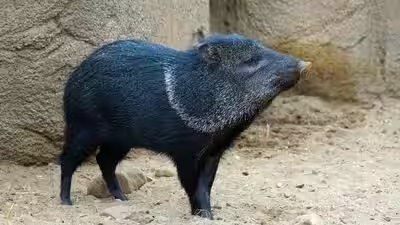
Collared peccaries vanished from Uruguay after the 1800s; a 17-year breeding effort returned them to forests where a new generation has now been born

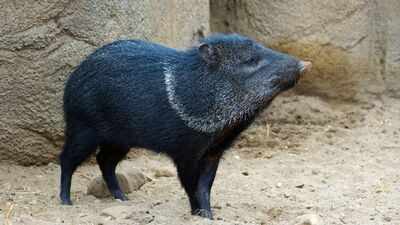
For more than 100 years, Uruguay’s grasslands and river forests were missing a native mammal that once moved through the country in social herds. That animal was the collared peccary, a compact, bristly species that disappeared locally in the late 1800s and is now being brought back through a long and carefully managed reintroduction effort.The comeback is still being watched closely, but the early signs are encouraging. Camera traps have captured peccaries in the wild, researchers have found tracks and other field evidence, and young animals born after release suggest the species is beginning to establish itself again, according to EcoNews.
A species that disappeared locally
The collared peccary, known scientifically as Pecari tajacu, was never extinct worldwide. Instead, it became locally extinct in Uruguay, which means it vanished from the country even though it survived elsewhere in its natural range.Uruguay’s proposed mammal Red List cites 1894 as the last solid record of the species in the country, although there were scattered reports into the early 20th century.The exact reason for the disappearance is still not fully settled, but hunting is considered the most likely main cause, with habitat degradation and disease also possible contributing factors.That distinction matters because local extinction leaves the door open to recovery. If a species still survives in neighboring countries, conservationists can sometimes rebuild a population through breeding and release rather than trying to rescue a tiny remaining wild group.
Seventeen years of work
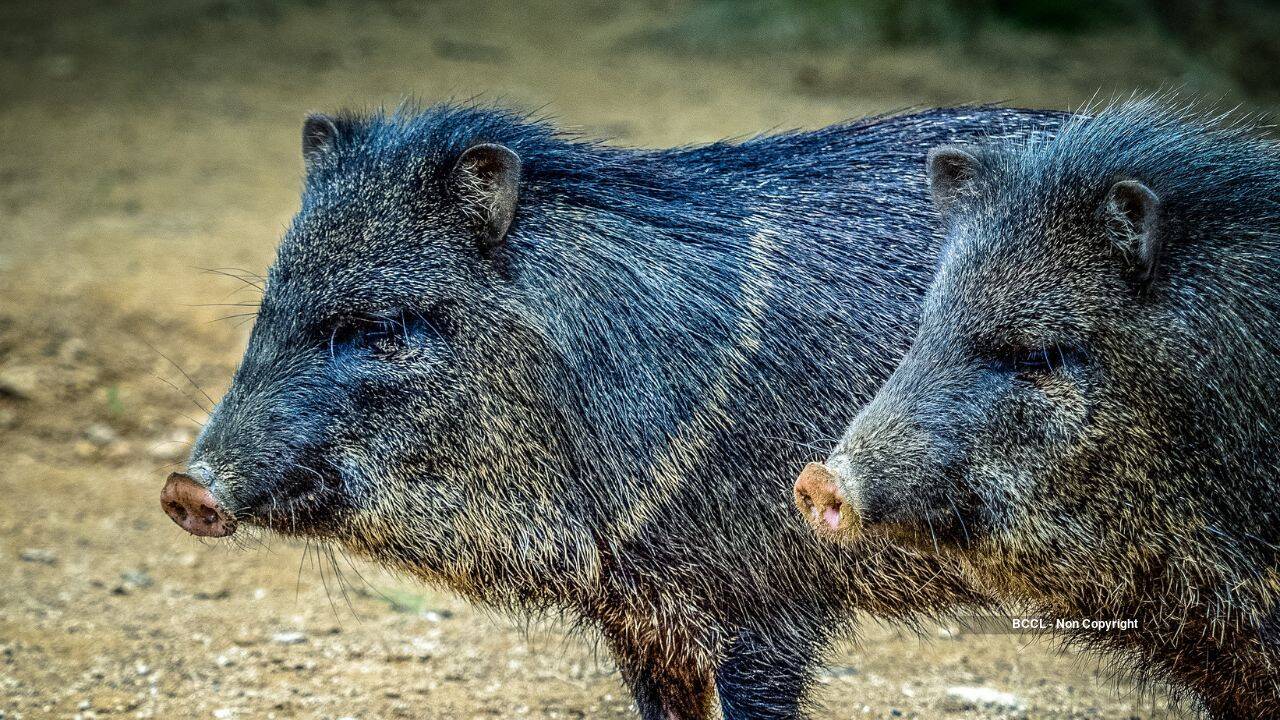
collared peccary
The return of the peccary did not happen quickly. The program began around 2000 at Bioparque M’Bopicuá, near Fray Bentos, where animals from Argentina and Paraguay helped create a managed breeding population.From there, conservation teams worked for years with Uruguay’s environmental authority to plan the release carefully. They studied genetics, checked the animals’ health, and adjusted their diet so the peccaries would be ready for life in the wild.This was not just a matter of opening a gate and hoping nature would take care of the rest. Before release, the animals were trained on native grasses, fruits and tubers, and veterinary screening helped reduce the risk of spreading disease to livestock or wildlife.The project also involved scientists, government officials, conservation groups and workers near the release area. In 2017, biopark coordinator Juan Villalba said the team hoped that, within a few years, the peccary would once again take its place in Uruguay’s native fauna.
How many were released?
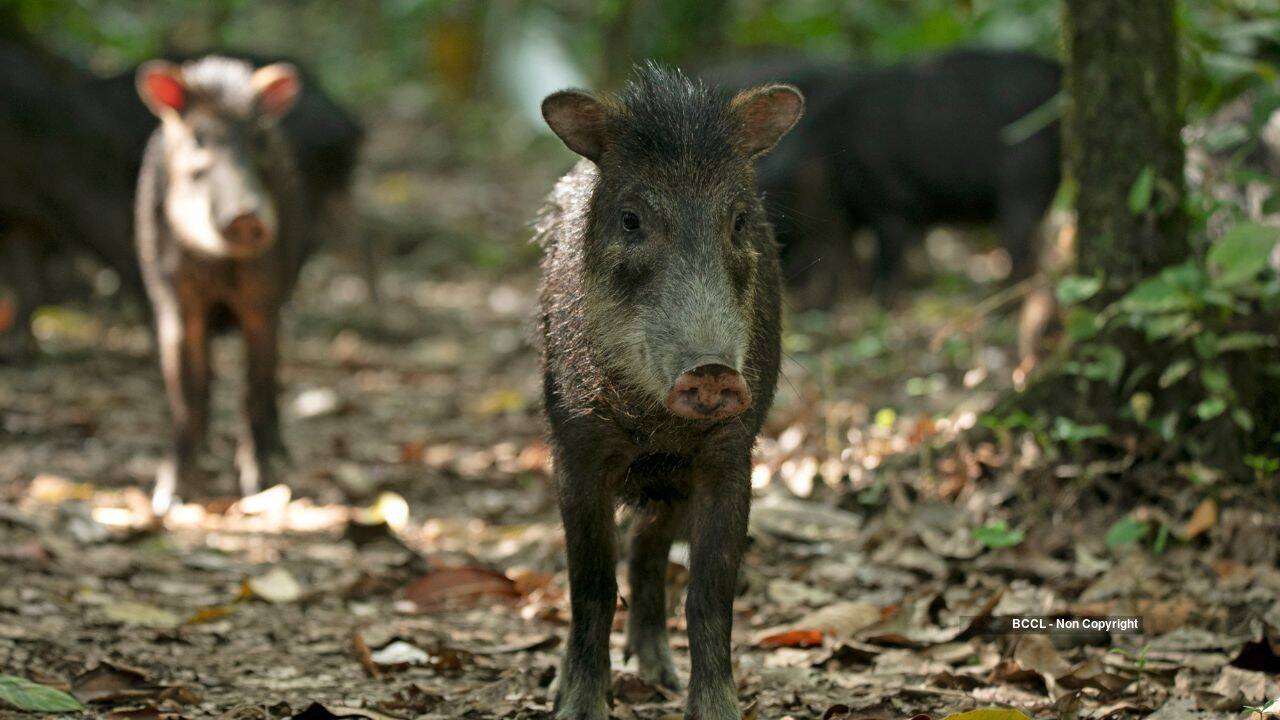
collared peccary (representative image)
The release numbers have been reported in slightly different ways, which suggests several phases of the program rather than one single event. Uruguay’s government initially said nearly 100 peccaries were released in two managed stages in 2017.A later national assessment cited 140 adults released in Paysandú that same year, while the project operator Montes del Plata said 200 animals were returned to the wild between 2017 and 2019. The exact totals depend on which phase of the program is being counted, but the overall story is clear: this was a gradual reintroduction, not a one-time release.That approach makes sense biologically too. Collared peccaries are social animals that usually live in groups ranging from 2 to 30 individuals. Adults are roughly 66 to 88 pounds and stand about 20 inches at the shoulder, with a pale band of fur that gives the species its “collared” look, as per the report.
Signs of a wild comeback
The strongest evidence that the project is working came after the first releases. Within a year, monitoring teams had collected 177 camera-trap images and confirmed the presence of young peccaries.That detail mattered more than a simple adult sighting. A juvenile is proof that breeding is happening in the wild, which means the released animals are not just surviving, but reproducing.Researchers also found tracks, sleeping sites and droppings, all of which suggested that the species was using the landscape normally. By 2022, peccaries had been detected more than six miles from the original release site, and biologist Alexandra Cravino said the animals had managed to adapt.The 2025 sustainability report from Montes del Plata says monitoring is still recording daytime activity, which is another useful sign because it shows the animals remain active and present in the area. Even so, the reports stop short of saying the population is fully secure.
Why peccaries matter
A collared peccary is more than just a conservation success story. Like many wild mammals, it plays a role in shaping the ecosystem around it.As peccary herds move through the landscape, they search for fruit, roots and other plant food, turning up soil and leaf litter along the way. They can create paths, spread some seeds and consume others, which means they help move nutrients and influence how vegetation grows.In tropical forests, scientists often describe peccaries as ecosystem engineers because of the way they affect the ground layer and the animals that depend on it. One exclusion study found that removing collared peccaries changed leaf litter and affected small amphibians and reptiles, although those findings cannot be directly applied to Uruguay’s grasslands and river forests.Still, the idea is useful. Returning peccaries may restore ecological functions that have been missing for generations, even if researchers still need years of observation to understand the full effect.
Recovery is not guaranteed
Even with the positive signs, Uruguay is not declaring victory yet. The country’s proposed national mammal Red List places the reintroduced peccary in the “Not Evaluated” category, and it says continued monitoring is needed before the species can be reassessed, the report suggests.That caution is important because reintroduction is only the first step. Long-term recovery depends on healthy habitat, disease surveillance, protection from hunting and enough time to prove that wild-born animals can survive on their own.Illegal hunting remains a concern, and reports of hunting after release show that the species still faces human pressure. That means conservationists cannot assume the reintroduction will succeed just because young animals have already appeared.
A long journey back
Uruguay’s peccary comeback is a reminder that conservation can take decades, not months. It required breeding animals in captivity, preparing them for the wild, releasing them in stages and then waiting for proof that they had truly returned.The good news is that the proof is beginning to appear. For now, Uruguay once again has native collared peccaries moving through its countryside, and a new generation has already been born in the wild.That does not mean the story is finished. It means the species has taken an important step back from the edge of local disappearance.