Indian Air Force: From 19 havai sepoys to a formidable air force in the world, IAF celebrates its 94-year-old glorious journey

HINDON AIR STATION: Indian Air Force, which was established on October 8, 1932, as an auxiliary air force of the British Empire and was then known as the ‘Royal Indian Air Force’, has since emerged as the world’s third-most powerful air force.As it marked its 94th anniversary at Hindon Air Force Station on Thursday, IAF looked back on its humble beginnings. FIts first operational flight took place on April 1, 1933, with a small but determined group of six RAF-trained officers and 19 Havai Sepoys in four Westland Wapiti IIA biplanes.These formed the nucleus of the ‘A’ Flight at Drigh Road in Karachi and laid the foundation for the planned No. 1 (Army Co-operation) Squadron — marking the dawn of what would evolve into one of the most formidable air forces.Now, armed with a versatile fleet of advanced fighter jets, such as Russian-acquired Sukhois, French Rafale and Mirage, and indigenous Tejas, and transport planes, such as US-acquired Globemaster and Super Hercules, IAF now boasts of 2,353 military aircraft.To mark the day, a piece of IAF’s rich history took to the skies. The vintage Tiger Moth aircraft performed aerobatics before hundreds of spectators, including the three service chiefs, Air Chief Marshal A P Singh, General Dhiraj Seth and Admiral K Swaminathan.
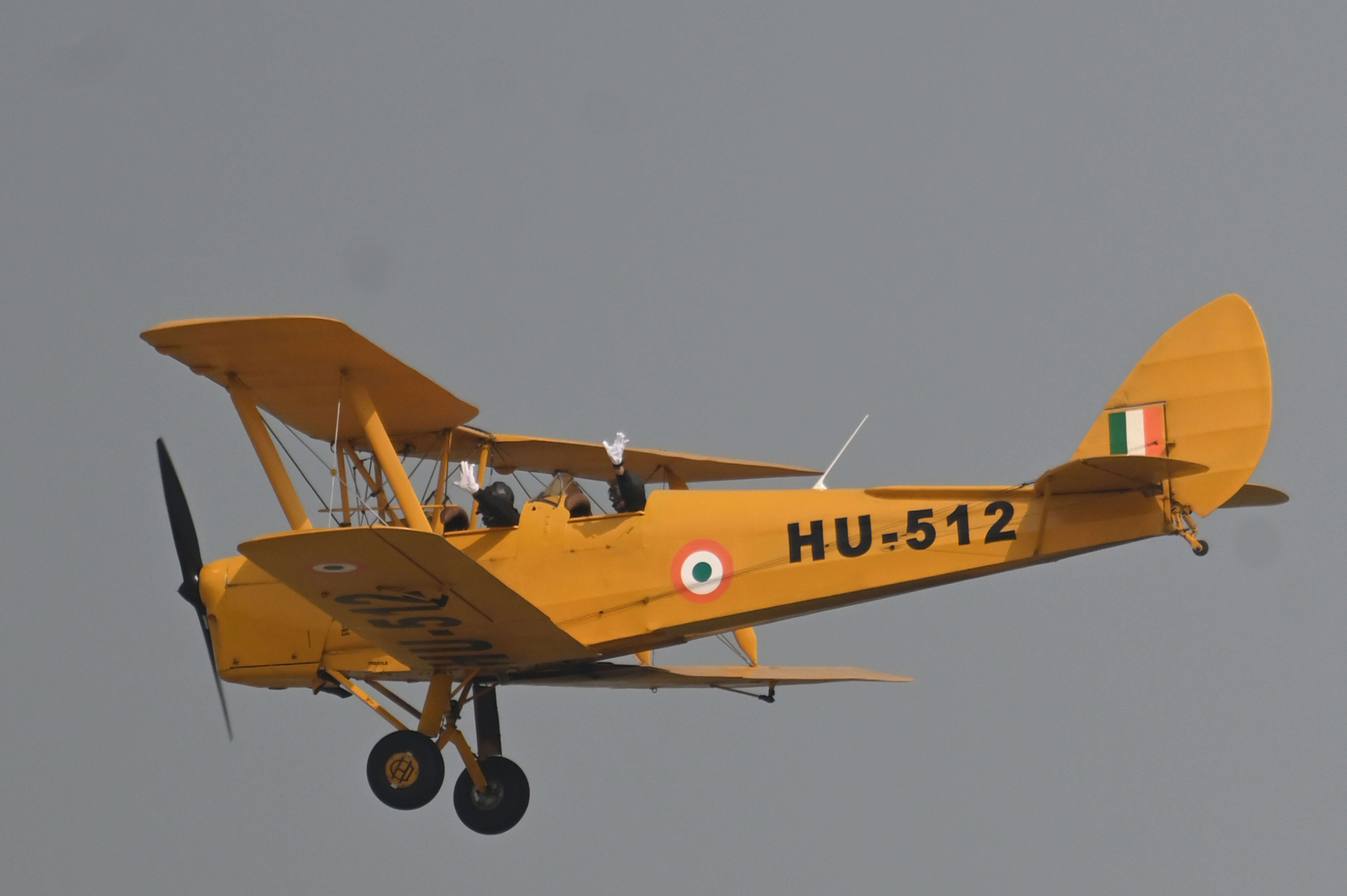
IAF pilots Wing Commander Shishir Arora and Grp Capt Amit Dhopawka who flew the Tiger Moth enthralled the audience with their flying skills for around 15 minutes.The vintage aircraft is the sole prized possession of IAF, which is preserved at the station. First built by de Havilland Aircraft Company in the 1930s, originally for the Royal Air Force (RAF) of England, the Tiger Moth fleet served as IAF’s primary basic trainer from 1939 to 1957, with 140 units operated during its active service period. The squadron was phased out in 1957, with one aircraft maintained to remember its past glory.Another key attraction at the event was when outgoing IAF chief ACM Singh arrived at the air base riding a vintage white 1960s Ford Galaxie V8 — a historic American classic car with registration IAF 1 that served as the official staff vehicle for IAF chiefs only on very special occasions.
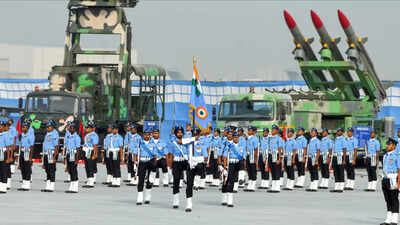
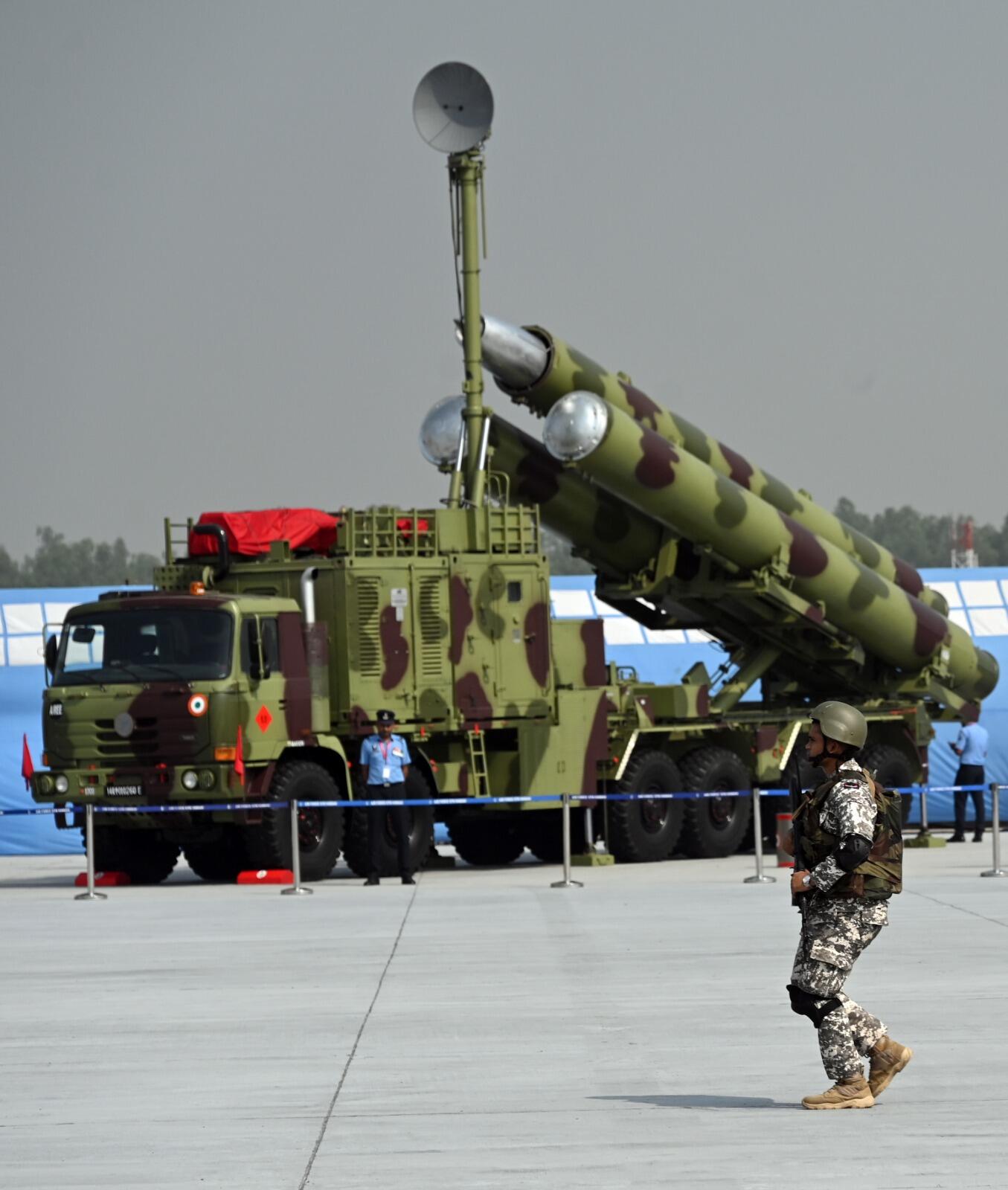
To showcase its air prowess, IAF lined up all its combat aircraft and also showcased its weapons, even those used during Operation Sindoor — like the BrahMoS supersonic cruise missile and the Akash air defence system — which not only stopped Pakistan missile and drone attacks but also razed to ground terrorist hubs and the enemy’s military assets.
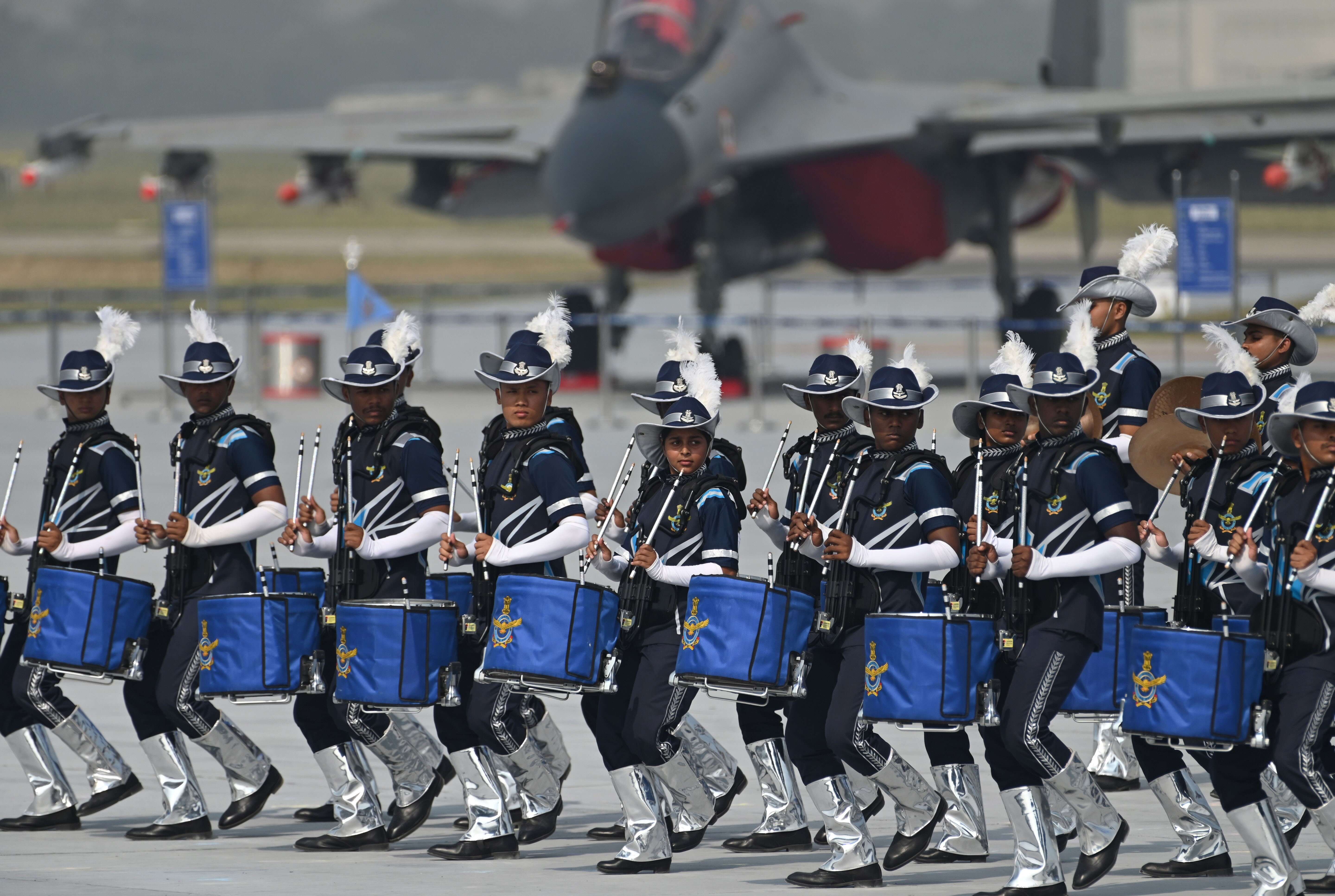
An all-women IAF’s air warrior drill team ‘Shakti’ memerised spectators with its highly synchronised and complex rifle manoeuvres.IAF drummers’ team, comprising 33 young air warriors dressed in vibrant colours, also captivated the audience with powerful drum beats and dynamic formations.
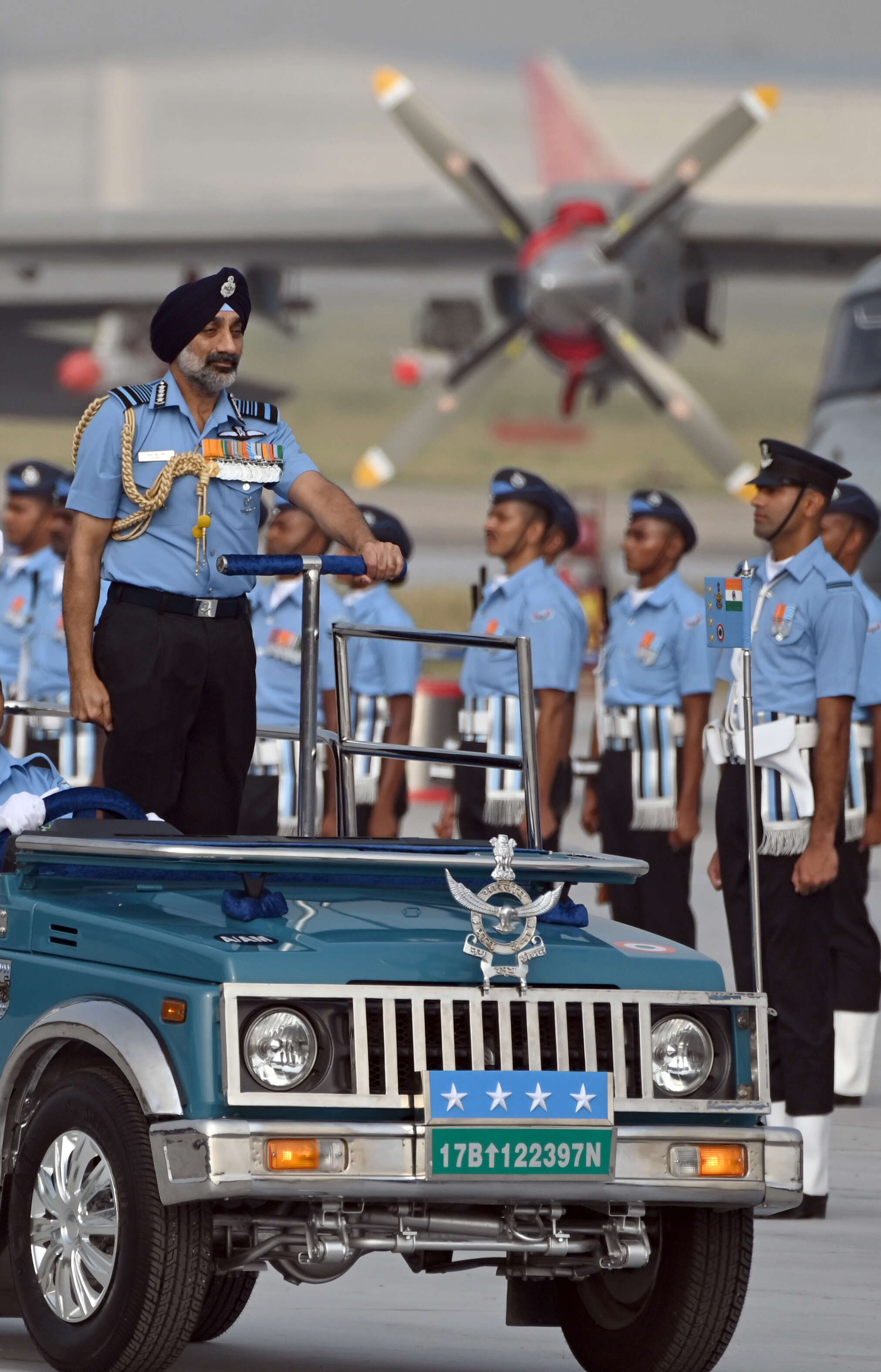
In his last Air Force Day speech, IAF chief ACM Singh, who was given an aerial salute by three Mi-17 1V helicopters carrying the Tricolour and IAF flag, highlighted that “air power is the primary means of protecting the national interest”.He said “an air force can have the most advanced aircraft in the world, but its true strength is measured by its operational preparedness-how quickly and confidently it can act whenever the call comes”.Referring to Operation Sindoor, he pointed out that IAF’s swift transition into combat operations demonstrated its ‘destructive power as well as the effective air defence operations’. He also stressed that “success in modern conflict demands deep synergy” and that joint planning and integrated combat application with Army and Navy is a daily activity.He said, “Space is a natural extension of the air domain”, highlighting the growing collaboration with Isro, especially for the Gaganyaan mission.Congratulating the IAF on its 94th anniversary, PM Narendra Modi posted a video praising the air warriors and said, “India is proud of our Air Warriors. On Air Force Day, we salute their courage and commitment to protect our skies!”Sending his greetings to all the courageous air warriors and their families, defence minister Rajnath Singh in a post on X said, “The Indian Air Force stands as a symbol of courage, valour, discipline and professionalism. With unwavering commitment, our Air Warriors have always guarded the nation’s skies and risen to the occasion whenever the country has faced a crisis. Their dedication and service have not only strengthened India’s security but have also contributed immensely to national unity and the spirit of collective resolve. Salute to our Air Warriors for their courage, commitment and selfless service to the nation.”From securing Indian airspace against hostile intrusions using its fighter jets and delivering precision strikes and air-to-ground attacks to aid Indian Army troops on the battlefield like during the 1971 war and 1999 Kargil war or transporting combat troops, heavy artillery and critical logistics to remote or high-altitude frontiers using its transport workhorses like C-17 Globemaster III, C-130J Super Hercules and An-32 or even gathering real-time intelligence, mapping terrain, and monitoring borders using specialised surveillance and aerial reconnaissance platforms, IAF has served a multi-dimensional role centered on defending national airspace, supporting ground operations, and providing humanitarian assistance.For over nine decades, the IAF and its air warriors have stood the test of time and remained at the forefront of India’s defence, combining courage, discipline and technological excellence in service of the nation.