America said ‘big no’ to Chinese EVs, Britain welcomed them, but now faces ‘Made in Europe’ fears

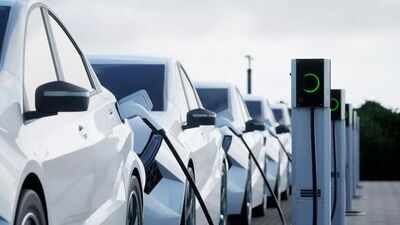
Chinese EVs gained ground in the UK despite US resistance. Now, Britain is reportedly facing pressure to rethink its approach as the European Union (EU) considers “Made in Europe” rules that could hurt companies selling into the bloc. While the US has effectively kept Chinese electric cars out with a 100% tariff, the UK has allowed them to enter with only its standard 10% import duty. But Britain’s more open approach is now creating a policy dilemma as the EU considers rules that could disadvantage companies selling products made outside the bloc.Chinese EVs incur no extra tariff specific to China in Britain, making the UK one of the major foreign markets without such a tariff. In addition, Japan and Norway also don’t have any extra tariff. However, the European Union levies an extra 35.3% tariff specific to each maker, on top of a 10% import duty.
Britain faces a choice over Chinese EV tariffs
According to a report by The Sunday Times, UK Business Minister Jonathan Reynolds is considering matching the EU’s tariffs on Chinese EVs. The move could help British companies avoid the impact of rules that favour goods manufactured within Europe when competing for access to the EU market.The proposed legislation is part of the EU’s Industrial Accelerator Act and aims to protect European industries from international competition.An EU official told the Financial Times in September that Britain would need to increase tariffs on Chinese EVs and align more closely with EU trade policy to avoid “Made in Europe” barriers.A UK government spokesperson told CNBC that Britain had not imposed tariffs on Chinese EVs, adding, “We continue to engage closely with industry so that our approach reflects the sector’s and the UK’s national interests.”The decision could also affect Britain’s efforts to improve relations with the EU, while any tariff increase could trigger a response from China.A spokesperson for the Chinese Embassy in London said it had expressed “serious concern” over reports of potential tariffs.“China is firmly opposed to any discriminatory practice involving tariff hikes or restrictive measures on Chinese products,” a spokesperson told CNBC. “We will continue to follow developments and respond accordingly.”
Chinese carmakers are gaining UK market share
Chinese carmakers have been increasing their footprint in Britain with battery electric and hybrid vehicles. Registrations for Chinese Original Equipment Manufacturers from January to August stood at 519,424, giving them a 28.1% market share, up from 12.9% in 2025.Hybrid vehicles drove most of the increase, with 62,655 additional registrations compared with 32,565 for battery-electric vehicles.“That matters for policy,” Paul Hilton, JATO Dynamics’ head of retail, told CNBC.“Tariffs aimed only at Chinese-built battery EVs could slow one part of the expansion, but would not address hybrid growth, vehicles made outside China or the underlying advantages in cost, product cadence and supply chains,” Hilton added.
Britain’s growing Chinese EV presence adds pressure
The Jaecoo 7, a Chinese SUV nicknamed the “Temu Range Rover”, was Britain’s best-selling car in September, according to the Society of Motor Manufacturers and Traders. Its sales reached 10,814, ahead of models including the Tesla Model 3, Ford Puma and Kia Sportage.Rico Luman, senior sector economist for transport and logistics at ING, said Britain’s policy gap with the EU leaves it with limited options if it wants to maintain a level playing field.Exclusion from the Made in Europe initiative could have “significant consequences” for businesses, he said.“It’s generally quite remarkable that batteries from China are exempted from EU tariffs,” Luman said.“At the same time, this is logical as production in Europe isn’t up to speed and Europe lacks the rare earth minerals and refinery capacity behind it,” he added.