
In 2005, an Iowa carpenter who never went to college left nearly $3 million in savings; 14 years later, 33 strangers whose education he funded gathered to remember the man they had never met

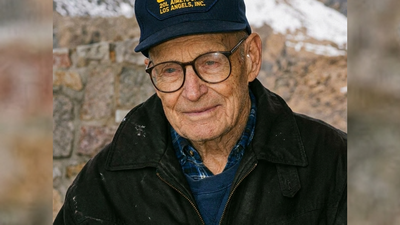
Dale Schroeder spent 67 years working as a carpenter at the same business in Des Moines, Iowa. He grew up poor, never went to college, never married and had no children. He lived a simple life, owning only two pairs of jeans and an old rusty Chevrolet truck. But over the years, he quietly saved almost $3 million.When Schroeder died in 2005, his savings were used to create a scholarship fund for small-town Iowa students who wanted to attend college but could not afford it. The fund eventually paid for the college education of 33 people.Fourteen years after Schroeder’s death, those 33 students came together to remember the man whose money had changed their lives, even though most of them had never met him. They called themselves ‘Dale’s kids’ and gathered around his old carpenter’s lunch box to talk about the difference he had made in their lives.Schroeder’s friend Steve Nielsen remembered him as a “blue-collar, lunch pail kind of guy”. He said Schroeder went to work every day, worked hard and was frugal. That simple lifestyle allowed him to build savings that he later decided to use to help young people get an education.
He wanted to help students like himself
Before his death, Schroeder went to Nielsen, who was his friend and lawyer, with an idea for his money. Schroeder had never had the opportunity to attend college, but he wanted other young people to have that chance. “He said, ‘I never got the opportunity to go to college. So, I’d like to help kids go to college,’” Nielsen recalled.At first, Nielsen did not know how much money Schroeder had saved. When he asked him about the amount, Schroeder told him it was “just shy of $3 million”. “I nearly fell out of my chair,” Nielsen remembered.Schroeder wanted the money to help small-town Iowa children who had the ability and desire to attend college but lacked the money to do so. His friend said the carpenter wanted to help students who were like him and might not have had an opportunity to go to college without his gift.The scholarship fund eventually helped 33 people attend college without having to pay for their education themselves. For the students who received the money, the scholarship became an opportunity they had not expected.
A phone call changed Kira Conard’s plans
Kira Conard was one of the 33 students helped by Schroeder’s savings. At the time, she had completed high school with the grades needed to attend college, but her family could not afford it.Conard grew up in a single-parent household with three older sisters. Paying for college for all four children was not an option, she said. She wanted to become a therapist but did not see a realistic way to pay for her education.“It almost made me feel powerless. Like, I want to do this. I have this goal, but I can’t get there just because of the financial part,” she said.At her high school graduation party, Conard was preparing to tell her friends that she would not be going to college. Then she received a phone call from someone who told her about Schroeder and the scholarship. “I broke down into tears immediately,” Conard said.The scholarship allowed her to attend college without taking on debt. She later graduated and planned to begin her career as a therapist.For Conard, the story was difficult to believe because the person funding her education was a man she had never met. “For a man that would never meet me to give me basically a full ride to college, that’s incredible. That doesn’t happen,” she said.
33 students remembered Schroeder
The 33 people who benefited from Schroeder’s savings eventually came together as “Dale’s Kids”. By the time they gathered to honour him, many had completed college and moved into careers including medicine, teaching and therapy.Their meeting also marked the end of the scholarship fund. Conard was the last person to receive one of Schroeder’s scholarships after the fund had supported 33 students through college.Although Schroeder was no longer alive to meet the people he had helped, his friends and the scholarship recipients continued to remember his decision. His savings, built through decades of carpentry work and a frugal lifestyle, had been used to give the students an opportunity he had never received himself.There was only one condition attached to the gift. Schroeder could not be repaid because he had died, but he wanted the people he helped to continue the gesture in their own lives.“All we ask is that you pay it forward,” Nielsen said. “You can’t pay it back, because Dale is gone, but you can remember him and you can emulate him.