
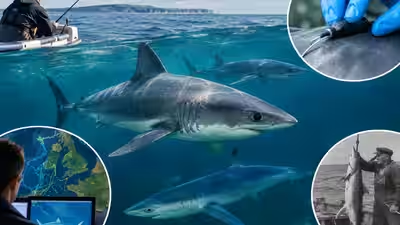
Scientists will deploy 70 electronic tags on 3 vulnerable shark species around Britain, pairing new tracking data with anglers’ catch records dating back to 1953

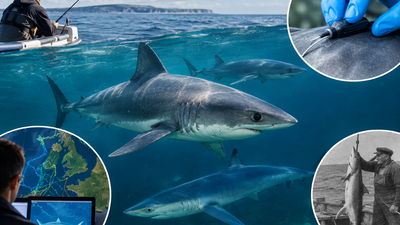
Britain’s coastal waters are home to more shark species than many people might expect, but scientists still know surprisingly little about how several of these animals move, feed and reproduce. In a report by The Guardian, researchers outlined plans for a new three-year project that will combine modern electronic tracking with decades of observations recorded by recreational anglers. The project will focus on three vulnerable shark species found around Britain: porbeagle, tope, also known as school sharks, and blue sharks. According to The Guardian, scientists will deploy 70 electronic tags as part of the project, which involves the University of Exeter, the Marine Biological Association, the Angling Trust and the Pat Smith Database.The project has received almost £1 million in funding from Natural England and will use electronic tags to study how the sharks move through British waters. Researchers will also draw on the Pat Smith Database, which contains shark catch records stretching back to 1953. Together, the historical records and new tracking information could provide a much longer-term picture of where these sharks have been found and how their distribution may be changing.
Tracking sharks at sea
The 70 tags will provide scientists with different kinds of information. Forty short-term tags, costing around £1,500 each, are expected to remain on sharks for about 45 days. They will help researchers examine how the animals respond after being caught and released. Another 30 tags are designed to remain attached for about a year. These more sophisticated devices can help reconstruct a shark’s movements while also recording how deep it dives and how long it spends at different depths. Such information could reveal previously unknown patterns in the animals’ behaviour and migration.Researchers will also collect small DNA samples from the sharks. These samples could help determine how different populations are genetically connected and whether sharks found in British waters are related to animals from other parts of Europe. For species capable of travelling long distances, that information could be particularly valuable. The researchers also want to understand how far these sharks travel, with the team noting that species such as porbeagles could potentially travel much farther than previously known.
Anglers provide historic clues
One of the most unusual aspects of the project is its reliance on recreational anglers. The Pat Smith Database contains records dating back more than seven decades, creating an opportunity to compare present-day observations with historical catches. Researchers say these records are particularly useful because scientists alone cannot observe sharks across such large areas and over such long periods. Recreational fishers have spent decades on the water, recording the species they encounter and, increasingly, releasing sharks after measuring them.Modern catch-and-release practices could also give researchers an opportunity to examine how sharks cope after being caught. The short-term tags are intended partly to show how well individual animals survive following capture and release.
Why the data matters
The information could ultimately help identify areas that are particularly important to sharks and reveal whether their ranges or population patterns are changing. Researchers will examine where porbeagles, tope and blue sharks feed, migrate and potentially gather to reproduce. If tagged sharks repeatedly travel into areas where they face a high risk of accidental capture, those movements could provide important information for conservation planning.The research also highlights how citizen observations can complement scientific monitoring. Researchers will also run workshops and interviews with anglers across the country, drawing on their experience as well as their records. The wider goal is not simply to track individual sharks, but to build a clearer understanding of Britain’s shark populations. With electronic tags revealing what happens beneath the surface and historical catch records showing where sharks have appeared over generations, scientists hope the combination will provide a stronger foundation for protecting these often misunderstood marine predators.