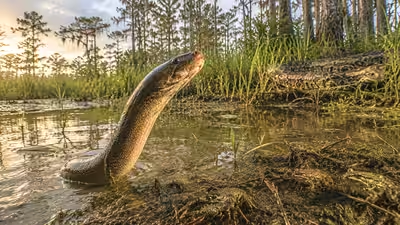
Florida’s Everglades face new threat as an invasive Asian swamp eel wipes out local crayfish and frogs and could be more destructive than the Burmese python |

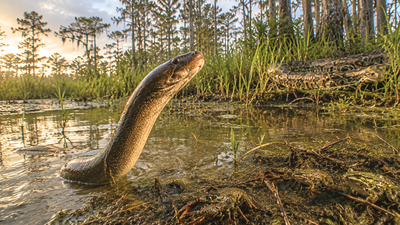
Florida’s Everglades is facing a stealthy invasive threat beneath its waters as the Asian swamp eel spreads through wetlands and preys on fish, crayfish, frogs and other aquatic animals. The air-breathing fish, native to East and Southeast Asia, has been established in Florida for decades, but researchers are increasingly documenting severe ecological consequences in the Everglades. A study published in Scientific Reports has linked its arrival to dramatic declines in small-bodied fish and crayfish and, more recently, to major changes in amphibian communities. The species is also exceptionally difficult to control because it can survive periods of low water by burrowing into mud. Some Everglades scientists now warn that its effects on the wetland food web could ultimately be more damaging than those of the notorious Burmese python.
Invasive Asian swamp eel has been spreading through Florida’s Everglades
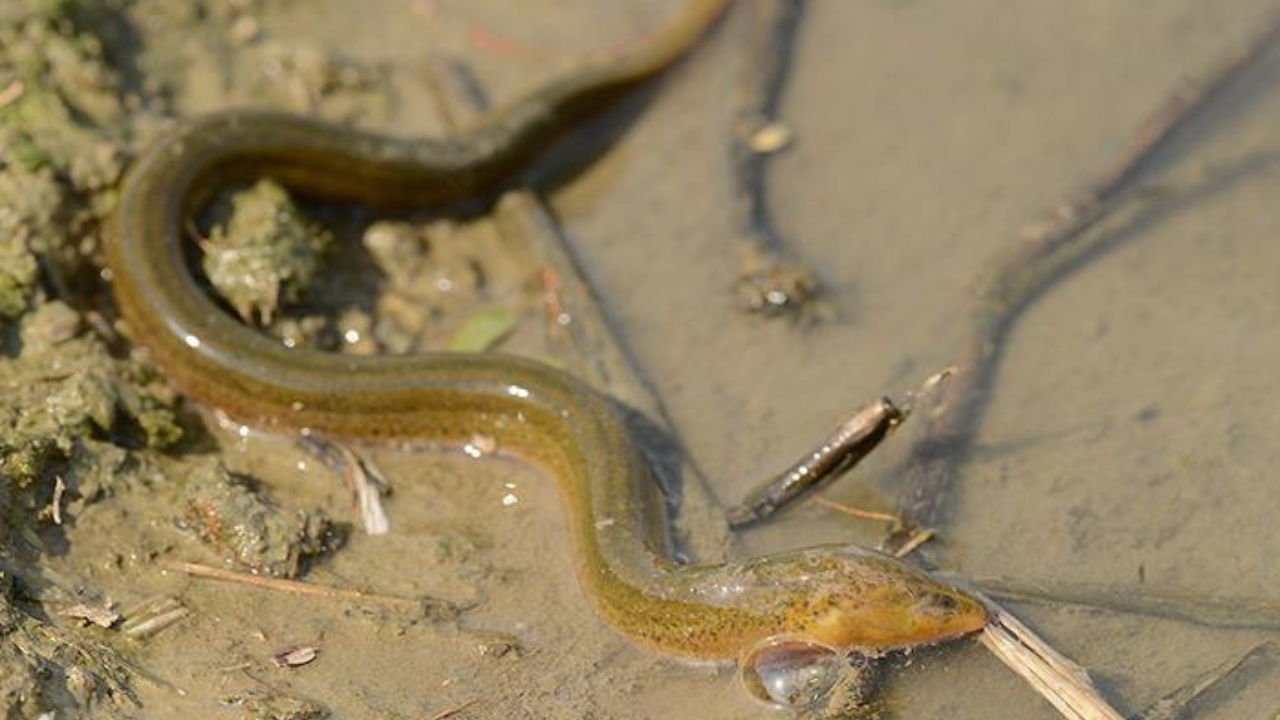
The Asian swamp eel (Monopterus albus) is an unusual freshwater fish that breathes air rather than relying entirely on its gills. Native to parts of Asia, it was first reported in Florida waters in 1997, with established populations developing in several South Florida canal systems. Researchers have since documented its spread into Everglades wetlands, including Taylor Slough in Everglades National Park, where the species has become particularly concerning. Nathan Dorn, an aquatic ecologist and associate professor at Florida International University, leads research examining the eel and its consequences for Everglades restoration. Dorn’s laboratory confirmed the species at the Arthur R. Marshall Loxahatchee National Wildlife Refuge in 2025, with researchers believing it may have reached the area a year earlier. The exact route by which the fish entered Florida remains uncertain, although escaped breeding populations and deliberate releases have both been suggested as possible pathways.
Studies found huge declines in fish and crayfish
The most striking evidence of the eel’s impact comes from long-term ecological research in the Everglades. Research led by Matthew Pintar and colleagues found that populations of native crayfish and small-bodied fish collapsed after Asian swamp eels became established in southeastern Everglades wetlands, with some populations experiencing declines of up to 99%. A 2025 study published in Scientific Reports found that average fish and decapod richness declined by about 25% following the establishment of swamp eels in Taylor Slough, while total small-fish and decapod biomass fell by 68%. More importantly, the biomass of the prey considered most important for nesting wading birds declined by 80%. These findings matter because the fish and crayfish being consumed by the eels are not merely isolated species. They form an important part of the aquatic food web and provide food for larger predators, including the Everglades’ famous wading birds.
New research links the eels to disappearing amphibians
The concern has now expanded beyond fish and crayfish. In a 2026 study published in Freshwater Biology, Hunter J. Howell and colleagues investigated amphibian communities across four major Everglades regions and examined whether Asian swamp eel abundance could help explain differences in amphibian populations. The researchers found that adding swamp eel abundance to their models substantially improved their ability to explain amphibian abundance and community composition. In some analyses, eel abundance replaced nutrient levels as the strongest predictor. The study also reported that southern leopard frogs were absent from surveyed areas in the southern Everglades where swamp eels had become established, while tree frogs that spend more of their lives away from the water were less affected. The researchers cautioned that the Everglades has many interacting environmental pressures, but their results provide evidence that swamp eel predation may be playing an important role in the decline of aquatic amphibians.
Its ability to survive drought makes it especially difficult to stop
The Asian swamp eel possesses several biological traits that make controlling an established population extremely difficult. Because it can breathe atmospheric air, it is not restricted to the oxygen conditions tolerated by many native fish. During dry periods, the eel can burrow into mud and survive low-water conditions that can eliminate or severely stress other aquatic animals. This gives it a major advantage in a wetland such as the Everglades, where water levels naturally fluctuate and drought periodically concentrates or eliminates aquatic habitats. The species can also consume a broad range of prey, meaning it is not dependent on a single food source. Researchers have struggled to develop an effective method for removing established populations from large wetlands. Hunter Howell of the University of Miami has described controlling an invasive species under these conditions as essentially impossible, while Dorn has publicly challenged researchers to develop an effective trap for the eels.
Scientists warn the hidden predator could rival the Burmese python
The comparison with Burmese pythons comes from the different ways the two invasive predators affect the Everglades. Pythons are highly visible symbols of the invasion because they consume mammals, birds and reptiles, but Asian swamp eels attack much lower in the food web, targeting fish, crayfish and amphibians that many other animals depend upon. Dorn has argued that although the eel does not pose the same direct danger to humans as a large python, its consequences for the wetland could be even more serious. In December 2025, he described the swamp eel as potentially the worst invasive species the Everglades wetlands have experienced. That should not be interpreted as a scientific consensus that eels are definitively more damaging than Burmese pythons. Instead, it reflects a growing concern among Everglades researchers that an inconspicuous aquatic predator could be disrupting the foundations of the wetland food web on a scale that is difficult to reverse. The U.S. Fish and Wildlife Service has separately classified the Asian swamp eel as a High Risk species, citing documented negative impacts in Florida and its ability to establish in suitable environments.