
Where leopards lounge on trees and the jungle meets the sea: Why Sri Lanka’s Yala National Park is more than a wildlife safari experience

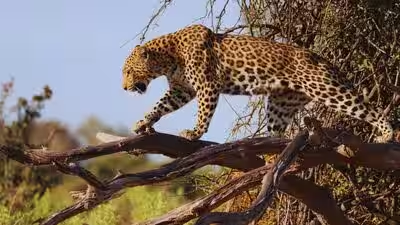
Most people who visit national parks and wildlife sanctuaries believing they are animal lovers may not be there purely for the love of wildlife. Many do not endure bumpy jeep rides under the blazing afternoon sun simply because they admire tigers or elephants; they go for two main reasons – the thrill of the chase and the desire to spot a tiger, or perhaps a lion if the park has one.I say “thrill” because there is a certain madness and excitement associated with sightings. When a tiger is finally spotted, the moment is rarely greeted with silence and awe. More often, the animal is surrounded by clicking cameras, excited voices and eager tourists trying to capture the perfect photograph, sometimes disturbing or irritating the creature. It is no surprise that governments limit the number of vehicles allowed inside national parks, although the frenzy often remains much the same.Those who truly love wildlife, however, seek places that offer not a prized animal sighting but an experience – a chance to immerse themselves in nature in all its richness. Sri Lanka’s Yala National Park is one such place. Green landscapes stretch towards the sea, and the park is filled with animals and birds that inspire wonder. More than a destination for spotting a single iconic creature, it is a place where nature itself becomes the attraction.Not just a National Park, a cultural destinationRavana’s kingdom is said to lie somewhere here with Ravana Kotte, now submerged in the sea, as its boundary. Yala was situated in the centre of Indo-Aryan trading route. A large number of ancient tanks in this region are the evidence of a rich agricultural civilisation dating back to 5th century BC. It is also in the middle of a rich Buddhist cultural centre.Ecosystems that exist togetherYala National Park is one of Sri Lanka’s most remarkable wildlife landscapes, not simply because of its famous leopards, but because so many different ecosystems exist within the same protected area. Here, dry forests give way to open grasslands, lagoons and wetlands, while rocky outcrops rise near the coastline. Each habitat supports its own collection of plants, birds and animals.The park is perhaps best known for its Sri Lankan leopards. The best thing is that unlike Jawai in Udaipur where one has to wait for hours to spot leopards in the rocky terrain, here the animals can be seen leisurely lounging on trees, rocks and moving through the scrub. Their ability to disappear into the dry forest makes every sighting feel particularly special.
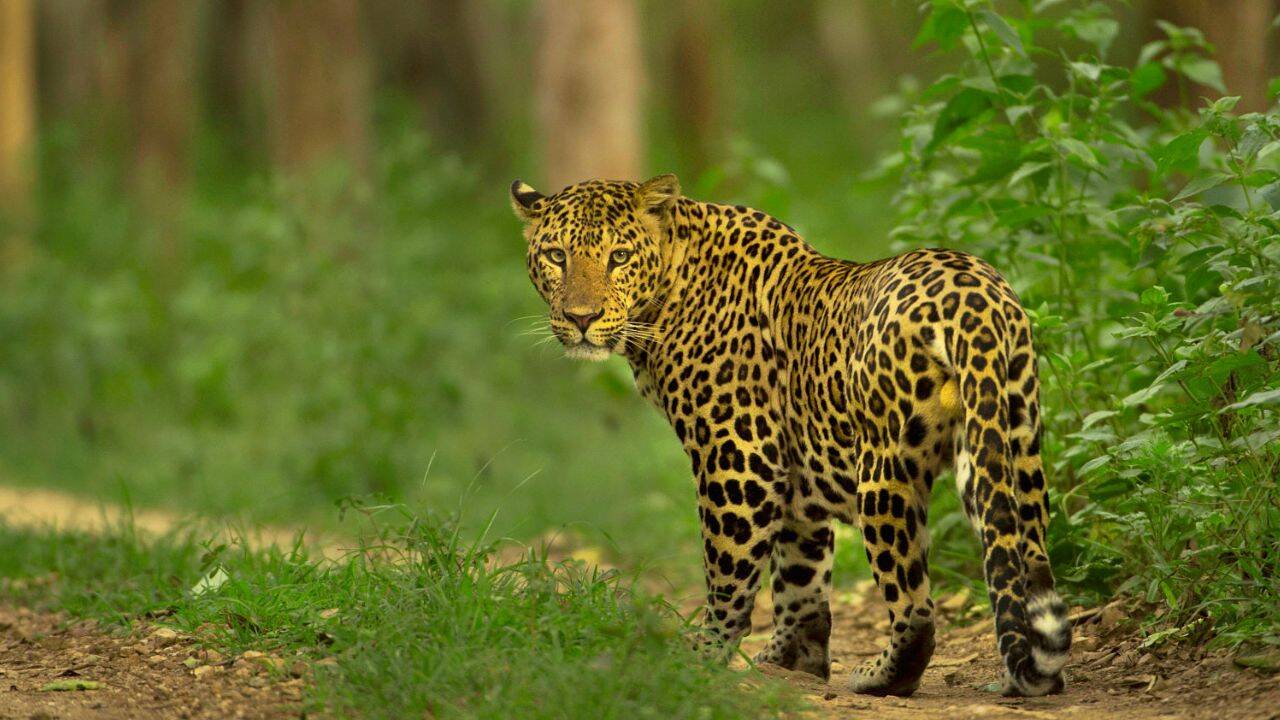
Leopard in the jungle (Canva)
But the leopard is only one part of Yala’s wildlife storySri Lankan elephants are another major attraction. Herds can be encountered around grasslands, waterholes and forest edges, particularly when they emerge from the vegetation to feed or drink. Their presence gives the landscape an unmistakable sense of wilderness.The park is also home to sloth bears, one of Sri Lanka’s most fascinating mammals. These shaggy, mostly nocturnal animals are particularly associated with the island’s dry-zone forests. They feed on insects, fruit and other vegetation and can occasionally be spotted foraging in the park.Then there are the sambar deer, spotted deer, wild boar, water buffalo and golden jackals, all of which form part of Yala’s complex food web. The abundance of herbivores, particularly deer, also helps sustain predators such as leopards.
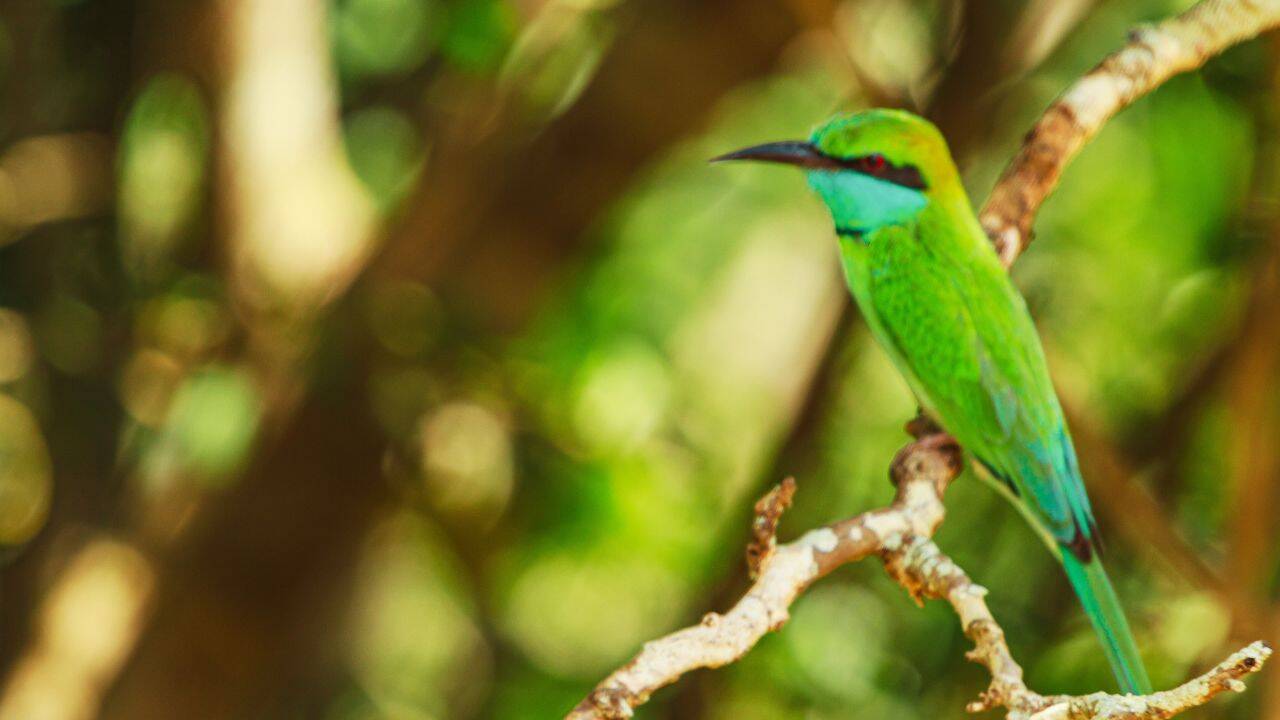
Birds are an important part of the Yala ecosystem (Canva)
A paradise for birdwatchersYala is equally impressive in the air. Its lagoons, wetlands and coastline create important habitats for waterbirds and migratory birds, while the forests and scrub support numerous resident species. Visitors may encounter peacocks displaying their spectacular feathers, painted storks, pelicans, egrets, herons, kingfishers and raptors.The park is also home to several birds endemic to Sri Lanka, making it particularly valuable for birdwatchers hoping to see species that cannot be found naturally anywhere else in the world. The wetlands are especially important. During the right season, the edges of lagoons can become gathering places for birds feeding in shallow water, while crocodiles may lie almost motionless nearby.The plants that create Yala’s wild characterYala’s vegetation is adapted to a hot and relatively dry climate. Rather than the dense tropical rainforest associated with some other parts of Sri Lanka, much of the park is characterised by dry-mixed forests, thorny scrub, grasslands and patches of woodland. Trees and shrubs provide food and shelter for wildlife, while grasses become crucial feeding grounds for elephants, deer and other herbivores.One of the most visually striking features is the Palu tree, an important dry-zone species. Yala’s vegetation also includes trees such as Weera, Ebony and Satinwood, alongside numerous shrubs, grasses and flowering plants.The landscape changes dramatically with the seasons. During wetter periods, vegetation becomes greener and waterholes fill, while the dry season transforms parts of Yala into a much more austere landscape, concentrating animals around remaining sources of water.
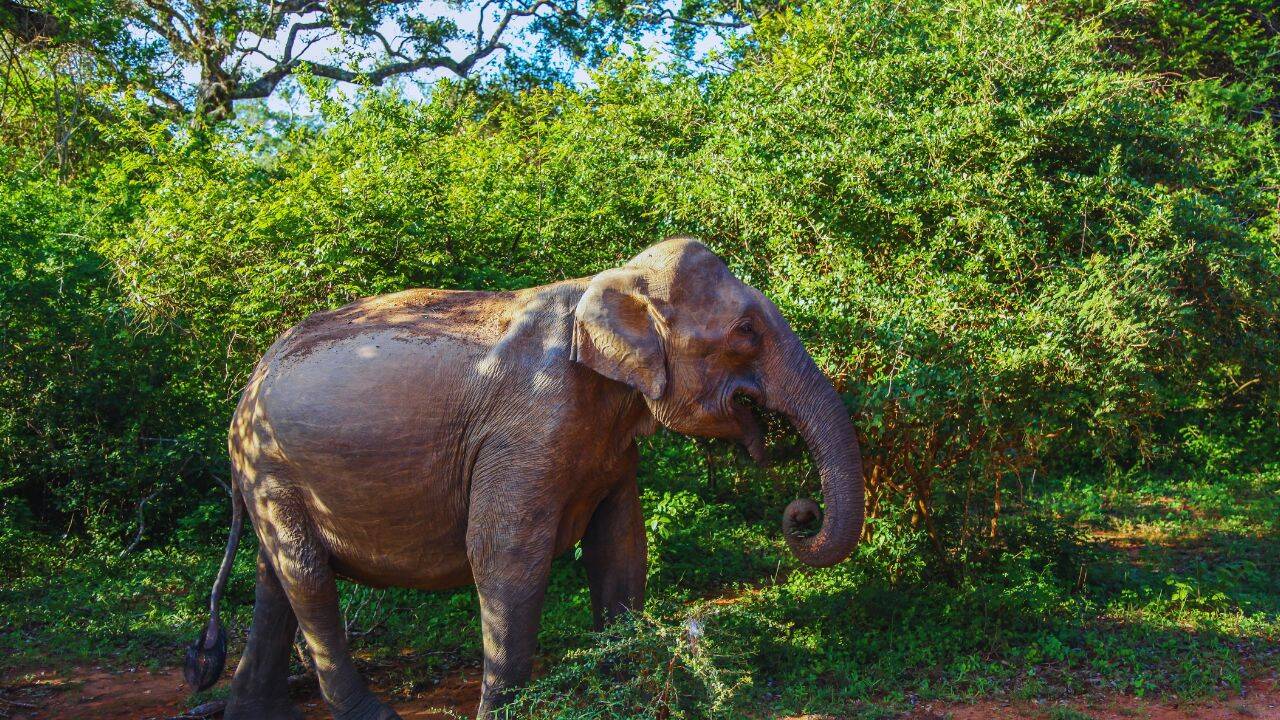
Elephant in the jungle (Canva)
Where the jungle meets the seaWhat makes Yala particularly extraordinary is that its wilderness doesn’t stop at the forest. The park stretches towards the Indian Ocean, bringing coastal habitats into the same protected landscape. Rocky shores, beaches, lagoons and wetlands exist alongside woodland and grassland. The coastal environment also adds another layer of biodiversity, supporting marine and shoreline ecosystems alongside Yala’s terrestrial wildlife.A landscape shaped by waterYala’s lagoons, tanks, rivers and seasonal water bodies are vital to its ecosystem. During the dry months, these water sources become gathering points for wildlife. Elephants, buffalo, deer and birds are drawn towards water, while predators follow their prey. The wetlands also act as nurseries and feeding grounds for countless smaller creatures, from fish and amphibians to insects and aquatic birds. This is why a safari through Yala can feel so unpredictable. One moment you may be looking at a leopard in a dry forest; minutes later, the landscape can open into a lagoon filled with chirpy, colourful avian multitudes.Ultimately, Yala’s magic comes from the interaction between its habitats. The forest provides cover, the grasslands provide food, the lagoons provide water, and the coast creates another ecosystem altogether. And perhaps that is the most memorable thing about Yala: you don’t simply enter a wildlife park; you enter an entire ecosystem where every tree, lagoon, rock and patch of grass can be part of the story.
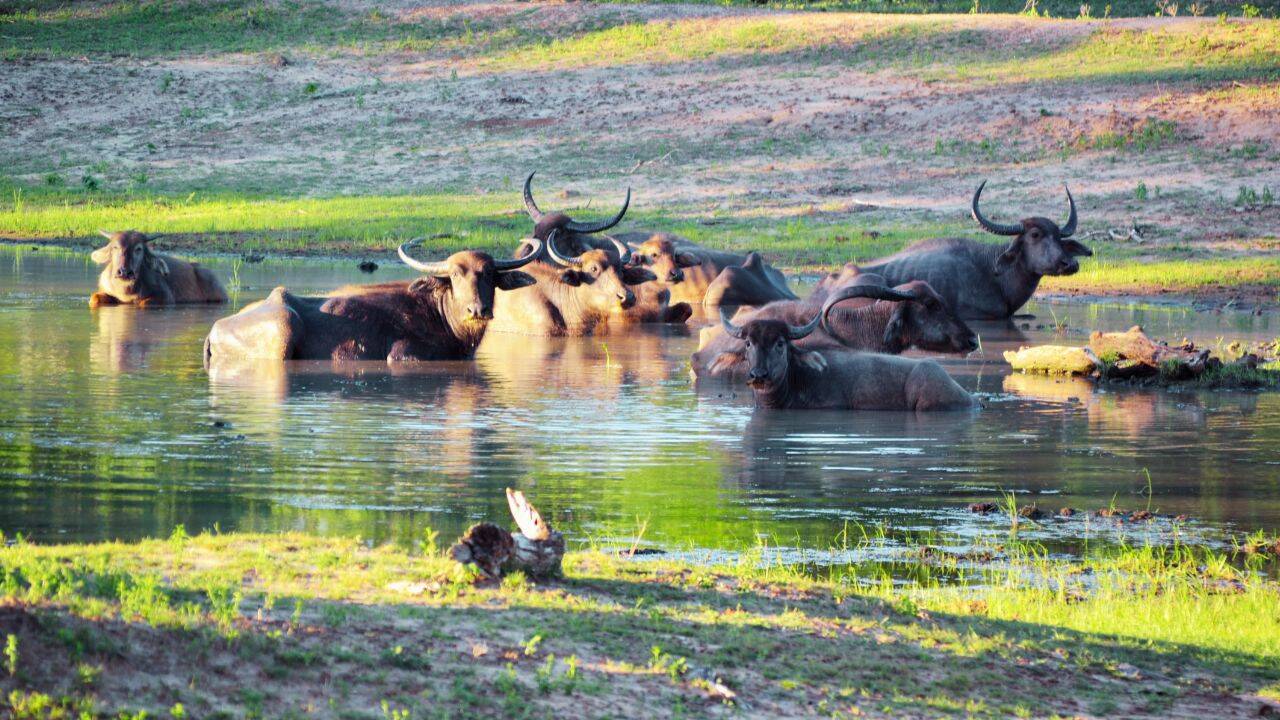
Water Buffalos in Yala National Park (Canva)
How to reach and what else to doYala National Park lies in Sri Lanka’s southeast, and the journey to the park is part of the experience. From Colombo, Yala is around 240 km away and takes roughly four hours by road, with the route passing through lush countryside and coastal landscapes. The condition of roads is excellent and the drive feels like a breeze. For travellers looking for a more scenic and relaxed journey, Yala can also be incorporated into a wider southern Sri Lanka itinerary covering destinations such as Galle, Mirissa, Ella and Udawalawe.Staying close to the park makes it easier to begin an early-morning safari and return to the comfort after hours in the wilderness. Jetwing Jungle Lodge can be an option, with just 10 jungle dwellings close to Yala. The cottages are right inside the jungle, have a bare, rustic charm as they are not surrounded by any wall and one can often site elephants and other wild animals just outside the window. Yala is often visited by a lot of international travellers so from five star properties to budget accomodations can be accessed witin a range of 30-40 kms at Tissamaharama and Kataragama.
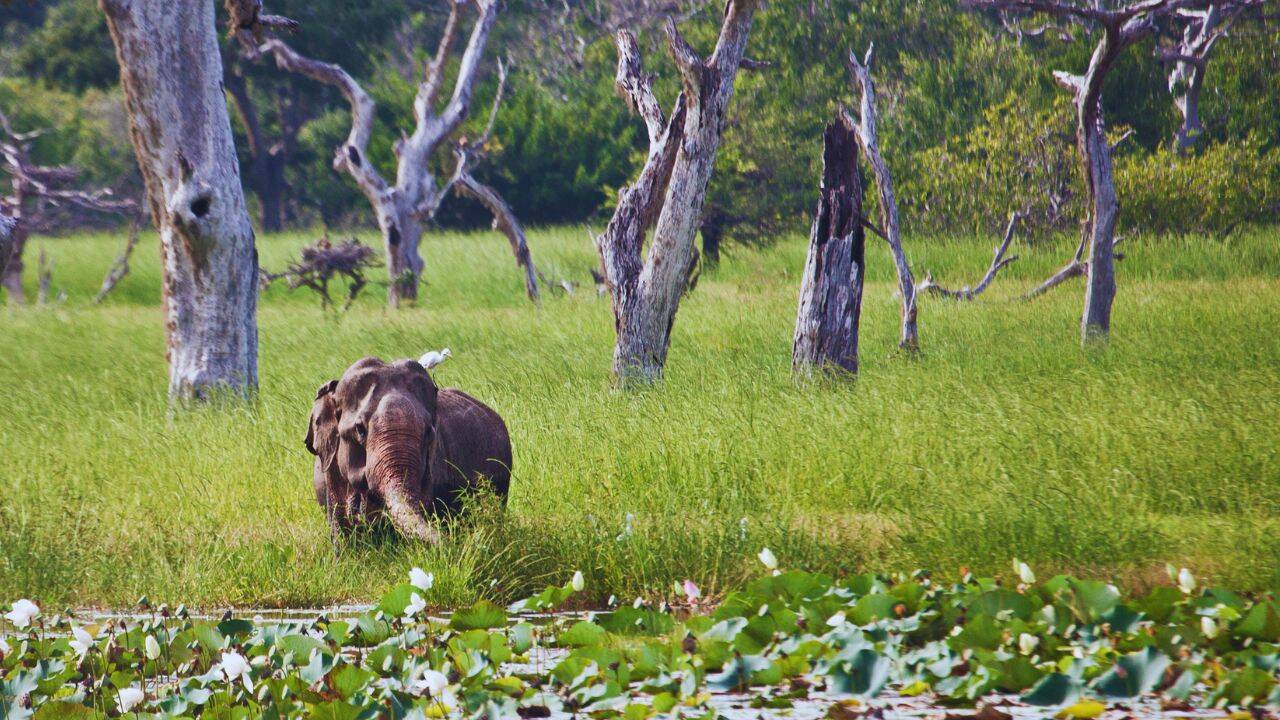
Elephant resting in marshy land (Canva)
Visit Sithulpawwa Monastery: This ancient Buddhist monastery sits amid the forest and offers a chance to combine wildlife with Sri Lanka’s religious and archaeological heritage. It is one of the cultural excursions that can be paired with a Yala stay.Visit Kataragama: The sacred town, known for its important religious sites, offers another cultural dimension to a trip through Sri Lanka’s deep south.Explore beyond Yala: Travellers with more time can consider nearby Bundala and Udawalawe National Parks, adding different landscapes and wildlife experiences to the itinerary. Jetwing’s Yala property also lists Bundala and Udawalawe among its excursion options.