
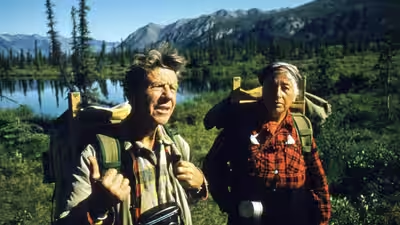
In 1922, Olaus Murie entered Alaska to study caribou, helping change how scientists understood wildlife and ecosystems

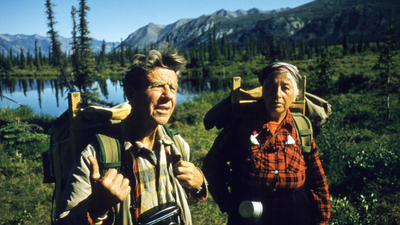
In 1922, biologist Olaus J. Murie entered Alaska’s vast wilderness to study caribou, beginning a body of field research that would eventually influence how scientists and park managers understood wildlife as part of interconnected ecosystems. Murie had been hired by the US Biological Survey as a wildlife biologist and spent much of the early 1920s studying Alaskan caribou, including their movements and populations. His work took him into the Brooks Range and Mount McKinley National Park, now Denali National Park and Preserve, where wildlife research was still in its early stages. The National Park Service describes his arrival in 1922 as the beginning of more intensive scientific research into the park’s wildlife. What began as a study of caribou would eventually become part of a much larger shift in American wildlife management, one in which predators were increasingly understood not simply as threats to game animals, but as components of functioning ecosystems.
How Olaus Murie entered Alaska to study caribou and understood their herd’s movements
According to the National Park service, Murie’s early work focused on Alaskan caribou, with research that included estimating population sizes and mapping the animals’ movements. According to the National Park Service, he studied Alaskan caribou from 1920 to 1926, recording their migratory routes and estimating herd populations.When Murie arrived at Mount McKinley National Park in the spring of 1922, his immediate objective was somewhat different from the broader ecological work his name would later become associated with. He hoped to capture young bull caribou as part of an effort involving the possible interbreeding of wild caribou with domestic reindeer. He and his crew built a corral in the Savage River valley for that purpose.
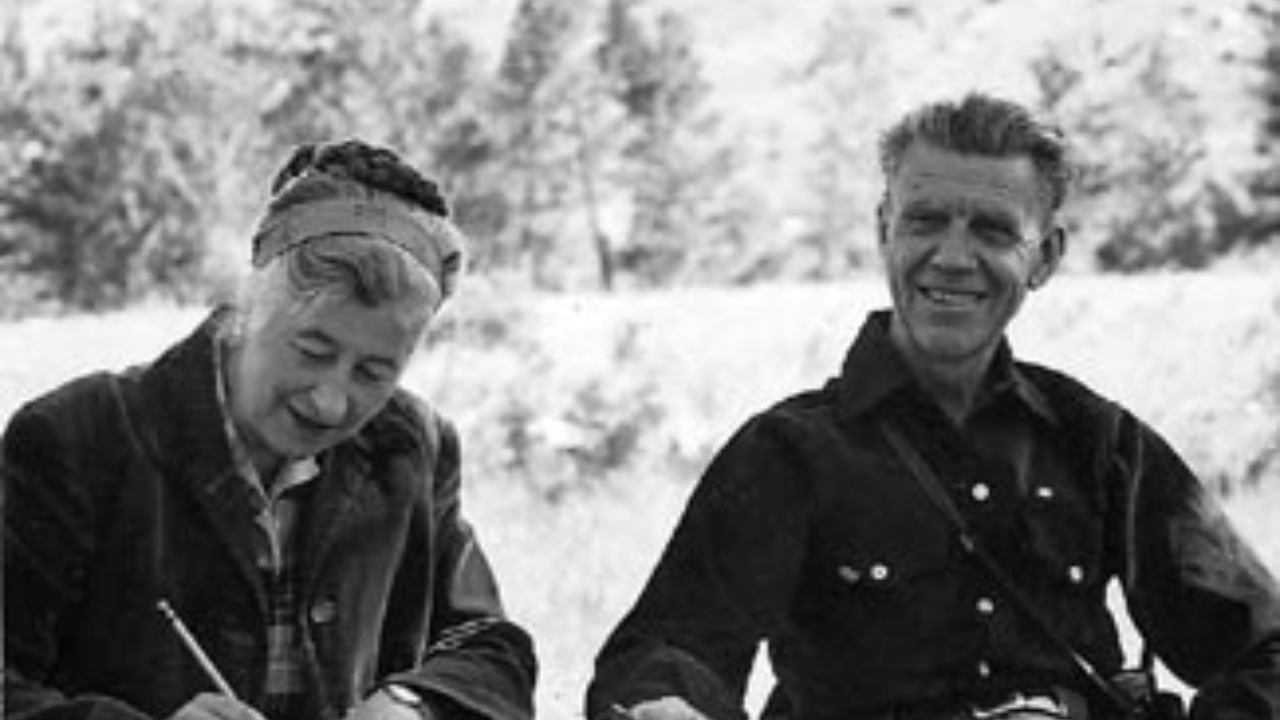
Image: Wilderness Connect
The project itself was short-lived, but Murie’s presence helped establish a tradition of systematic wildlife research in the young national park.His half-brother, Adolph Murie, joined him in Alaska and later became an important wildlife biologist in his own right. Together, the brothers gathered information about mammals, birds and the wider ecology of the region.
The caribou studies became part of a much bigger picture of Alaska’s wildlife
Murie’s work was important partly because researchers were beginning to move beyond simply counting animals. They were trying to understand where animals travelled, how populations changed and how different species interacted with their surroundings.The National Park Service notes that early caribou studies in Mount McKinley examined both the size and movement of herds. Later researchers built on this work by recording caribou behaviour, including rutting and calving, as well as the age and sex composition of herds. This growing body of information eventually contributed to a broader understanding of the park as an ecosystem rather than a collection of individual species.That distinction would become particularly important when another animal became the centre of a major controversy: the wolf.
Adolph Murie later used the family’s fieldwork tradition to investigate wolves and Dall sheep
The connection between Olaus Murie’s early caribou research and later predator management came through his brother Adolph Murie.By the 1930s, Mount McKinley National Park was facing what became known as the wolf-sheep controversy. The park’s Dall sheep population had declined, and wolves were widely blamed. Predator control was therefore considered a possible solution.In 1939, the National Park Service asked Adolph Murie to investigate the relationship between wolves and Dall sheep. He spent years conducting detailed field observations rather than simply assuming that predators were responsible for the decline.His research eventually produced a very different conclusion: severe late-winter weather, rather than wolf predation, was the principal cause of the sheep decline he investigated. That finding challenged the assumption that removing predators was automatically necessary to protect prey populations.
Murie’s research helped shift Mount McKinley away from treating predators simply as pests
Adolph Murie’s work became particularly influential because it examined wolves within the wider network of species around them. His 1944 government publication, The Wolves of Mount McKinley, included observations not only of wolves and Dall sheep but also of caribou, moose, grizzly bears, foxes and eagles.The National Park Service describes the study as a landmark in understanding wolf behaviour and ecology. Murie observed individual wolves and documented their relationships with prey, helping challenge older stereotypes about predators.His conclusions helped the park move towards eliminating predator control at the time, although the policy later changed again as sheep numbers fluctuated. The history of Mount McKinley therefore shows that wildlife management was not transformed overnight; it evolved as researchers gathered more evidence about the relationships between predators, prey, weather and habitat.
Olaus Murie’s 1922 expedition helped establish a scientific tradition that lasted for decades
Olaus Murie’s importance extends beyond the particular caribou project he began in 1922. His early fieldwork helped establish wildlife research as an important part of understanding and managing Mount McKinley National Park.The National Park Service notes that Murie continued studying Alaskan caribou through the 1920s, while his brother Adolph later returned to the park for extensive research on predators and other wildlife. Adolph continued working in the park for decades, studying sheep, caribou, bears, wolverines, small mammals, birds and vegetation.The approach also evolved with technology. Early researchers relied heavily on observation, field notes, specimens and tracking. Modern Denali research now uses techniques such as aerial surveys and radio collars to monitor wildlife populations and movements.
More than a century later, Denali still builds on the Muries’ ecological approach
Today, Denali National Park and Preserve remains an important natural laboratory for studying Alaska’s large mammals, including caribou, wolves, moose, grizzly bears and Dall sheep. The National Park Service continues to investigate how these species interact and how factors such as weather, prey availability and changing environmental conditions affect their populations.The significance of Olaus Murie’s 1922 journey therefore lies in more than the distance he travelled or the caribou he counted. His fieldwork formed part of an early effort to understand Alaska’s wildlife in its natural setting, while the research carried forward by his brother helped demonstrate why individual species cannot always be managed in isolation.More than a century later, that principle remains central to wildlife conservation: protecting an animal can require understanding everything around it, from its prey and predators to weather, habitat and the wider ecosystem.