
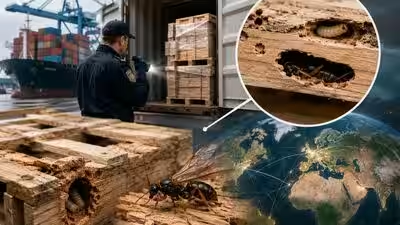
From 1952 to 2020, US inspectors recorded 2,562 woodwasp interceptions; researchers found wooden packaging was the dominant invasion pathway

When a shipment arrives at a port, inspectors are usually focused on what’s inside the containers. But sometimes, the biggest biosecurity risk isn’t the cargo at all, it’s the wooden pallet or crate carrying it.A new study published in Biological Invasions suggests that this has been the case for woodwasps, a group of wood-boring insects capable of spreading through international trade. After analysing decades of border inspection records from the United States, Canada and New Zealand, researchers found that wooden packaging materials were by far the most common pathway through which these insects crossed borders. The findings are based on one of the most comprehensive analyses of woodwasp interceptions to date, including 2,562 records collected by US inspectors between 1952 and 2020.
The packaging, not the product, was often the problem
The research team examined a total of 3,054 woodwasp interception records from three countries to understand how these insects have moved around the world over time. The pattern was striking.In the United States, nearly 98% of interceptions recorded before changes in reporting practices were linked to wooden packaging materials such as pallets, crates and dunnage. Similar trends appeared elsewhere, with packaging associated with more than 90% of interceptions in Canada and more than 84% in New Zealand.That finding may seem surprising at first. After all, woodwasps live inside wood, so it might be easy to assume that timber imports pose the biggest risk. Instead, the study points to the wooden materials used to transport everyday goods.Pallets and crates are often manufactured from low-grade wood, reused multiple times and shipped across countries and continents. If larvae are already hidden inside the wood, they can survive the journey unnoticed. By the time the shipment reaches its destination, the insects may still be alive, emerging only after the packaging has been unloaded.The researchers also found that later inspection records increasingly listed products such as machinery, ceramic tiles or metal goods. However, they believe the insects were most likely associated with the wooden packaging supporting those products rather than the cargo itself.
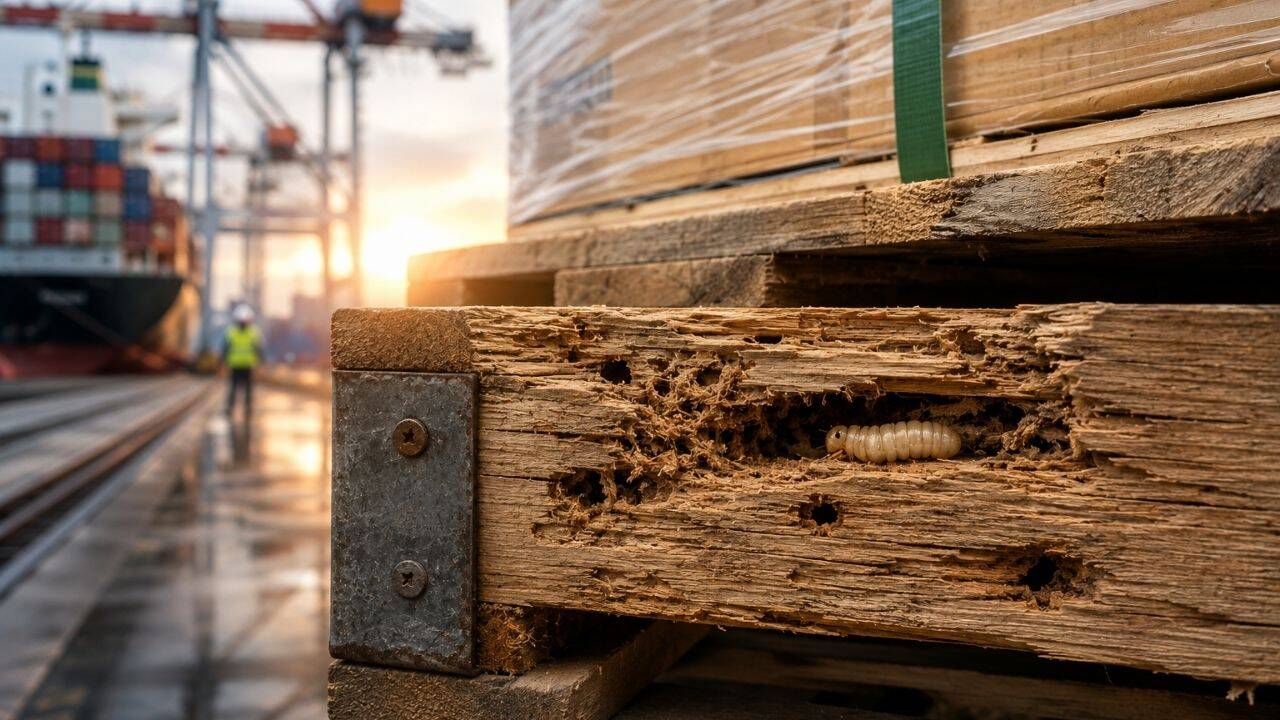
Image: AI-generated
Trade routes have changed, and so have the insects’ origins
The study also revealed how global trade influenced the origin of intercepted woodwasps. Earlier records were dominated by insects arriving from Europe and parts of Asia, regions where many woodwasp species naturally occur. As international trade evolved, inspectors increasingly encountered insects originating from countries where invasive woodwasps had already established populations.This points to what scientists call a “bridgehead effect.” Instead of spreading directly from their native habitats, invasive species can first establish themselves in one country before using that new location as a launching point for further expansion through trade.Even so, the researchers note that successful invasions remain relatively uncommon. Thousands of insects have been intercepted over the decades, yet only a limited number of woodwasp species have managed to establish permanent populations outside their native range.That is because arriving in a new country is only the first hurdle. The insects also need suitable host trees, favourable climate conditions and the ability to reproduce before they can become established.
A reminder that biosecurity starts with the basics
The findings reinforce why international rules governing wooden packaging remain so important. Today, many countries require wooden pallets and crates used in international trade to undergo treatments such as heat treatment or fumigation under the International Standard for Phytosanitary Measures No. 15 (ISPM 15). These measures are designed to kill insects and other pests before shipments leave their country of origin.According to the researchers, long-term interception records provide valuable evidence that these regulations target one of the most important pathways for woodwasp movement. They also help authorities identify changing trade patterns, detect potential gaps in compliance and monitor emerging risks.While woodwasps are just one group of forest insects, the study highlights a broader lesson about global trade. Sometimes the greatest biological threat isn’t hidden inside a shipment; it is built into the packaging that protects it.For scientists and biosecurity agencies alike, that makes the humble wooden pallet far more significant than it first appears. It serves as a reminder that preventing invasive species often begins with paying attention to the smallest and most overlooked parts of the supply chain.