Neutron scans of a 100-million-year-old Queensland ichthyosaur found fish, cephalopods and a pterosaur in its stomach; crushing bite marks point to giant Kronosaurus

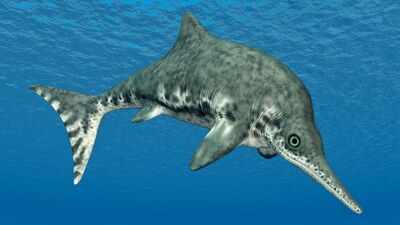
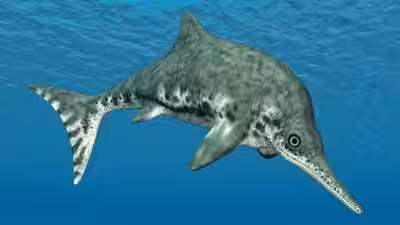
According to a study published in the journal Gondwana Research, supported by findings from the Australian Nuclear Science and Technology Organisation (ANSTO), neutron and synchrotron scans of a 100-million-year-old ichthyosaur fossil from Queensland have uncovered the marine reptile’s final meal, and clues to its violent end. Researchers found the remains of fish, cephalopods and part of a pterosaur preserved inside its stomach, while crushing bite marks suggest it was probably scavenged or attacked by the giant marine predator Kronosaurus queenslandicus. The fossil offers a rare glimpse into the complex food web of Australia’s ancient inland sea.A remarkably preserved fossil from northwestern Queensland has allowed scientists to reconstruct one of the most dramatic prehistoric stories ever captured in stone. By combining advanced neutron imaging with high-resolution synchrotron X-ray scans, researchers were able to examine the fossil without damaging it, revealing both what the ancient predator had eaten and what likely happened to it shortly afterwards.The fossil belongs to a large ichthyosaur, a dolphin-shaped marine reptile that lived during the Early Cretaceous period around 100 million years ago. Measuring between six and seven metres in length, the animal swam through the vast Eromanga Sea, which once covered much of inland Australia and supported a rich diversity of marine life.
Scans uncover the ichthyosaur’s last meal
The specimen, nicknamed “Bag of Bones” or “B.O.B.”, was discovered in 2019 by fossil hunters at a public fossicking site near Richmond, Queensland. During its preparation, scientists noticed several rock nodules preserved behind the skull. Rather than opening them mechanically, they turned to neutron tomography and synchrotron computed tomography to investigate their contents.The scans revealed an extraordinary collection of remains inside the animal’s stomach. Researchers identified bones belonging to fish and cephalopods, marine animals related to today’s squid and cuttlefish. Even more remarkably, they also found fragments of a pterosaur jaw.The discovery marks the first direct fossil evidence anywhere in the world of an ichthyosaur consuming a pterosaur. Scientists suggest the ichthyosaur most likely seized the pterosaur while it was floating or skimming the water’s surface, where pterosaurs often searched for fish, instead of hunting it in mid-air.The exceptionally preserved stomach contents provide a rare snapshot of the ichthyosaur’s feeding behaviour and show that its diet was more varied than previously documented.
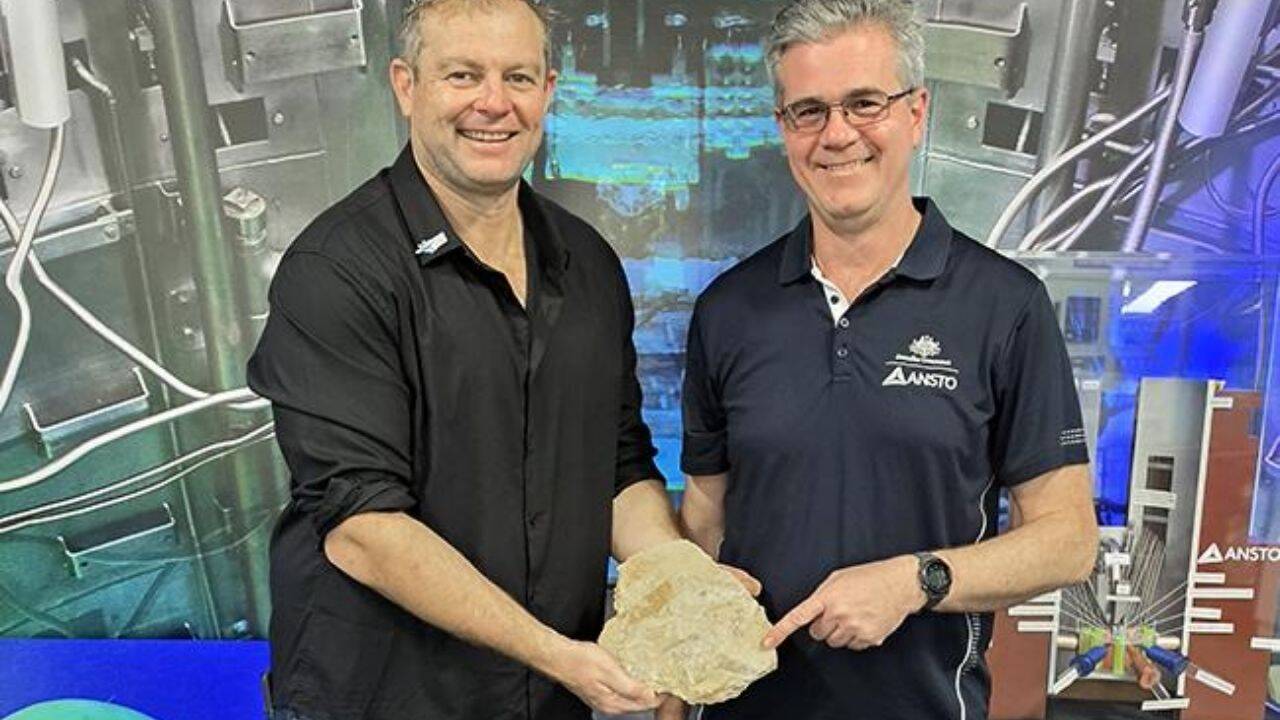
Fossilised stomach that was scanned (Image Credit: Australian Nuclear Science and Technology Organisation)
Bite marks point to a fearsome marine predator
While the stomach contents reveal the ichthyosaur’s final meal, its skeleton tells another story. Researchers found extensive crushing damage across several bones, including massive bite marks indicating the animal was attacked or scavenged after death. The injuries were too severe to have resulted from normal decomposition or fossilisation.Based on the size and pattern of the bite marks, the research team believes the most likely predator was Kronosaurus queenslandicus, one of the largest marine reptiles ever to inhabit Australia’s ancient seas. This enormous pliosaur possessed a massive skull and powerful jaws capable of crushing large prey with tremendous force.If this interpretation is correct, the fossil records a remarkable sequence. The ichthyosaur had recently eaten fish, cephalopods and a pterosaur before becoming the victim of an even larger apex predator.
A rare glimpse into an ancient ecosystem
Complete stomach contents are rarely preserved in fossils, making discoveries like this exceptionally valuable. Even rarer are specimens that preserve evidence of both an animal’s diet and the injuries that likely led to or followed its death.According to the researchers, the fossil provides one of the clearest pictures yet of the food web that existed in the Cretaceous Eromanga Sea. It shows that fish, cephalopods, flying reptiles and giant marine predators were all linked within a dynamic ecosystem where predators could quickly become prey.The discovery also demonstrates the growing importance of non-destructive imaging techniques in palaeontology. By using neutron and synchrotron scanning, scientists could examine structures hidden deep inside the fossil while leaving the specimen intact for future research.Beyond revealing the final moments of a single marine reptile, the Queensland ichthyosaur provides an extraordinary snapshot of life in Australia’s ancient inland sea. From its diverse last meal to the crushing bite marks left by a giant predator, the fossil preserves a prehistoric food web frozen in time.