
In 1991, America listed the razorback sucker as endangered; 35 years later, it has been moved to threatened after one population reached about 36,000 adults

US Fish and Wildlife Service has announced that the species will no longer be listed as endangered. Instead, it has been reclassified as threatened under the Endangered Species Act.Government agencies, tribal groups, conservation programmes, researchers and private organisations worked together for years to increase the fish’s numbers and improve its habitat.Although the species has shown strong signs of recovery, officials say it still faces several long-term threats and continues to need legal protection.The US Fish and Wildlife Service finalised the new rule on July 16. Along with changing the fish’s status from endangered to threatened, the agency also introduced a rule under Section 4(d) of the Endangered Species Act. This rule allows certain limited activities involving the fish when they are directly linked to conservation efforts.
A fish found only in Colorado River
The razorback sucker is one of the largest sucker fish species in North America. It is a freshwater fish that naturally lives in the warm-water parts of the Colorado River basin in the western United States.The fish is easy to recognise because of the raised, bony ridge behind its head, known as a keel. It can grow to more than three feet in length and weigh up to 10 pounds.It can survive in a wide range of water temperatures and river conditions. However, it is usually found in slow-moving areas such as backwaters, floodplains, flat stretches of rivers and reservoirs.Today, the species is found in Arizona, California, Colorado, Nevada, New Mexico and Utah. In the past, it also lived in Wyoming and in the Mexican states of Baja and Sonora.
More than 30 years of recovery
The razorback sucker was first listed as an endangered species in 1991 because its population had fallen sharply. According to the US Fish and Wildlife Service, its recovery is the result of more than 30 years of joint conservation efforts.Three major recovery programmes played a key role including the Upper Colorado River Endangered Fish Recovery Program, the San Juan River Basin Recovery Implementation Program and the Lower Colorado River Multi-Species Conservation Program.
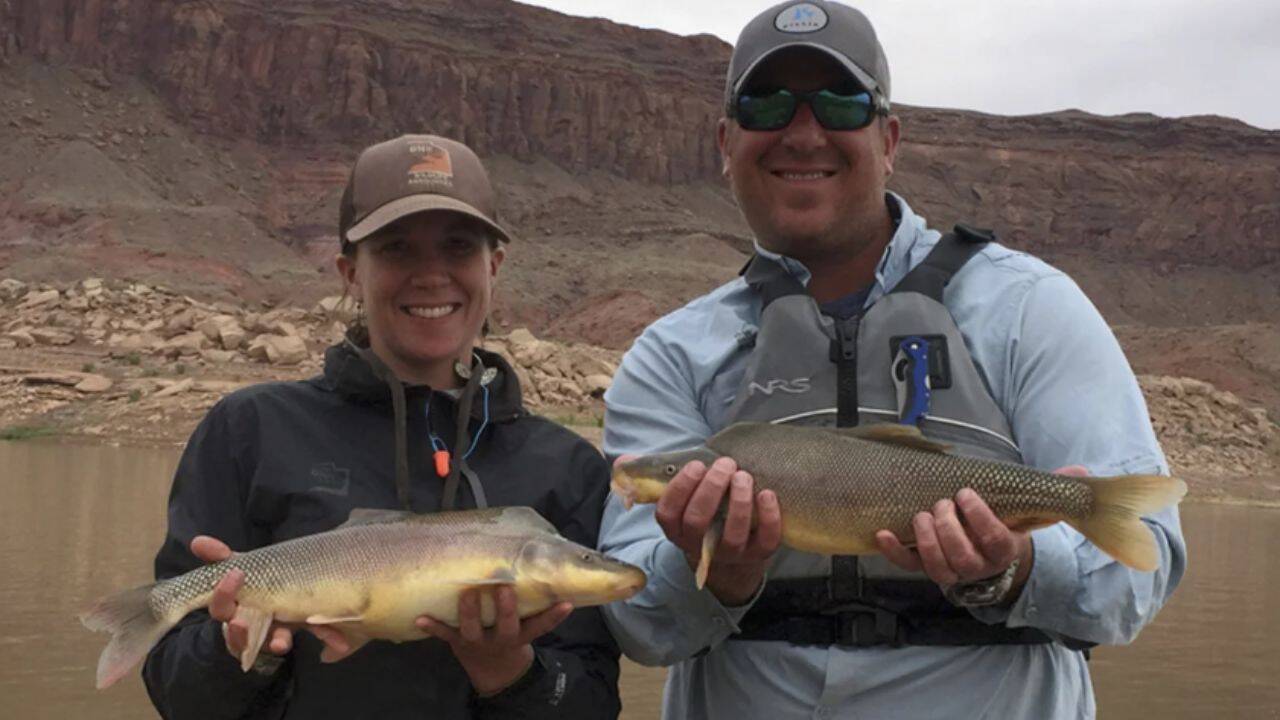
The recovery of razorback suckers was supported by a combination of different conservation actions (AP file photo)
The agency said many other partners also contributed to the effort. These included state, regional, tribal and federal organisations, along with private companies and non-profit groups.Together, they carried out several conservation measures aimed at increasing the fish’s numbers and improving the river environment where it lives.
What helped the fish recover
Officials said the recovery was supported by a combination of different conservation actions. One important method was propagation and stocking, in which the fish were bred and raised before being released into suitable rivers to strengthen wild populations.Another major effort involved controlling non-native fish species. These are fish that do not naturally belong in the Colorado River basin but compete with or prey on native species such as the razorback sucker.The work also focused on restoring habitats, maintaining enough water flow in rivers, and carrying out regular research and monitoring. These steps helped improve conditions in parts of the Colorado River basin where the fish had historically lived.As a result, the razorback sucker is now found in eight different populations across the basin. Four of these populations are able to migrate and reproduce in more than one location.The biggest success has been seen in the Green River, which forms part of the upper Colorado River basin. According to the US Fish and Wildlife Service, this population now has around 36,000 adult fish. In comparison, there were only about 100 wild fish there in the late 1990s.
Why is the fish still listed as threatened?
Although the species has recovered enough to move out of the endangered category, officials say it still faces several risks. One continuing problem is changes in river flow. Rivers no longer flow in the same way they once did, reducing the shallow nursery habitats where young fish grow.The species is also affected by changes in water quality and the amount of water available. Long periods of drought continue to put pressure on rivers across the western United States. Another major threat comes from non-native fish that prey on razorback suckers or compete with them for food and space.Alongside the change in status, the agency also finalised a rule under Section 4(d) of the Endangered Species Act. This rule provides protections that are specifically designed for the razorback sucker while allowing certain activities that support its recovery.According to the agency, the rule allows limited take of the fish for conservation-related work. In wildlife law, ‘take’ is a legal term that can include actions such as handling, capturing or moving animals under controlled conditions.Activities covered under the rule include maintaining refuge populations, displaying the fish for educational purposes, creating nursery habitats, removing non-native fish and developing catch-and-release fishing opportunities.