
In 1967, an ecologist predicted tropical mountains would trap heat-sensitive species; nearly 60 years later, tests on over 100 beetles support his warning

Imagine yourself living on a mountaintop where the climate has been almost unchanged for thousands of years. Life evolves with amazing precision; generation after generation adjusts to cool , predictable temperatures. But then the world starts to warm. The mountain that was once a refuge slowly transforms into a trap, and its inhabitants are left with no cooler refuge.“This could happen,” warned renowned ecologist Daniel Janzen nearly six decades ago, states a report published by Phys Org. In a seminal paper in 1967, he argued that tropical mountain species, which are adapted to stable climates, would find it much harder to cope with rising temperatures than species from more variable environments. It was a bold ecological theory in those days. Now scientists studying tiny rove beetles in Costa Rica have found compelling evidence that his prediction was eerily on target, nearly 60 years later. The new study, published in the Proceedings of the National Academy of Sciences (PNAS), sheds light on how climate change may be quietly threatening some of Earth’s richest ecosystems—one insect at a time.
A Natural Climate Laboratory
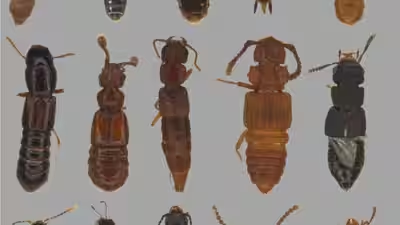
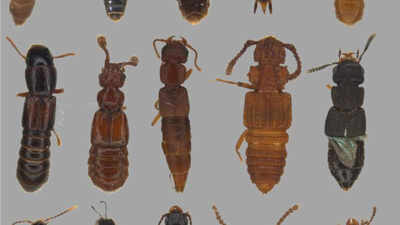
The study was carried out in the Área de Conservación Guanacaste (ACG) of Costa Rica, a UNESCO World Heritage Site famous for its exceptional biodiversity. In just 1,500 metres of elevation, the landscape swings from hot tropical dry forest to lush rainforest to cool cloud forest.The steep environmental gradient enabled researchers to study over 100 species of rove beetles, one of the most diverse groups of insects on the planet, living at different elevations on Volcan Cacao. Scientists slowly heated beetles to determine how these insects deal with temperature — and what their upper limit of heat tolerance is. Two groups were put under cold conditions and their recovery rates from a cold-induced coma were measured. Many of the beetle species have yet to be formally named, so researchers used DNA barcoding to accurately identify them.
A Theory That Has Weathered the Test of Time
Beetles in the cool cloud forests had the lowest heat tolerance
In 1967 Daniel Janzen published a paper called “Why Mountain Passes Are Higher in the Tropics” and introduced a revolutionary idea to tropical ecology. He says tropical species experience relatively constant temperatures year round, compared to temperate species that are used to shifting seasons. Consequently, tropical organisms have evolved a narrow thermal tolerance, enabling them to survive within a limited temperature range. The new research provides strong support for this decades-old theory.The beetles in the cool cloud forests had the lowest heat tolerance and were thus most vulnerable to the warming temperatures slowly creeping uphill, the researchers found. “The adaptations that enabled this extraordinary biodiversity may also make it especially susceptible to rapid climate change,” said corresponding author Dr. M. Alex Smith, University of Guelph.
Different Elevations, Different Risks
Scientists estimate that only around 1% of the rove beetle species on Volcán Cacao have formal scientific names
Interestingly, the study found that insects on the mountain face different climate challenges. Cloud forest beetles, accustomed to cool conditions all the time, are ill equipped to survive warmer temperatures. Over time, these species may run out of suitable habitat as climate zones move upslope. In the meantime, the beetles living in the hot lowland forests are not necessarily safer. Scientists found they are already living dangerously close to their maximum thermal limits, but can handle higher temperatures. A little more heat might have been sufficient to push them beyond their limits of survival. Many beetles, unlike birds or mammals, have limited mobility and therefore cannot just move long distances to find cooler environments. The research builds on decades of biodiversity monitoring in the Guanacaste Conservation Area.Since 2013, scientists have been taking temperature readings every 15 minutes all over the mountain, providing one of the most detailed long-term climate records for a tropical ecosystem. Combining the data with almost two decades of beetle collections and biodiversity surveys, scientists were able to see, like never before, how changing temperatures affect insect physiology. What is perhaps even more remarkable is how little we know about it. Scientists estimate that only around 1% of the rove beetle species on Volcán Cacao have formal scientific names, underscoring the amount of undocumented tropical biodiversity.
Tiny Beetles, Big Climate Message
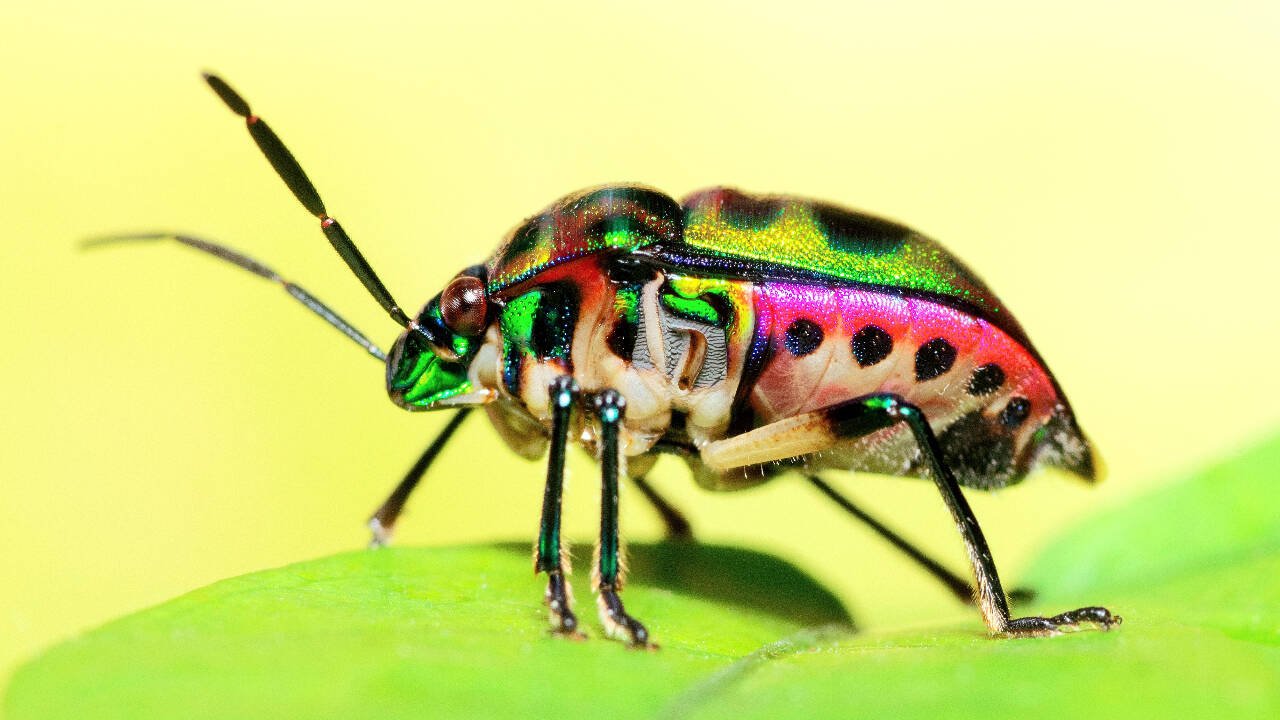
any of the beetle species have yet to be formally named, so researchers used DNA barcoding to accurately identify them.
However, when the researchers compared their findings to the largest database in the world on insect heat tolerance, they found something unexpected. Previous studies have shown that elevation has little effect on heat tolerance in land insects. But rove beetles in Costa Rica told a different story, revealing a steep decline in heat tolerance with increasing elevation.Images Courtesy: istock and Phys Org