German scientists discovered naturally occurring microbes that removed 95% of dissolved uranium from contaminated water |

A team of scientists has uncovered a naturally occurring microbial process that could change how uranium-contaminated water is cleaned up. Studying bacteria living in the flooded Königstein uranium mine in Germany, the researchers discovered that certain microorganisms can transform highly soluble uranium into a rare, stable mineral that remains locked in place instead of spreading through groundwater. In laboratory experiments, the microbes removed around 95% of dissolved uranium over 130 days, raising the possibility of using naturally occurring bacteria as an environmentally friendly tool for remediating radioactive pollution. The findings provide fresh insight into how microbial communities influence uranium chemistry and could help shape future clean-up strategies for contaminated mine sites and aquifers worldwide.
Scientists uncover an unexpected uranium-transforming microbial pathway
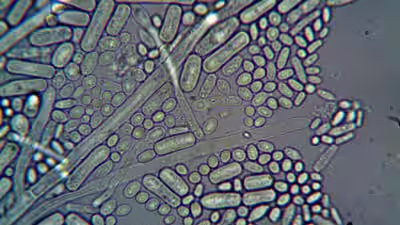
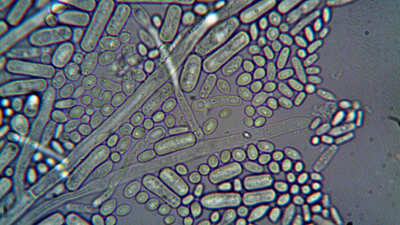
The research “Pentavalent and tetravalent uranium formation via glycerol-stimulated bacteria in mine water“, published in Nature Communications, focused on microbial communities naturally inhabiting water inside the flooded Königstein uranium mine in eastern Germany. Rather than introducing engineered organisms, the team investigated bacteria that had already adapted to living in an environment heavily contaminated with uranium.When supplied with glycerol under oxygen-limited conditions, these microbes triggered a previously unknown sequence of chemical reactions. Instead of leaving uranium dissolved in the water, they converted it into FeU(V)O₄, a rare iron-uranium mineral containing pentavalent uranium. Advanced X-ray spectroscopy and electron microscopy showed that the bacteria also produced tetravalent uranium before incorporating the radioactive element into mineral deposits associated with their cell walls.By the end of the 130-day experiment, approximately 95% of the dissolved uranium had been removed from the mine water.
Why turning uranium into a mineral is scientifically important
Most uranium dissolved in groundwater exists in a chemical form that readily moves through soil and water, increasing the risk of environmental contamination. Immobilising uranium has therefore become a major goal of remediation efforts around former mines and nuclear sites.The newly discovered microbial process achieves this by converting soluble uranium into a crystalline mineral that remains chemically stable even after exposure to oxygen. This stability is particularly significant because many uranium minerals produced by bacteria can become unstable when environmental conditions change, allowing contamination to spread once again.The researchers suggest that the newly identified mineral could represent a far more durable form of long-term uranium storage in contaminated environments.
A biological alternative to expensive clean-up technologies
The removal of uranium from polluted water is achieved through chemical precipitation, use of ion exchange, or special filtration techniques. Although the processes achieve high success, they are usually expensive and create dangerous secondary waste which needs treatment.A new method is provided through the microbial process, which makes it possible for the naturally occurring bacteria to perform the task of remediation. The provision of glycerol to the microbes was sufficient to give the bacteria the energy required to precipitate the dissolved uranium into minerals.Though still in the experimental phase, the technology may eventually prove to be a good complementary remediation technology.
Implications for contaminated groundwater worldwide
The problem of uranium pollution persists in areas where there have been uranium mines and operations involving nuclear power, such as in Germany, the United States, Canada and Australia. Groundwater polluted by soluble uranium is considered dangerous for ecosystems and human health due to the fact that this metal is toxic and radioactive.It is believed that the results obtained by the scientists show the potential of naturally existing microbial communities as collaborators in environmental remediation projects in the future. Additional research will be required to establish if the procedure can be implemented under various environmental circumstances.In case of success, this invention may become an addition to environmental bioremediation, showing how microbes can reshape the chemistry of radioactive elements in ways that benefit both ecosystems and public health.