
Europe is becoming too hot for some cold-blooded snakes, but one region could become their last major refuge


A new ecological modelling study suggests that climate change could reshape where Europe’s snakes can survive, with cold-adapted species facing the greatest risk. While much of Western Europe may become less suitable over time, the Balkan Peninsula could emerge as one of the most important refuges for snake diversity.The research looked at 31 European snake species and used climate and land-cover data to project how their habitats may change across two future periods, 2041–2060 and 2061–2080, under both moderate and high-emissions scenarios. The overall picture is worrying: for many snakes, especially those that rely on cooler conditions, rising temperatures and drought could force major range contractions.
Why snakes are so exposed
Snakes are ectotherms, which means they depend on the environment to regulate their body temperature. That makes them especially vulnerable when heat rises, rainfall patterns shift and the landscape becomes drier or more fragmented.The study explains that many snake species depend on stable thermal niches, and those niches are becoming harder to find in a warming Europe. When suitable habitat disappears, snakes cannot simply “adapt” overnight;they need places to move, shelter and reproduce, and climate change can disrupt all three at once.
Western Europe looks increasingly hostile
One of the clearest findings is the sharp decline in habitat suitability across Western Europe, particularly in the Iberian Peninsula and France. These regions are projected to become hotter and drier, which is especially difficult for cold-tolerant snakes.Species such as Vipera berus and Vipera seoanei stand out as especially vulnerable. The study suggests their ranges could shrink significantly, and in some areas the pressure may become severe enough to raise extinction concerns.That does not mean every snake in Western Europe will vanish. But it does mean the balance is shifting, and species that once had enough cool, moist habitat may increasingly struggle to find the conditions they need.
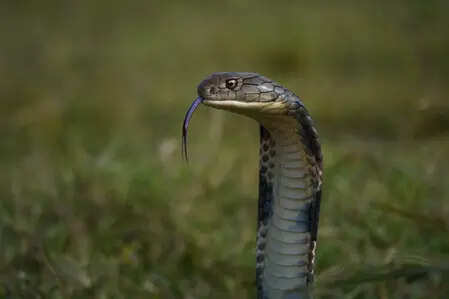
Representative image
The Balkans could become a lifeline
While much of the west trends downward, the Balkans tell a very different story. The region’s rugged mountains, varied elevations and mix of Mediterranean and continental influences create a patchwork of microclimates that can buffer species against heat stress.The study identifies the Balkan Peninsula as a likely climate refugium, a place where snakes may continue to find suitable conditions even as surrounding regions become less hospitable. In fact, some heat-tolerant species, including Dolichophis caspius, may do especially well there.That does not make the Balkans immune to climate change. But it does make the region strategically important for future conservation, because topography and climate diversity can give species room to persist when flatter, hotter landscapes cannot.
Not all snakes face the same risk
The researchers grouped the species into four broad ecological categories: Iberian, Balkan, cold-tolerant and other. This matters because climate change does not affect all snakes equally.Cold-adapted species were the most clearly separated from heat-tolerant taxa in the study’s analysis, with temperature and precipitation emerging as the main limiting factors. In other words, the snakes most tied to cooler, wetter conditions are the ones most likely to be squeezed as Europe warms.This kind of species-level detail is useful because conservation planning often happens too broadly. A continent-wide strategy may miss the fact that one snake can tolerate heat well while another cannot survive without a narrow temperature window.
Habitat loss and fragmentation add pressure
Climate change is only part of the problem. The study also warns that habitat fragmentation can make things worse by limiting how far snakes can move when their current habitats become unsuitable.If a species needs to shift uphill, northward or into a cooler pocket of land, roads, farms and urban expansion can block the way. That means even areas that remain climatically suitable may not be reachable.This is why the authors emphasize the importance of structurally diverse landscapes. Places with mixed terrain, microhabitats and natural shelter can offer more resilience than simplified environments that heat up quickly and leave little room for escape, according to EureAlert!
What conservation should focus on
The study’s message is not just that snakes are in trouble. It is that conservation can be more effective when it focuses on places most likely to remain stable under climate stress. That means protecting areas with microclimatic refugia, maintaining habitat connectivity and preserving landscapes that give snakes room to move.For Europe, that could mean prioritising the Balkan Peninsula and other topographically complex regions as long-term safe zones for reptile diversity. It could also mean paying closer attention to the cold-adapted species in Western Europe that are likely to be hit first and hardest.This kind of planning is especially important because reptiles often receive less attention than mammals or birds in climate policy discussions. Yet for snakes, the changes may be swift, silent and irreversible if action comes too late.
Why this study matters
This research offers a practical look at how warming may redraw Europe’s wildlife map. It does not just predict loss; it also identifies where future survival may still be possible. That makes it valuable for scientists, policymakers and conservation groups trying to act before declines become crises.The bigger lesson is simple: climate change is not affecting every place equally. Some regions will become ecological pressure points, while others may turn into shelters for species pushed out elsewhere. For Europe’s snakes, the Balkan Peninsula may be one of those rare shelters, and protecting it could make a major difference