Marcus Aurelius: 1,800-year-old Roman camp linked to Marcus Aurelius found in Slovakia; possible soldiers lay in pits and wells with armour left behind

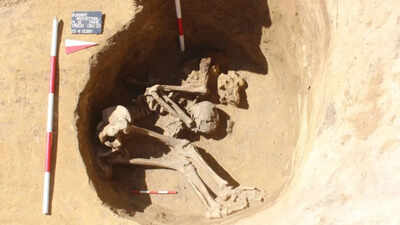
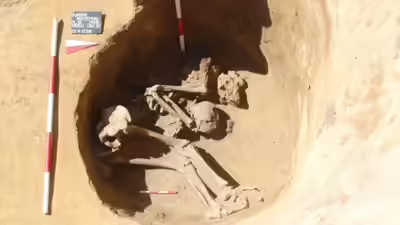
Archaeologists in Slovakia have uncovered the remains of a large Roman military camp that may have been used by the army of Emperor Marcus Aurelius during wars against Germanic tribes nearly 1,850 years ago. The discovery is unusual not only because of the size of the camp but also because of the way Roman soldiers were buried there.Researchers found skeletons and parts of skeletons in shallow graves, defensive ditches and even inside wells. Alongside the human remains, they also uncovered Roman weapons, armour, coins and the remains of military sandals, giving fresh evidence about a military campaign that took place in the late second century AD.The excavation took place near the town of Surany in southwestern Slovakia. Archaeologists say the findings could help them better understand the Marcomannic Wars, a series of conflicts fought by the Roman Empire under Marcus Aurelius against Germanic tribes living north of the Danube River.
Rare camp uncovered
The remains of the Roman military camp were uncovered over an area of around 7.4 hectares, or about 18.2 acres. The excavation was carried out by MH Invest together with the Institute of Archaeology at the Slovak Academy of Sciences (SAS).According to researchers, the camp had all the features expected in a Roman military installation. It included five entrance gates, strong defensive structures and a curved ditch-and-rampart system that was commonly used to protect Roman marching or legionary camps.The discovery surprised archaeologists because such camps are rarely found almost completely preserved.“We have a unique opportunity to explore practically an entire Roman marching camp, which is extremely rare in the European context,” Matej Ruttkay, director of the SAS Institute of Archaeology, said in a statement, Live Science reported.“We are clearly investigating a place that disappeared immediately after the military conflict between the Romans and the Germans,” he added.
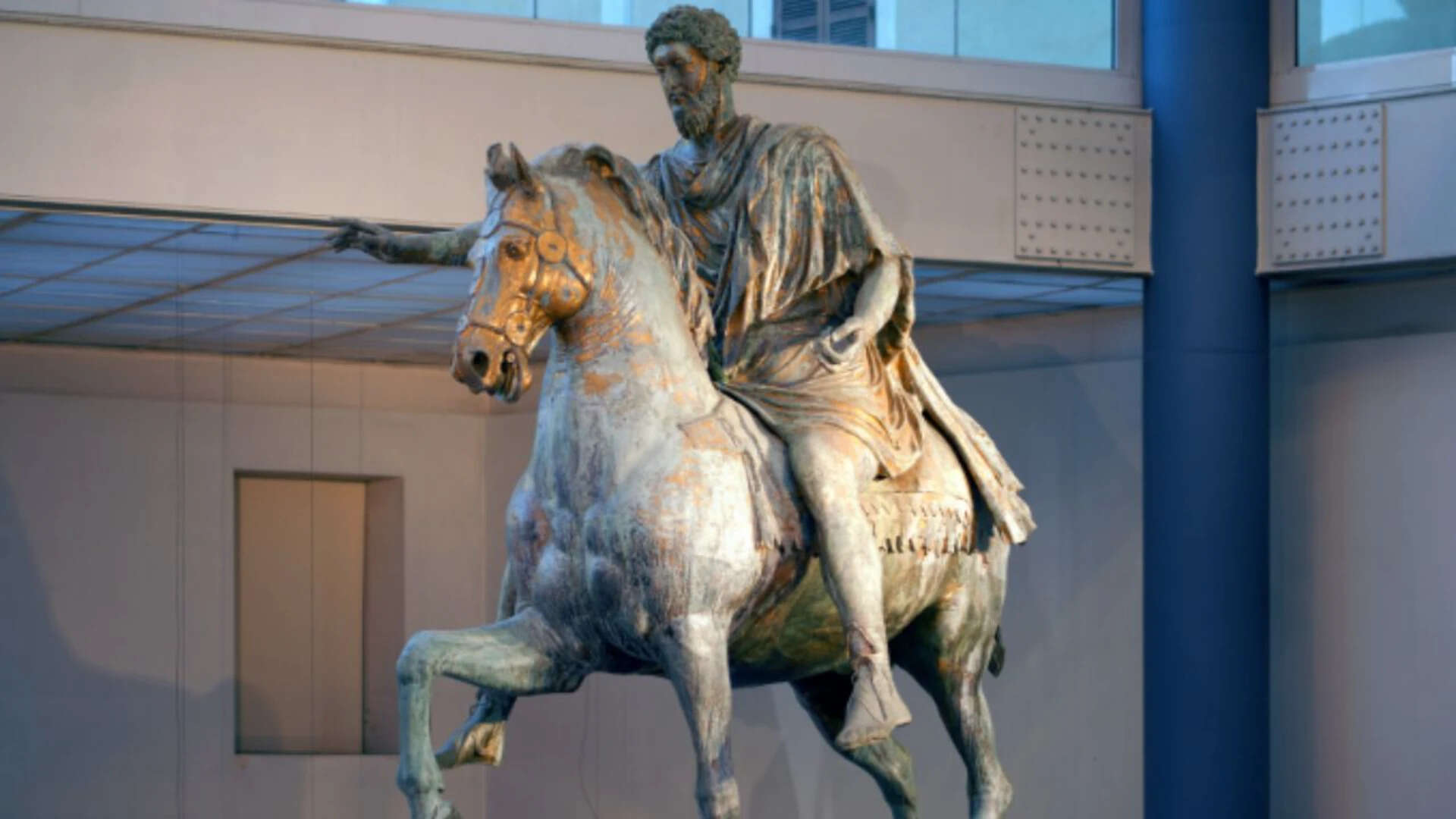
Equestrian Statue of Marcus Aurelius (Capitoline Museums, Rome)
Links to Marcus Aurelius
The newly discovered camp is believed to date to the Marcomannic Wars, which were fought between AD 166 and 180. During this period, Roman forces battled the Marcomanni, a Germanic people who lived north of the Danube in areas that are now part of Slovakia and the Czech Republic.Marcus Aurelius, who ruled the Roman Empire from AD 161 to 180, personally led military campaigns during these wars. His aim was to defend Rome’s northern frontier from repeated invasions by Germanic tribes.The conflicts came to an end after Marcus Aurelius died in AD 180. His son, Commodus, later reached a peace agreement with the Marcomanni, according to the ancient Roman historian Cassius Dio.The Surany camp is only the second Roman military site ever discovered in western Slovakia. The first one, found by SAS archaeologists in 2024, is believed to be the place where Marcus Aurelius wrote part of his famous philosophical work Meditations.
Skeletons in unusual places
One of the most striking discoveries at the site was the large number of human remains. Instead of finding organised cemeteries, archaeologists uncovered skeletons and parts of skeletons buried in shallow pits, defensive ditches and even inside wells.The unusual burials suggest that the dead may have been buried quickly after a major event, although researchers do not yet know exactly what happened.“Our preliminary findings indicate that in most cases these are Roman soldiers,” archaeologist Marek Vojtecek of the SAS Institute of Archaeology said in the statement.The skeletal remains were found together with several pieces of Roman military equipment.“Numerous components of Roman military equipment and weaponry were also found with the skeletal remains, such as spears, arrowheads, parts of helmets, segmented and scale armour, legionary brooches, coins, and the characteristic ‘caligae’ military sandals, from which iron nails on the soles have been preserved,” Vojtecek said.These discoveries strengthen the view that the people buried at the site were members of the Roman army.
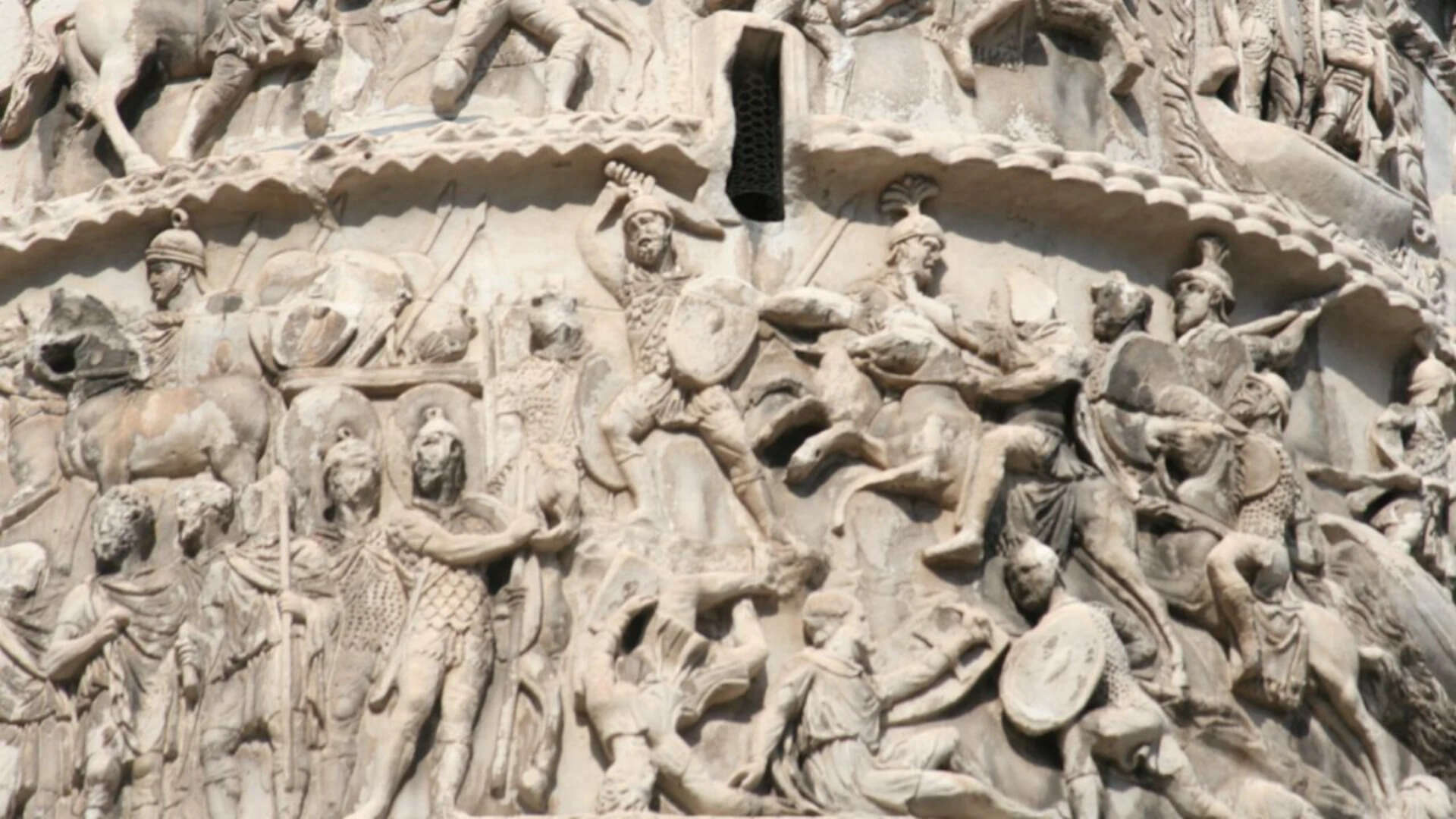
Detail from the Column of Marcus Aurelius in Rome.
Sandals reveal remarkable detail
Among the discoveries, researchers were particularly excited by the remains of Roman military footwear.Although the leather parts of the sandals had disappeared over time, the iron nails fixed into their soles survived because they became enclosed inside blocks of clay.Scientists used X-ray analysis to examine the clay blocks and identify the original pattern of the sandal nails without damaging them. The preserved remains have now been moved to the specialised laboratory of the SAS Institute of Archaeology for further study.“It is literally a miracle to see the original footwear of a Roman soldier and even to be able to determine its size,” archaeologist Michal Cheben said.The sandals, known as caligae, were standard footwear worn by Roman soldiers during long military campaigns. Their distinctive iron-studded soles made them easier to identify during excavation.
Mysteries remain
Although the excavation has uncovered important evidence, researchers say the site has also raised several new questions. One major mystery is why the soldiers were buried in such unusual places instead of receiving formal burials.Scientists also want to know whether the soldiers died in battle, from disease or because of some other event. Another unanswered question is why valuable military equipment remained with many of the bodies. Normally, weapons and armour were collected and reused after battles, making such discoveries uncommon.“Laboratory analyses and further genetic and anthropological research may provide answers,” Cheben said.