
Invasive plants may be boosting mosquito numbers in lower-income areas, showing how neighbourhood vegetation can quietly shape public-health risks

Low-income urban neighbourhoods in Baltimore and Washington, DC, have higher mosquito numbers partly because of the types of trees growing on their streets and in empty lots, according to new research published in the Journal of Medical Entomology.The study, co-authored by scientists at the Cary Institute of Ecosystem Studies and led by Dr Sarah Rothman, a former postdoctoral researcher at the University of Maryland, shows that rotting leaves from invasive, nonnative plants commonly found in poorer areas give mosquito larvae a rich food source. This diet helps the young insects survive longer, grow up faster and, in some cases, develop larger bodies as adults, making them better at spreading dangerous viruses.
Wealth gap in tree cover
For years, disease experts noticed a confusing pattern in Baltimore. Wealthier neighbourhoods had thick, varied tree cover, yet poorer areas consistently had larger swarms of aggressive, disease-carrying mosquitoes.This difference comes from years of public and state underinvestment. Slower-growing native trees like elms and maples are regularly planted and cared for in wealthier areas. On the other hand, empty lots and uncared-for spaces in low-income areas are often overtaken by fast-growing, nonnative weeds and trees.“We wanted to understand if differences in tree canopy might help explain why we found more abundant and larger mosquitoes in some neighborhoods,” explained Dr Shannon LaDeau, a Cary Institute disease ecologist and co-author who has studied Baltimore’s environment since 2011. “Our earlier studies demonstrated that you’re more likely to find nonnative plants in neighborhoods with lower housing values and more abandoned lots.“
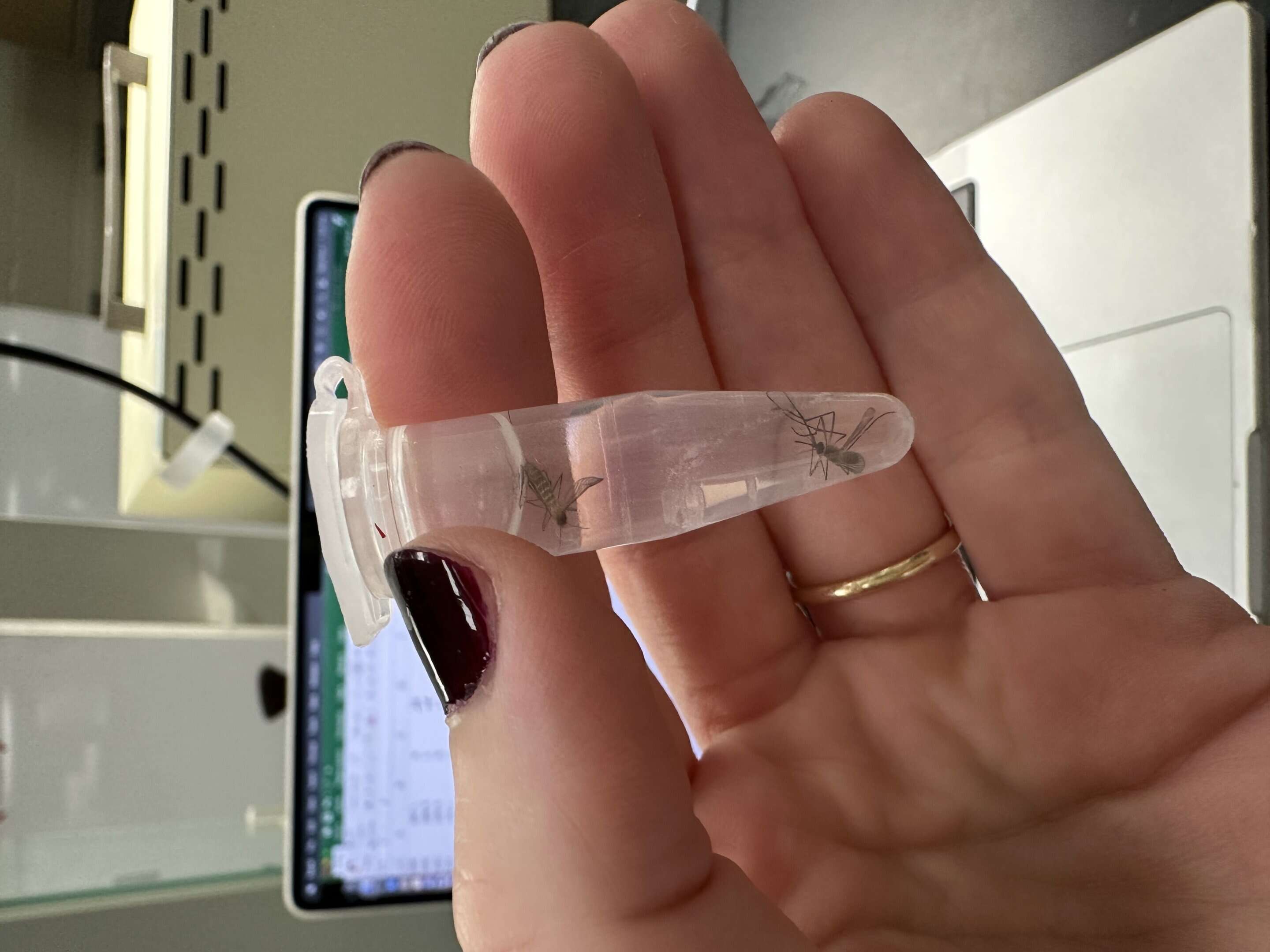
Mosquitoes raised on leaf litter from low-income areas were more likely to survive (Credit: Sarah Rothman)
How leaf water breeds bigger insects
Mosquito larvae do not eat leaves directly. Instead, they eat the bacteria that break down plant bits sitting in water-filled containers like old tyres, buckets and rubbish bins.To test how local plants change this food chain, the team gathered fallen leaves from common trees across Baltimore, Washington, D.C., and Capitol Heights, Maryland. They made three different “leaf teas” in the lab:
- Low-income neighbourhood mix: Leaves from two common nonnative species, tree-of-heaven (Ailanthus altissima) and princess tree (Paulownia tomentosa).
- High-income neighbourhood mix: Leaves from two native trees common in wealthier areas, American elm (Ulmus americana) and red maple (Acer rubrum).
- Common mix: Leaves from species found across both types of areas, white mulberry (Morus alba, nonnative) and black walnut (Juglans nigra, native).
Researchers soaked the leaves for five days before adding mosquito eggs. They tested two invasive species: the Asian tiger mosquito (Aedes albopictus), which carries dengue, Zika and yellow fever, and the common house mosquito (Culex pipiens), which spreads West Nile virus.“The hardest part of doing this type of lab experiment,” said Rothman, “was getting hundreds of mosquito eggs to hatch in synchrony so we could start many containers at the same time for comparison.”
Unexpected laboratory results
The results showed a clear link between nonnative leaves and stronger insect growth. Larvae raised in leaf mixtures with at least one nonnative species grew faster and were more likely to survive.The nonnative leaf diet also reduced competition between the two mosquito species, letting both live together in the same water container. Female Asian tiger mosquitoes raised on the nonnative leaf tea also grew longer wings, which shows a bigger body size. Larger adult mosquitoes usually live longer and bite more often, making them better at spreading disease.Researchers think there are two main reasons for this boost. First, invasive plants often have more nitrogen, making their leaves break down quickly and release nutrients for bacteria early in the larvae’s life. Second, because these invasive trees and mosquitoes both come from similar habitats in Asia, the insects may naturally do better eating those specific leaves.
New ideas for mosquito control
In the past, public health officials thought higher mosquito numbers in low-income areas were mostly down to physical issues, like extra trash lying around or more stray animals providing food for mosquitoes.“Scientists have found multiple reasons that explain why mosquito infestations are worse in low-income areas, often having to do with quantity—for example, more containers to breed in or more rats to feed on,” said Rothman. “We’re showing that quality matters, too. Municipal governments and residents can use this information when deciding which trees to plant along streets or in yards.”The research shows that simple city planting plans could bring big public health benefits. City councils could help cut down mosquito numbers simply by replacing invasive plants with native young trees.Looking ahead, the research team plans to test other tree species to see if the findings hold true across larger city areas. Co-author Dr Jane Lucas, a community ecologist at the Cary Institute, noted that while total bacteria levels were similar across the test cups, future work will look at the specific types of bacteria growing in different leaf mixtures.“Our findings suggest that mosquito control agencies could better predict where infestations may occur by surveying the local vegetation,” said LaDeau. “They also provide hope that governments and city residents can protect public health in low-income communities by replacing nonnative plants with native ones.”The research is titled Leaf litter characteristic of low-income urban blocks improves population performance of Aedes albopictus (Diptera: Culicidae) and Culex pipiens mosquitoes.