

Woman given wrong blood after accident; hospital’s unusual defence fails before consumer panel

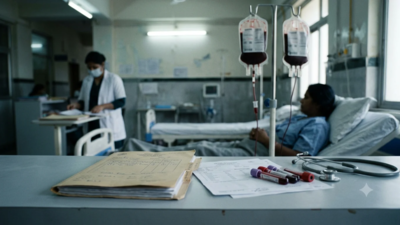
NEW DELHI: A district consumer commission in Chhattisgarh has directed a hospital and two doctors to pay Rs 5.1 lakh to a woman who was allegedly given blood of the wrong group during treatment after an accident. The commission found that the woman had B-positive blood but was given AB-positive blood, causing her physical distress and putting her life at risk.The commission passed the order on September 29, 2026, holding the hospital and the two doctors responsible for deficiency in service and negligence. It directed them to pay Rs 5 lakh as compensation for mental agony and Rs 10,000 towards legal expenses within 45 days.What happened during the woman’s treatment?As per the commission order, Madhu Khakha was returning to Raipur from Bilaspur with her daughter and other family members on February 16, 2014, when their car collided with a truck.Khakha suffered a fracture in her thigh bone and was taken to Balaji Institute of Medical Sciences in Raipur for treatment. She alleged that the hospital began treatment after Rs 25,000 was deposited at the time of admission.The next day, doctors ordered several tests, including a blood group test. The hospital’s report identified her blood group as AB-positive, and arrangements were made for three units of AB-positive blood.However, Khakha alleged that she told the hospital staff that her blood group was B-positive. According to her complaint, the staff did not take her warning into account and proceeded with the transfusion.She further alleged that she began shivering soon after the blood transfusion started. Her condition worsened, and she began vomiting and lost consciousness. The blood supply was stopped, and she was given further treatment.The complaint also claimed that blood-like discharge appeared in her urine. The woman was later told that the wrong blood group had been transfused and that her fracture surgery would have to be postponed.Khakha and her family eventually decided to leave the hospital on February 24, 2014, and seek further treatment elsewhere because they had lost confidence in the hospital.Commission’s findingThe bench of president Dakeshwar Prasad Sharma along with members Anil Kumar Agnihotri and Nirupama Pradhan examined the medical records, blood test reports and the hospital’s defence. The hospital and doctors denied negligence, arguing that the woman had been admitted not only for a thigh fracture but also for other serious injuries suffered in the accident.They claimed that her condition was unstable and that medical complications during a state of shock could affect blood group testing. They also argued that the blood transfusion had been stopped after she developed a reaction.The commission, however, examined the blood test reports produced by both sides. It noted that the hospital’s report dated February 17, 2014, recorded Khakha’s blood group as AB-positive. A later report dated February 20 showed her blood group as B-positive.The commission also referred to a medical opinion sought from the civil surgeon-cum-chief hospital superintendent of the district hospital in Pandri. The expert was asked whether a person’s blood group could change because of surrounding medical circumstances.The response was that a person’s blood group could not change due to such circumstances. The commission therefore did not accept the hospital’s explanation that the difference in blood group could be justified by the woman’s condition.The commission also noted that Khakha had complained of shivering and other physical distress after the transfusion began, but the hospital staff had not paid adequate attention to her condition.The commission said that the woman’s account showed that she had begun experiencing physical distress after the transfusion started, but the staff continued giving her blood despite her condition worsening.It further observed that the hospital’s defence that only two to five drops of blood had been transfused before the reaction was not supported by the medical evidence placed before it. The commission noted that the hospital had not produced evidence to establish its explanation for the conflicting blood group results.“On examining the above questions and answers, the defence taken by the opposite parties cannot be accepted as medically justified. The expert has stated that a blood group cannot change due to surrounding circumstances,” the commission concluded.The commission held that Khakha had B-positive blood but was given AB-positive blood, resulting in physical and mental suffering. It said the hospital and doctors had shown serious negligence during her treatment.Khakha had sought Rs 19 lakh as compensation for mental agony and Rs 50,000 towards legal expenses. She had also sought the return of Rs 25,000 allegedly deposited when she was admitted to the hospital.The commission found that the claimed Rs 25,000 had not been supported by a bill, so it did not order its refund. It also considered the larger compensation claim excessive, but held that the woman had faced mental distress and a risk to her life because of the wrong blood transfusion.The commission observed that giving a patient blood of an incompatible group could lead to a serious, potentially fatal reaction if not treated promptly. It therefore held the hospital and doctors liable to compensate her.The commission’s translated conclusion was that the opposite parties had provided AB-positive blood even though the woman’s blood group was B-positive, amounting to deficiency in service and unfair conduct.Final orderThe District Consumer Disputes Redressal Commission, Raipur, partly allowed Khakha’s complaint and directed the hospital and two doctors to:
- Pay Rs 5 lakh as compensation for mental agony.
- Pay Rs 10,000 towards legal expenses.
- Make the payments within 45 days of the order.
The compensation and legal expenses are payable jointly and severally by the opposite parties. The commission did not direct them to refund the Rs 25,000 admission payment because the woman had not produced a bill to prove that amount.The order holds the hospital and doctors responsible for negligence in the treatment, while limiting the compensation to the amounts the commission found justified by the material before it.