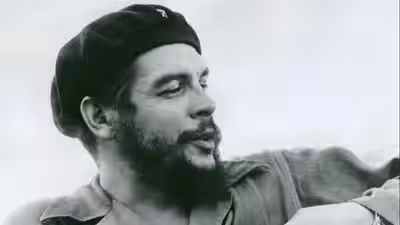

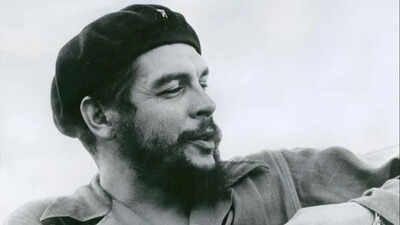
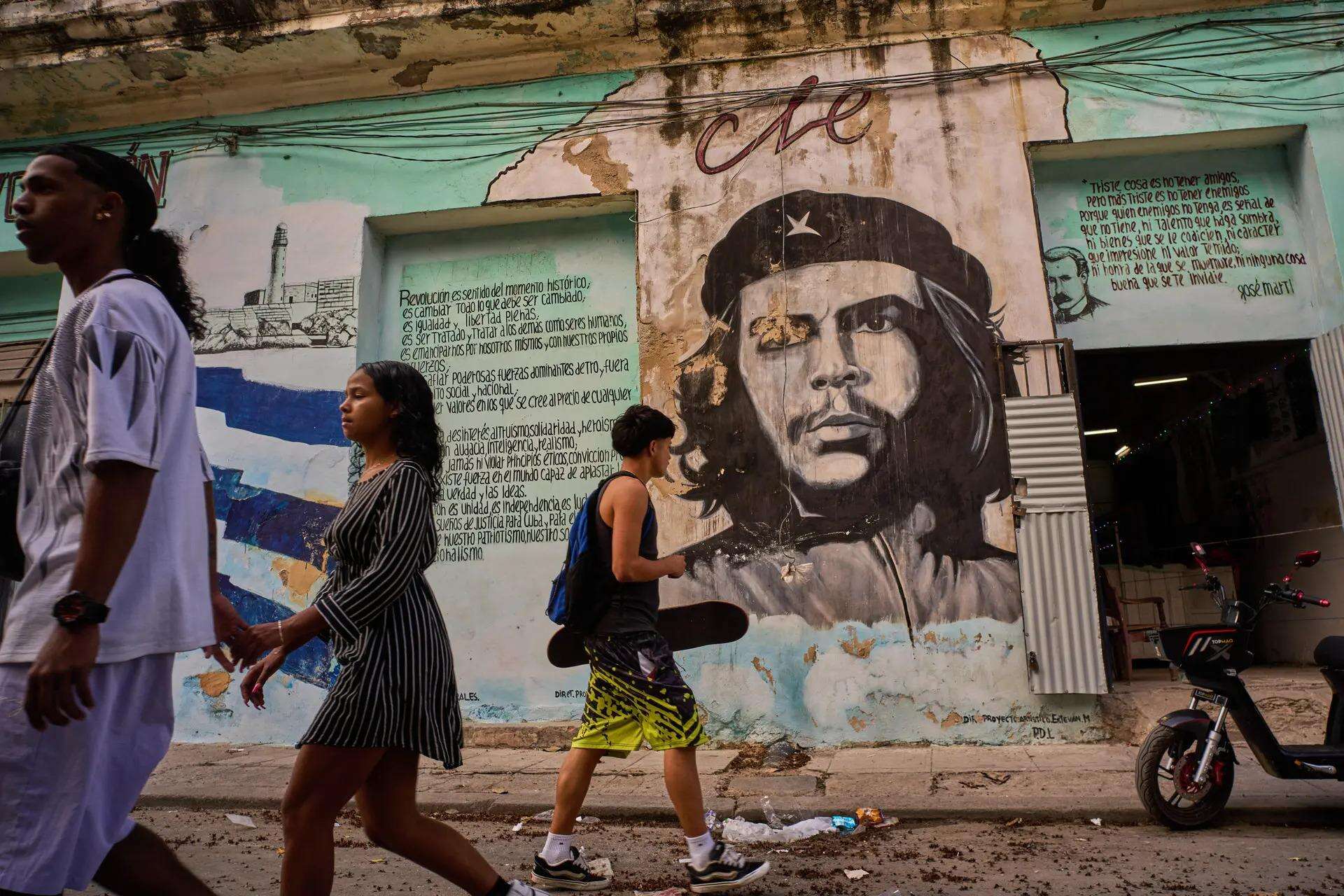
“I know you are here to kill me. Shoot, you are only going to kill a man.”Nearly six decades after his death, Che Guevara is still 39 – and still on T-shirts.Like Marilyn Monroe, Kurt Cobain and Bob Marley, Che has remained frozen in time, forever young in the public imagination. The grey hair never came, the face never aged and he is always dressed for battle.With his beret and unruly hair, his image still appears on T-shirts, coffee mugs and protest banners, turning the Argentine-born revolutionary into an enduring symbol for generations of young rebels.
The doctor who wanted to treat the world
Ernesto Guevara de la Serna was born in Rosario, Argentina, in 1928. He studied medicine but was swept towards the dream of revolution. In 1951, he set out on a trip with his friend Alberto Granado on La Poderosa II around South America. His experience with poverty, sickness and exploitation – documented in The Motorcycle Diaries – turned a restless medical student into a committed Marxist.Along the way, he picked up the nickname “Che”, which loosely translates to ‘yaar’ in Hindi.In 1954, he met Fidel Castro and became his most trusted field commander during the 1956-58 guerrilla war that overthrew Cuban dictator Fulgencio Batista.
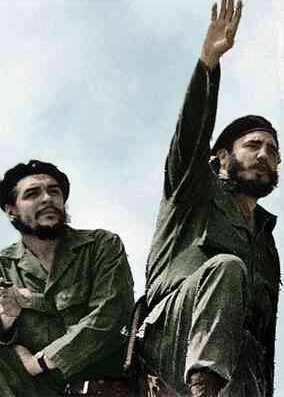
After the January 1959 victory, he held key posts in Castro’s government. He became the head of the national bank and industry minister and helped push Cuba towards a Soviet-aligned, centrally planned system. He also became the leading theorist of foco warfare, the belief that a small, disciplined armed group could ignite a wider uprising.Cuba’s declining economy, US sanctions and Che’s radicalism brought him into conflict with the Cuban leadership. In 1965, he eventually resigned from the Cuban government and vanished from public view.From Cuba, he went to Congo to support the liberation movement founded by Patrice Lumumba. The effort, however, fizzled out and he landed in Bolivia in hopes of turning the country into the base of a continent-wide revolution.
The Bolivian campaign
Guevara arrived in Bolivia in November 1966, in disguise. He established the National Liberation Army of Bolivia with plans to win over peasants in the country and eventually challenge President René Barrientos.He had dreamed of bringing his version of revolution to the heartland of South America while he was fighting in the Sierra Maestra of Cuba a decade earlier.“I’ve got a plan. If some day I have to carry the revolution to the continent (South America), I will set myself up in the forest at the frontier between Bolivia and Brazil. I know the spot pretty well because I was there as a doctor. From there it is possible to put pressure on three or four countries and, by taking advantage of the frontiers and the forests, you can work things so as never to be caught,” Che had once written.However, the plan didn’t work. By October 1967, Che Guevara’s Bolivian guerrilla campaign was collapsing. His small band was exhausted, short of food and increasingly isolated from local support.Meanwhile, the US CIA was closing in on the revolutionary following his disappearance from Havana.
How Che was captured
On October 8, Bolivian forces, trained and assisted by the United States, cornered the guerrillas near the village of La Higuera. Guevara was wounded in the fighting.He was shot in the leg and the rifle was knocked from his hands. Unable to continue, he surrendered.“Do not shoot! I am Che Guevara and worth more to you alive than dead,” he reportedly told the soldiers.The captured guerrilla leader was then taken to a one-room schoolhouse in La Higuera, where he was held overnight. The next day, CIA operative Félix Rodríguez, a Cuban American working with the Bolivian military, found Guevara inside.
‘I should have never been captured alive’
Washington wanted Guevara kept alive for interrogation. But Bolivia’s military leaders decided that a public trial would turn him into an even greater revolutionary symbol. They ordered his execution and planned to claim that he had died in combat.In an interview many years after the incident, Rodríguez recalled telling Guevara that he was going to be killed.According to Rodríguez, the guerrilla leader accepted his fate and said, “It’s better this way. I should have never been captured alive.”He then instructed the soldier assigned to carry out the execution to shoot Guevara below the neck, so his death could be presented as the result of battlefield wounds.“I know you’ve come to kill me. Shoot, you are only going to kill a man,” Che told Sgt. Jaime Terán, the man tasked with killing him.The bullets struck Guevara in the arms, legs and thorax. The 39-year-old guerrilla leader died on October 9.Bolivian soldiers took his body to Vallegrande and laid it on a hospital laundry sink, where journalists and photographers were allowed to see and photograph him.Authorities also ordered his hands cut off so his fingerprints could be taken and used to establish his identity.Within days, news of his death reached Washington. A memorandum to US President Lyndon B Johnson concluded: “This removes any doubt that ‘Che’ Guevara is dead.”Fidel Castro later told a massive crowd in Havana that those who believed Guevara’s death had defeated his ideas were mistaken.“They are mistaken who believe that his death is the defeat of his ideas,” Castro said.
Che returns to Cuba
Thirty years later, a team of Cuban specialists and Argentine forensic experts located a mass grave beneath an airstrip in Vallegrande. The remains were exhumed and Che’s skeleton was identified along with those of several of his fallen comrades.In 1997, Che’s remains were flown to Havana, where Fidel Castro presided over a televised ceremony at San Antonio de los Baños airbase. Che’s daughter handed the urns containing the remains to the Cuban state.The remains then lay in state at Havana’s Plaza de la Revolución before being taken to Santa Clara, the city where Che had helped secure a decisive victory during the 1958 Cuban Revolution.On October 17, Castro led the final burial at the newly built Che Guevara Mausoleum in Santa Clara. In a ceremony watched across Cuba, he made clear that the occasion was not meant to mark the end of Che’s story.“We have not come to say goodbye to Che,” Castro declared. “We have come to welcome him.”