For every 30 Chinese AI researchers moving to the US, only one went to China; migration expert warns: The danger for the US is… |

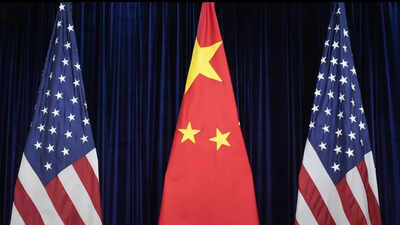
The US-China race for artificial intelligence is usually measured in chips and frontier models. A new study measures it in people, and the flow still runs heavily one way. For every 30 Chinese-origin AI researchers working in the United States in 2025, only one US-trained researcher was working in China, according to the Carnegie Endowment for International Peace. In 2022, that ratio stood at 46 to one.The gap is narrowing, but slowly, and a migration expert says the headline number may be hiding the real problem. “The danger for the U.S. is a slow erosion of its appeal to attract talent that compounds over decades,” said Yingyi Ma, a sociology professor at Syracuse University who studies Asian students in America. “By the time the effect shows up in the data, it is hard to reverse.”Her point rests on timing. The study tracks where researchers studied and where they work now, but not when they moved. Most made that call years before the Trump administration tightened student visas, added a $100,000 fee to new H-1B petitions and cut federal research funding.For now, the US still wins the head count. The share of Chinese-origin talent among AI researchers working in America rose four percentage points to about 36%, said Damien Ma, director of Carnegie China, who led the study. The US recorded a net gain of 2,145 elite researchers, while China posted a net loss of 1,729.
China now produces more top AI researchers than any other country
The study, titled “Who’s Ahead in the Global AI Talent Race?”, follows 10,280 authors whose papers were accepted at NeurIPS 2025, one of the most selective machine learning conferences in the world. The team traced each author’s undergraduate degree, graduate school and current employer, using Claude Code and OpenAI Codex to process the data with human checks at every stage.The results show how fast China’s base has grown. Scientists who earned undergraduate degrees in China made up 57% of the sample, up 11 percentage points since 2022, while the US share fell to 13%. China has also overtaken the US as the top place where this talent works, at 41% against 34%.Universities tell the same story. Peking University ranked first for AI research output, followed by Tsinghua. Google, which topped the 2022 list, slipped to seventh. Twelve Chinese institutions made the top 30, double the count three years earlier.
A booming home industry and travel curbs are keeping Chinese AI talent at home
Retention is where China has gained the most. Around 69% of China-trained researchers now work in China, up from 57% in 2022, though that still trails the US at 89%.Part of the pull is prestige. Kevin Xu, founder of hedge fund Interconnected Capital, said a job at DeepSeek now carries the same professional weight as one at OpenAI, a big shift from five years ago.Part of it is control. Beijing barred the two founders of Manus from leaving the country after Meta agreed to buy the startup, and later ordered the deal unwound. Last month, reports said travel curbs on top AI and chip executives at private firms had been widened to require government approval even for short trips by their spouses and children.China has also tried to court outsiders, launching a K visa for young STEM graduates in October 2025. It has not worked so far. Only 118 researchers trained elsewhere moved to work in China, per the study. Returnees remain rare, though Tencent’s hiring of former OpenAI researcher Yao Shunyu as chief AI scientist stood out.
South Korea and Singapore are the other big winners in the AI talent race
Away from the two superpowers, smaller Asian hubs are pulling ahead. South Korea keeps 77% of its homegrown AI researchers, the second-highest retention rate after the US. KAIST jumped 12 places to rank third among the top 30 institutions.Singapore has become a magnet of its own. It posted a net gain of 218 researchers, second only to America, and many of those arrivals came from China. National University of Singapore and Nanyang Technological University both broke into the top 20, while Europe’s ETH Zurich and Oxford dropped off the list altogether.Which brings the story back to the 30-to-one figure. It reflects choices made before the visa crackdown, and on that count America remains the clear winner. Whether the next cohort chooses the same way is what the data cannot show yet.