Delhi Police Bodycams: Amid SIR protests, Delhi Police issue body-worn cameras to frontline personnel | Delhi News

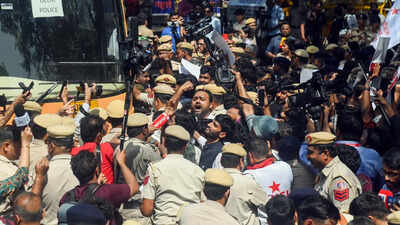
NEW DELHI: Delhi Police has issued body-worn cameras to officers and personnel deployed on the frontline in the New Delhi area amid allegations of excesses during recent protests, while a Public Interest Litigation (PIL) filed before the Delhi high court has sought directions to make body-worn cameras mandatory for Delhi Police and Rapid Action Force (RAF) personnel deployed for crowd control and protests.The bodycams have been issued particularly to personnel involved in crowd management and security arrangements around protest sites and roads leading to the Election Commission of India office, an official source said on Tuesday.
Delhi HC PIL seeks mandatory bodycams for police, RAF
The PIL has sought directions making body-worn cameras mandatory for Delhi Police and RAF personnel deployed during protests and crowd-control operations.The plea comes amid heightened scrutiny of police conduct during recent demonstrations in the capital.
Delhi Police bodycams to record protest action
A police source said the bodycams would help maintain a real-time video record of events and interactions between police personnel and protesters, besides providing evidence if allegations are made against officers on duty.“The bodycams are important, particularly when officers are dealing with large crowds, and there are allegations from either side. The recordings can help establish what happened during a protest,” the source said.
Bodycams issued amid SIR protests in Delhi
The move comes amid heightened security in the New Delhi, Central Delhi and North Delhi districts following a series of demonstrations against the Election Commission over the Special Intensive Revision (SIR) exercise.Police and paramilitary personnel have been deployed in large numbers, while multilayer barricades have been placed at several points to prevent protesters from entering restricted areas.
Three women journalists allege sexual harassment during protest
The deployment of bodycams assumes significance following complaints of alleged sexual harassment and manhandling made by three women journalists during a protest against Chief Election Commissioner Gyanesh Kumar at Jantar Mantar on October 2.The journalists alleged that police personnel behaved inappropriately with them. One of the complainants alleged that an officer sexually assaulted her.The New Delhi district police received the complaints and transferred them to the Crime Branch for a fair and impartial inquiry, an officer said.The investigating agency is expected to examine the allegations and record statements of the complainants and other persons concerned.The complaints also led to protests by independent journalists and others outside Parliament Street police station, with demonstrators demanding registration of an FIR and examination of CCTV footage of the alleged incidents.No FIR had been registered in the matter, according to police sources.
Police bodycams aimed at improving accountability
The use of bodycams is also aimed at strengthening accountability during law-and-order deployments, particularly as police personnel increasingly manage protests involving large groups of political workers, students and civil society members.The recordings could provide investigators with an additional source of evidence while examining complaints against police personnel or allegations of misconduct by protesters, the source said.
Delhi Police asks journalists to carry identity cards
Delhi Police has also issued an advisory for journalists covering protests, asking them to carry valid identity cards.“Journalists covering protests to carry valid identity cards issued by their respective organisations or valid PIB/DIP accreditation cards, and keep them visibly displayed at all times to facilitate identification by law enforcement at protest sites,” the Delhi Police said.In the advisory, police also said media personnel should ensure that their presence or activities do not obstruct police operations or the movement of law enforcement personnel.(With PTI inputs)