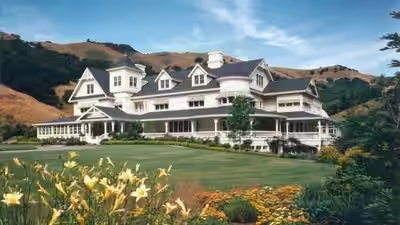
George Lucas began buying California ranchland in 1978; the holdings expanded to nearly 5,000 acres, with a 50,000-square-foot main house, more than a dozen buildings, and Skywalker Sound at its core

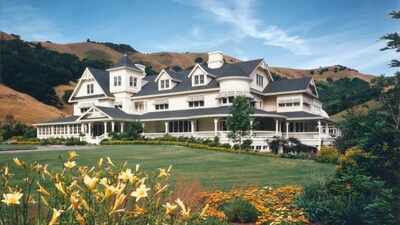
First, it was just a dairy ranch tucked away in a quiet Marin County valley. Today, it is a 4,700-acre moviemaking retreat, with its own fire brigade, a vineyard and a lake named after the Ewoks!In 1978, filmmaker George Lucas bought the first parcel of what would eventually become Skywalker Ranch, using money he had made from Star Wars. All he wanted was a private filmmaking haven away from Hollywood. Nearly five decades later, that idea has grown into a sprawling creative compound with more than a dozen buildings, a 50,000-square-foot main house and Skywalker Sound at its heart. But despite its futuristic name, the ranch looks like an old Northern California estate, with Victorian architecture, gardens, farmland and handcrafted details woven into the landscape.“I’ve never been into science fiction,” the creator of Star Wars told AD. His penchant for Victorian and Mission architecture is evident on the ranch. “My taste has always been romantic. I think my heart lies at about the year 1910. I love that style.” The ranch is also home to his Skywalker Sound facility, an extensive research library.
A Victorian-style house at the centre
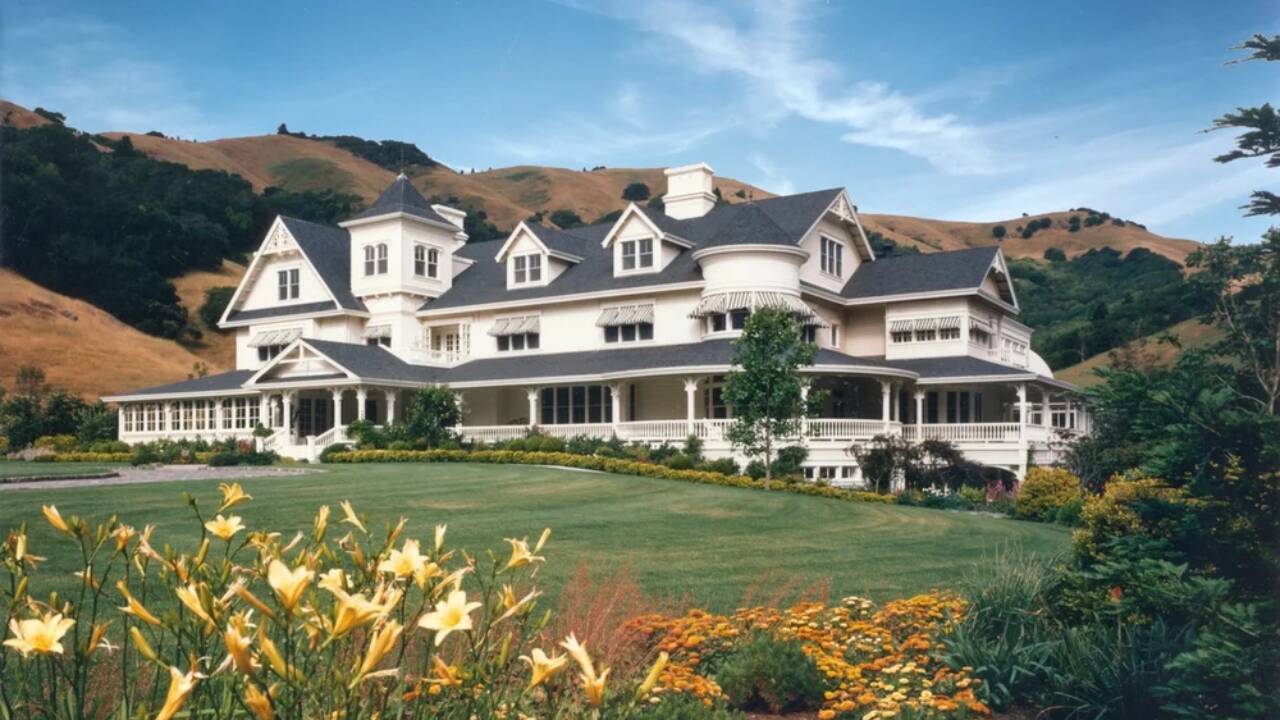
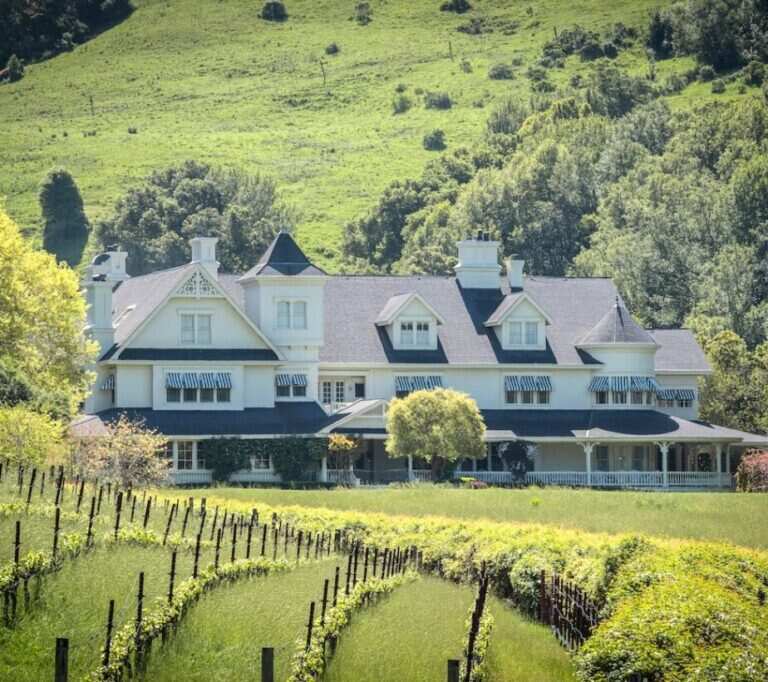
The centrepiece is a Victorian-style main house finished in 1985. The main house spans 50,000 square feet, more than an acre under one roof, according to the LA Times. Lucas does not live there. It is a space dedicated to his work and business meetings. “I’ve always worked out of my house. I think a lot of writers do. It’s just a much more friendly atmosphere, more comfortable and calming. I wanted a nice, quiet place to come up with ideas, because, really, we’re in the ideas business. So when I got the opportunity and the wherewithal to do it, I thought, Well, I’m going to do it myself,” he told the outlet.The creamy white house was designed in the style of a grand Victorian residence, complete with turrets, verandas, stained glass and fireplaces. Lucas also did his filmmaker thing. He created a fictional history for the building. In his version, it was built in 1869 and extended in 1910 with a library wing in the style of the architects Greene and Greene. To make it look real, he set up an art-glass studio and a mill shop on the grounds. Hired craftsmen built the staircase and stained-glass windows there. “I’ve always been a frustrated architect. But I couldn’t get past the maths,” he said. Nothing here is accidental.
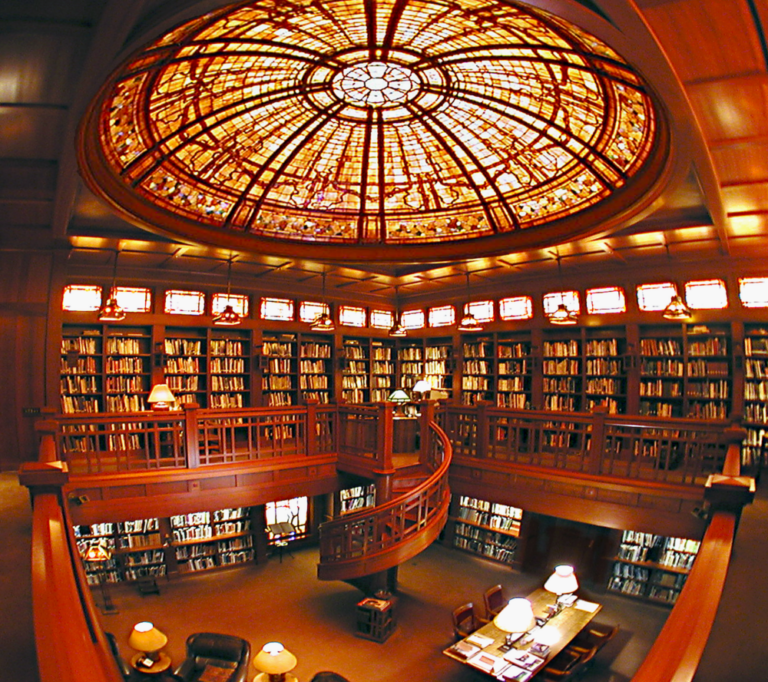
The ranch also has a research library. It has a leaded-glass dome and redwood shelves made from timber salvaged from an old bridge. Lucas bought the book collections of both Paramount and Universal. The shelves cover military history, costumes and insects, along with a large geography section.
Skywalker Sound
In 1987, Skywalker Sound moved onto the ranch. It operates from the Technical Building beside Lake Ewok. It is a building dressed up to look like an ivy-covered brick winery. The studio, set against the backdrop of picturesque mountains, is a dream place for the technicians as well. “In the morning, there’s mist coming up from Ewok Lake, and there’s dew on everything. It’s kind of crazy-beautiful. It looks like a very well-shot movie, just driving up to it,” award-winning sound designer and re-recording mixer Bonnie Wild, who started work at the studio in 2012, said.
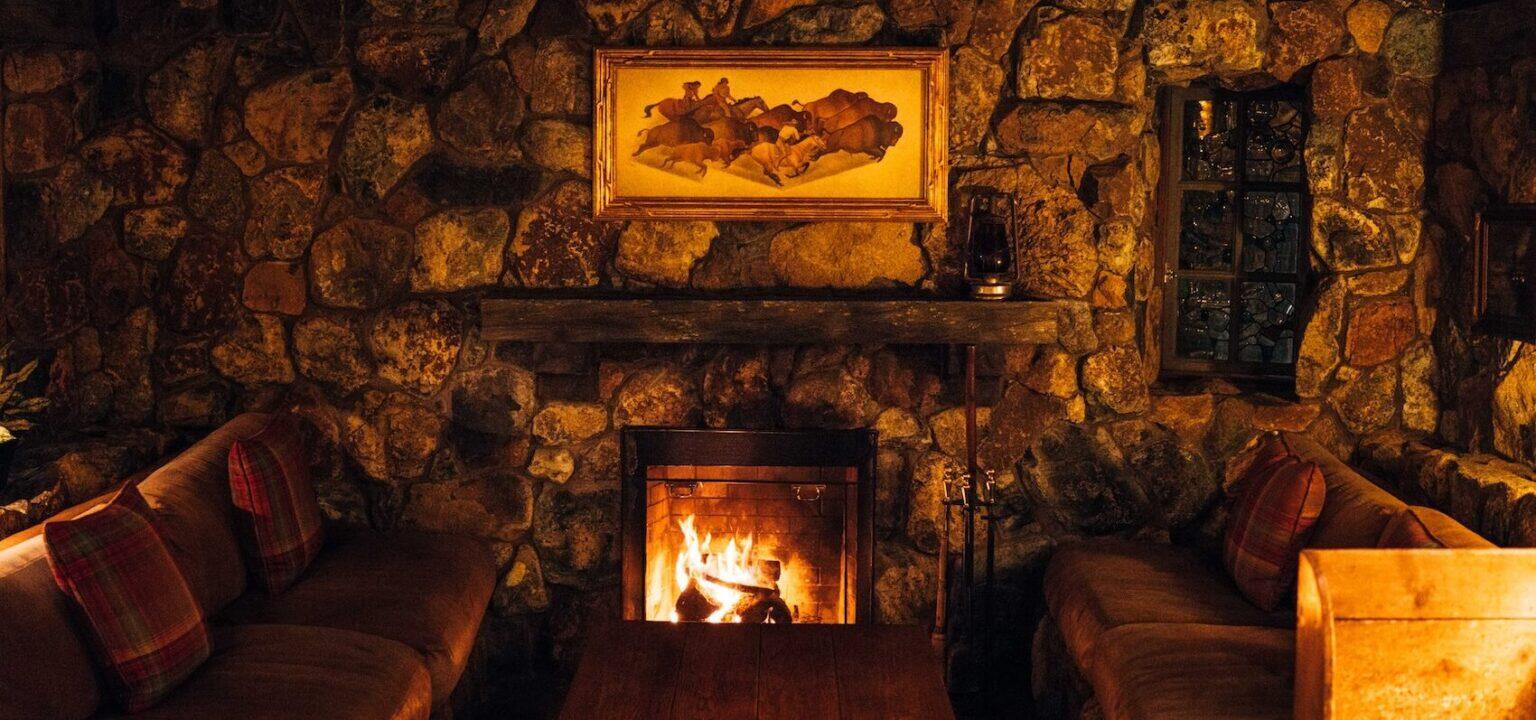
Directors have long used the place as a retreat. James Cameron, Philip Kaufman and Clint Eastwood are among the visitors to Skywalker Sound. The guests stay at an on-site inn where rooms are themed after people Lucas admires. The John Ford room allows smoking because, well, Ford smoked. The Frank Lloyd Wright room displays a rare Wright drawing of a resort that was never built. The inn is the place where art meets comfort.The ranch also has three restaurants, a 35-seater theatre and a health club with yoga and Pilates classes. An organic garden, olive grove and vineyard add to the feeling of a self-contained rural community. The grounds are also home to horses, goats, chickens, Texas longhorns and even a Vietnamese pot-bellied pig named Betty Boop.Nearly five decades after Lucas began assembling the land, the ranch remains one of the most unusual filmmaking environments in the world. It is a working studio, a retreat and an architectural fantasy, with hints of the past that Lucas always wanted to inhabit.