
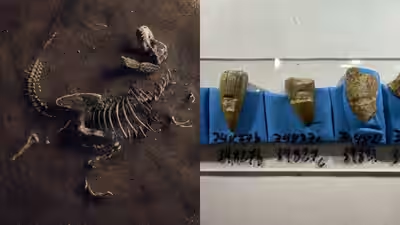
Fossil teeth from ancient North American coastlines suggest some dinosaurs supplemented land diets with seaweed and other marine food, revealing a coastal feeding link that existed more than 100 million years ago

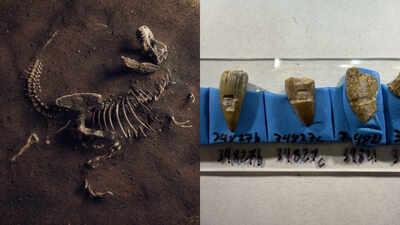
More than 100 million years ago, the boundary between land and sea may have been a little less distinct than it looks on a map. Along the ancient coastlines of North America, storms regularly swept marine material onto beaches, creating an unexpected source of food for animals living on land. A new research suggests that some dinosaurs and the animals they fed on may have taken advantage of this coastal buffet, incorporating nutrients that ultimately came from the ocean into their bodies. The finding offers evidence that marine and terrestrial food webs were connected during the Cretaceous, much as they are in some coastal ecosystems today, states a news report by Phys Org. Scroll down to read the interesting details of the findings.
Following the carbon trail
The study, published in Frontiers in Ecology and Evolution, examined the chemical signatures preserved in fossil teeth. Researchers focused on carbon isotopes, particularly the ratio between carbon-12 and carbon-13, which can provide clues about an animal’s food sources. As per the study, pants growing on land generally have lower carbon-13 values than many marine plants. When animals consume them, those chemical signatures are carried through the food chain and can become locked into tissues such as tooth enamel. Dinosaur teeth, however, have long presented something of a puzzle. Their carbon isotope values are often higher than expected for animals relying entirely on land-based vegetation. That raised the possibility that some dinosaurs, directly or indirectly, were consuming food that originated in the sea.
A prehistoric version of marine subsidization
The study provides the first evidence identified by the researchers for marine subsidization in prehistoric ecosystems. It also adds another layer to understanding how animals survived in the greenhouse climates of the Cretaceous.
The researchers examined fossils from ancient coastal environments associated with the Western Interior Seaway, a vast inland sea that divided North America during the Cretaceous. They also studied material from the ancient Gulf of Mexico coastline and compared it with fossils from inland environments. The samples came from formations dating to two periods: roughly 113–107 million years ago and 100–96 million years ago. Fossils included dinosaurs as well as fish and crocodiles, allowing the researchers to look for similar dietary patterns across different parts of the food web.The results revealed a striking geographic pattern. Fossils from coastal environments consistently showed higher carbon-13 values than those from landlocked sites. The pattern appeared across different coastal locations and persisted across the periods represented in the samples. That consistency suggests the signal was not simply the result of geological changes affecting fossils after burial. Instead, it points towards what the animals were eating.
Seaweed emerges as the likely link
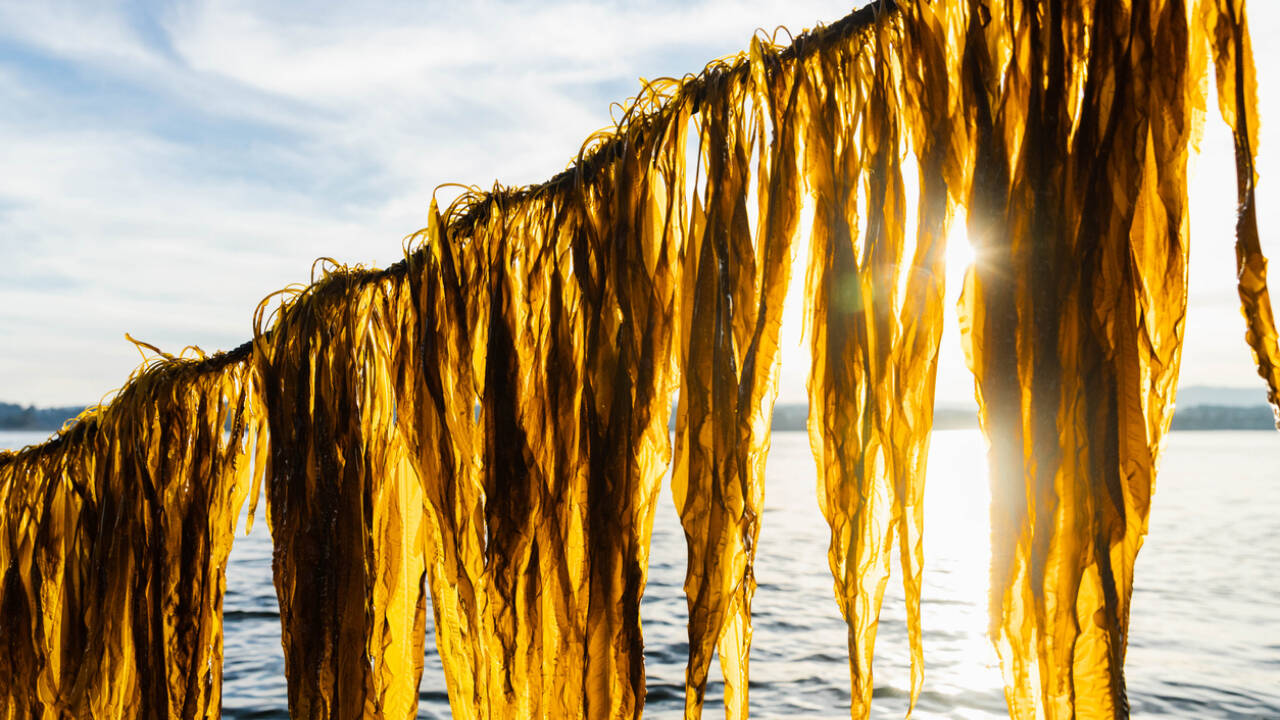
The researchers looked for a food source that could explain the chemical signature across animals occupying both marine and terrestrial ecosystems. The candidate needed to live along coastlines, remain available over long periods and sit low enough in the food chain for its carbon signature to reach both predators and large herbivores. Marine algae and other aquatic plants fit those conditions. Storms and tides can carry seaweed and other organic material from the ocean onto shorelines, where terrestrial animals can encounter it. Herbivorous dinosaurs may have eaten the material directly, while other animals could have consumed prey that had already fed on marine resources. This would create a form of marine subsidization: nutrients produced in one ecosystem being transported into another and supporting animals there.
Not every dinosaur joined the coastal menu
The evidence does not suggest that all dinosaurs regularly ate marine food. One notable exception was Tenontosaurus tilletti, a large herbivore whose carbon isotope values resembled those expected from animals feeding exclusively on terrestrial vegetation. That distinction is important because it indicates that the elevated carbon signatures were probably linked to dietary habits rather than a universal chemical alteration of dinosaur teeth.In other words, some dinosaurs appear to have exploited the coastline, while others remained reliant on food produced on land.
An ancient connection with modern echoes
The study provides the first evidence identified by the researchers for marine subsidization in prehistoric ecosystems. It also adds another layer to understanding how animals survived in the greenhouse climates of the Cretaceous. The findings are particularly significant because coastal ecosystems today continue to depend on exchanges between land and sea. Washed-up marine plants can provide food for insects, birds, mammals and other terrestrial organisms, especially when food on land becomes scarce.The fossil record suggests that this ecological relationship is far older than previously demonstrated. More research is needed to establish whether the pattern extended to equatorial and polar regions, as well as to other periods such as the Jurassic and early Cenozoic. For now, the fossil teeth offer a glimpse of an ancient coastline where the sea did more than shape the landscape. It may also have helped feed the animals walking beside it.Images Courtesy: istock and Phys Org