

Meet Isabella Garry, the Eden Prairie seventh-grader who tested plant-based gels in simulated stomach fluid and found psyllium could remove up to 93.3% of microplastics within 60 minutes

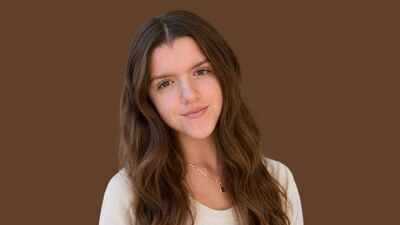
When Isabella Garry learned that microplastics can enter the human body through food, water and the air, she began looking for a solution that went beyond simply avoiding plastic. The seventh-grader from Central Middle School in Eden Prairie, Minnesota, tested natural plant compounds in a laboratory-made stomach environment to see whether they could capture and remove microplastics. According to her profile published by the Society for Science, Isabella found that okra, fenugreek and psyllium mucilages all removed microplastics from simulated gastric fluid within 60 minutes. Psyllium produced the strongest result, removing up to 93.3 percent at the highest concentration tested. Her project has earned her a place among the 2026 Thermo Fisher Scientific Junior Innovators Challenge finalists, as per Society for Science. Read on to know more about Isabella’s unique invention that can help save lives:
A concern that became a research project
Isabella’s interest in microplastics began four years ago when she discovered how widespread these tiny plastic particles are. They can be found in the things people eat, drink and wear, as well as in the air they breathe. At first, she believed the most practical answer was to avoid plastic wherever possible.That idea changed when she learned that microplastics had been detected in newborn babies. The discovery made her question whether prevention alone could protect people from exposure. “When I discovered that babies are being born with microplastics already in their bodies, I knew prevention alone couldn’t solve this,” Isabella said in her Society for Science profile.Rather than treating the problem as too large to solve, she focused on one specific question. Could natural substances made by plants form a gel that traps microplastics inside the body? Her project, titled ‘A Novel Method for Microplastic Removal From Simulated Gastric Fluid Using Plant Mucilage Flocculants’, explored that possibility in a controlled experiment.How Isabella faked digestion Isabella created an acidic liquid out of water, vinegar and salt to mimic some of the conditions in the stomach. The pH of the mix was adjusted to between 1.8 and 2.2, which is close to the highly acidic environment of the stomach. She sanded plastic utensils into microplastics with a sander and collected them for her experiment. Then she picked out three plants known to produce mucilage, a sticky substance that can turn gel-like when mixed with water. Her choices were okra, fenugreek and psyllium.For each test, Isabella placed 0.5 grams of microplastics into Mason jars filled with the simulated gastric fluid. She added either a one percent or two percent concentration of the plant mucilage. A separate jar containing only water and microplastics served as the control, allowing her to compare what happened without a plant-based substance.She swirled the jars every 15 minutes to simulate movement during digestion. She tested each mucilage six times so that she obtained repeated results rather than relying on a single trial. After 60 minutes, she measured how much microplastic remained in the liquid to calculate how much had been removed.
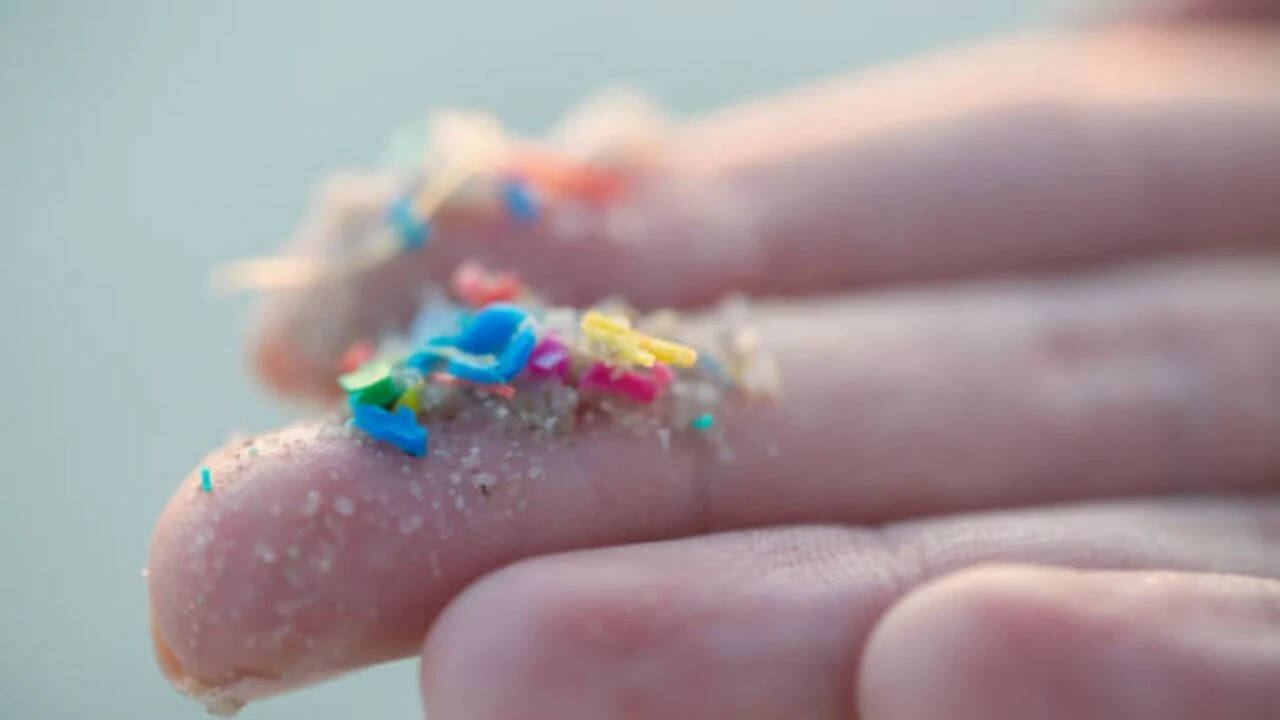
Image credit: Getty
Psyllium delivered the strongest result
All three plant mucilages removed microplastics from the simulated stomach fluid within an hour. However, their effectiveness varied depending on the plant and concentration. At the highest concentration tested, okra removed up to 81 percent of the microplastics. Fenugreek removed as much as 82.7 percent. Psyllium performed best, removing up to 93.3 percent within 60 minutes.The findings do not mean that eating psyllium can remove microplastics from a person’s body. Isabella’s experiment took place in simulated gastric fluid rather than inside a human digestive system. The results also do not establish that the trapped particles would safely leave the body or that the method would work under real biological conditions.Instead, the project offers an early laboratory observation that could inspire further research. Future studies would need to examine how these plant gels behave in more complex digestive environments and whether they can capture different types and sizes of microplastics without interfering with nutrients or normal digestion.
Nature as a source of solutions
Isabella’s choice of materials was influenced by her belief that nature can offer practical answers to modern problems. She says her grandmother taught her to look to plants and the natural world for ideas, as per the report. That outlook also shapes her future ambitions. Isabella would like to be an environmental scientist and would like to study further the effects of plastic pollution including microplastics and nanoplastics. Her project is a sign of growing alarm among scientists and the public over the journey of persistent plastic particles in water, food systems and living organisms.Her work also shows how scientific investigation can begin with an everyday observation. A question about plastic exposure led her to learn about plant chemistry, acidity, experimental controls and repeated testing. The result was not a finished medical treatment, but it was a carefully structured attempt to explore a difficult environmental and health problem.
Beyond the science fair
Outside the laboratory, Isabella is a figure skater and participates in Technovation, an all-girls coding club and competition. Through the programme, she has developed apps designed to address real-world problems and has had the opportunity to pitch her ideas to investors through the Technovation Global Challenge.Those interests reveal the range of skills behind her microplastics project. The research took patience and measurement, and coding challenged her to think about how to use technology to solve social and environmental problems. In both of these activities she has managed to combine creativity with practical problem-solving.As one of the 2026 Junior Innovators Challenge finalists, Isabella will join other middle-school students whose projects address issues ranging from health and food safety to climate and environmental protection. Her experiment stands out for connecting a global pollution problem with familiar plants found in kitchens, gardens and health products.For Isabella, the goal is ultimately larger than one experiment. “I have found it critical to protect our earth from the effects of plastic, i.e., micro- and nano-plastics, because it is my responsibility to protect the earth’s healing properties,” she said in the report. Her research suggests that even a seventh-grader with a jar, a few plant-based gels and a carefully framed question can begin exploring solutions to a problem that affects the entire planet.