
From days without food to CWG gold: Ashmita Dey now faces India’s 32-year judo wait at Asian Games | Asian Games 2026 News


Ashmita Dey arrives at the Asian Games less than two months after becoming the first Indian judoka to win Commonwealth Games gold.The Commonwealth title in Birmingham changed her profile almost overnight, and the 24-year-old, who had spent much of her career out of the spotlight, began to be recognised off the mat too.“No one knew me before. But now everyone knows me. When I went to get food, someone said, this is the same girl, right? This is the same girl who created history for Judo for the first time in India. I was very happy to hear all this,” Ashmita told Timesofindia.comThe recognition means so much to her for a reason. Asmita’s career has been built through a combination of sporting support and financial uncertainty, with the latter shaping much of what she wanted from judo.Before the Commonwealth gold, there had been the bronze at the Asian Junior Championships in 2022, gold at the Junior Asia Cup in Macau in 2023, a silver at the Asian Open in Kuwait later that year, and another podium finish at the African Open in Casablanca in 2025. She had also finished fifth at the Asian Senior Championships in Almaty in April this year.The success and recognition have come a long way from a humble start in Belonia, a small town in Tripura, where her introduction to judo was almost accidental.Her uncle heard about trials at a sports school where there was running, jumping and a fitness test. Asmita had initially been around athletics trials, but judo became the sport that stayed.“My aunt thought I was talented and she put me in Judo and I started from there,” Asmita remembered.Within a week of starting judo, she competed in a jiu-jitsu event and finished first. Two or three weeks later came a state competition, where she won gold.The early years were sustained by family members moving her between places for training. Her brothers ferried her on a cycle for training, while her father would often travel with her from the village on a scooter, sometimes even in the rain.“My father used to support me a lot. He never stopped me for a game. My mother never stopped me.”When food was a struggle, a house became the dreamHowever, there were limits to what the family could provide. Asmita remembers periods when there was no food at home.“Because sometimes we didn’t even have food. We used to sleep after drinking water. Sometimes we only had rice, salt, and chillies with water. Sometimes we used to get food once, sometimes twice. So I remember all those days.”Her mother had one gold earring, the only piece of jewellery she owned, and that was pawned for money. Asmita said she still has not been able to get it back, and the interest has continued to accumulate.Asked if she would get it back now, Asmita’s answer was immediate.“Yes, it will definitely come back. I have to get it.”Her father worked as a bicycle mechanic, taking whatever work he could find as the family struggled to make ends meet. The family lived in rented accommodation for years. Asmita grew up with the idea that a house of their own would have to come from what she could achieve.She had won her first competitions soon after starting, and her coaches were already telling her she could go further.By 2018, she had won silver at the Khelo India Games and moved to the Sports Authority of India Regional Centre in Bhopal. That was when she came under coach Yashpal Solanki – former Indian judoka and an Arjuna Awardee – after earlier support from Manik Lal Deb in Tripura.
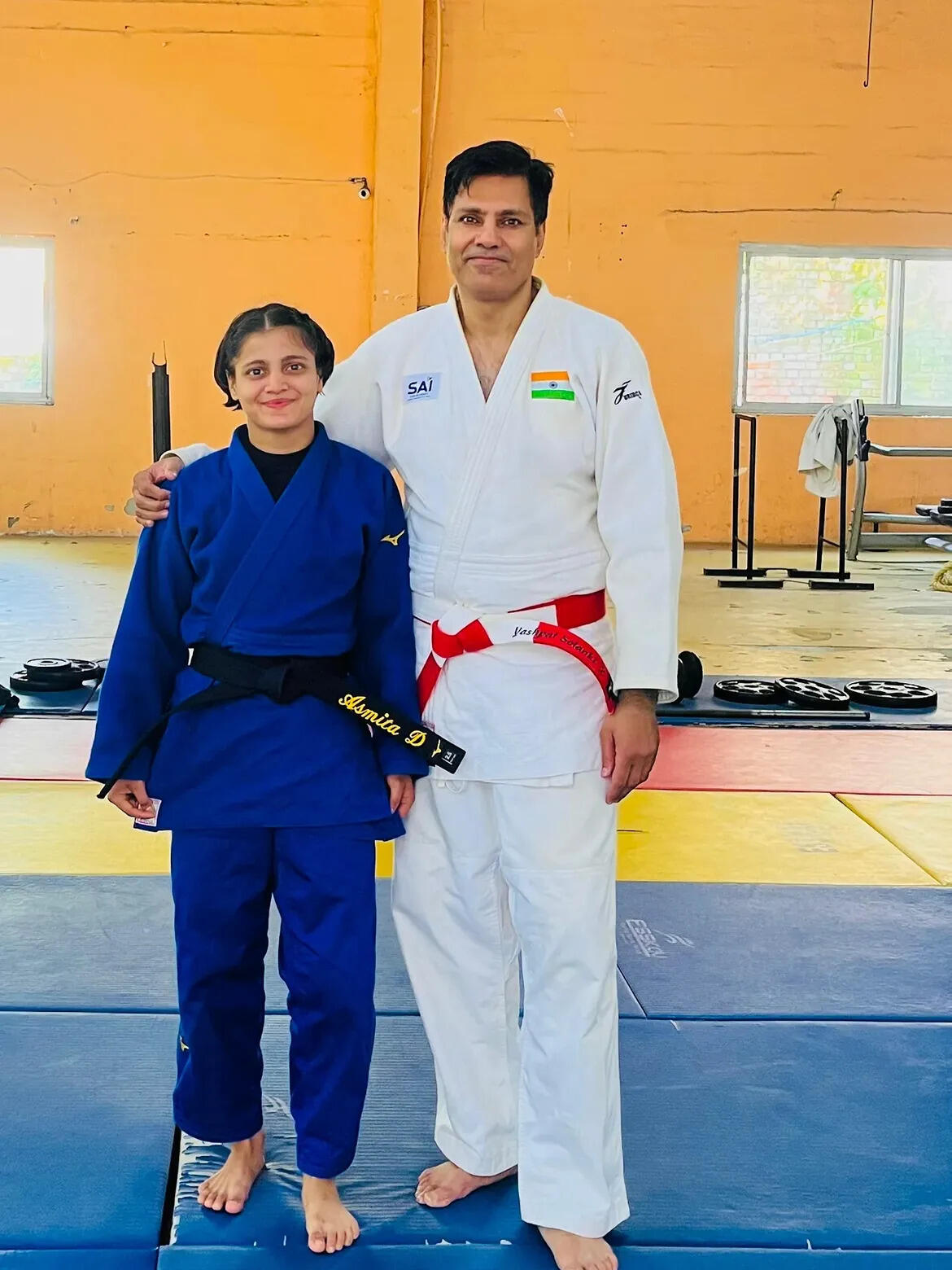
Asmit Dey with coach Yashpal Solanki
Solanki also pushed her towards international competition. “My coach used to say that I have to play internationally. I have to win a gold medal. He told me that I have to win a gold medal and have done that”Father’s death, Commonwealth gold and what followedThe path, most recently, was interrupted by injury and, more painfully, by the death of her father. When she was injured in Delhi, he had travelled to her with her medicines.
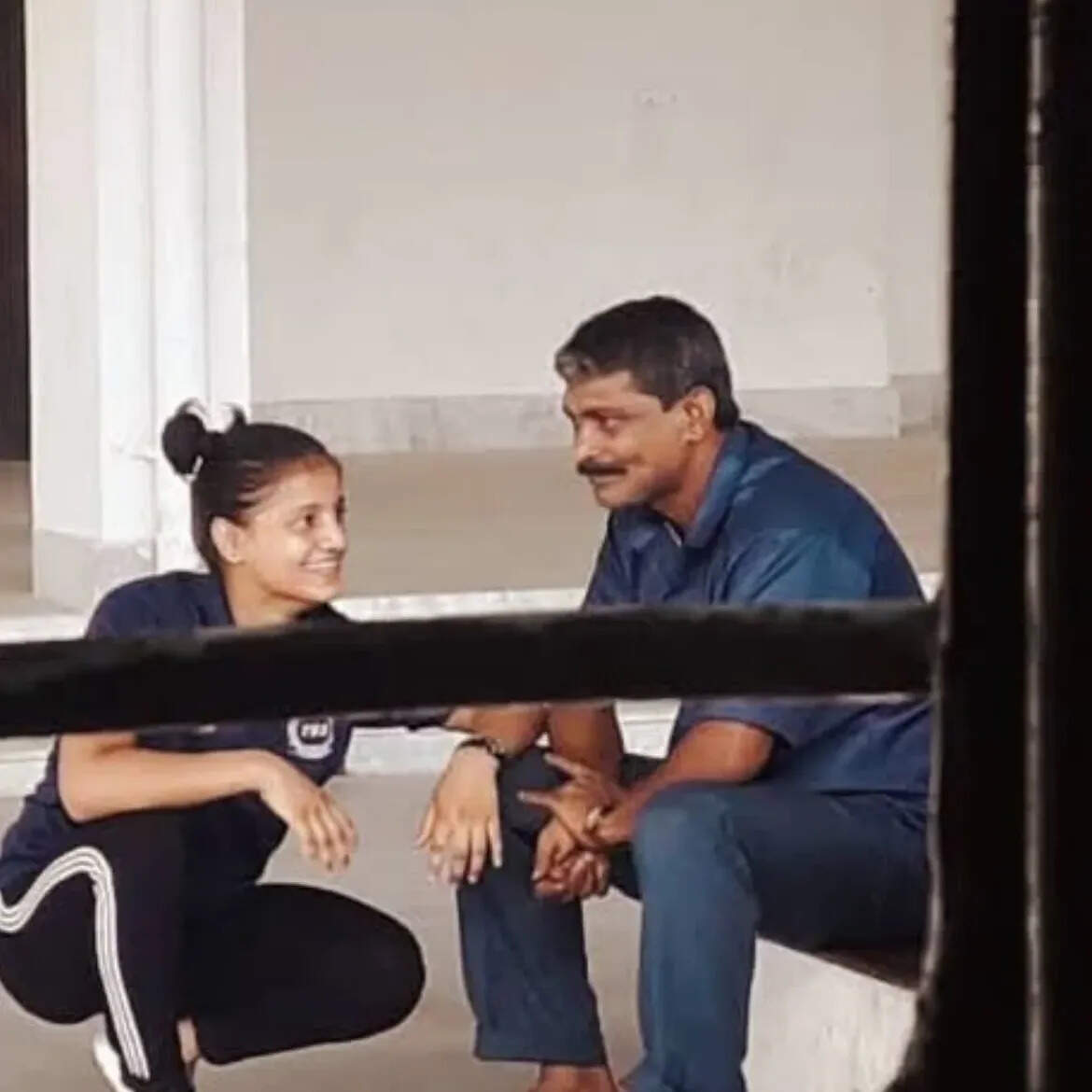
Asmita Dey with her Father
“When I was injured for the first time in Delhi, my father came to me. He brought all the medicines for me,” remembered Asmita.His death, in 2025, came with a Commonwealth Games trial coming up, and her coach called her back to training around the 12th or 13th day.There was about a month left.“I told him that I can’t do it. I don’t want to do it.”The coach then spoke to her about the Bhagavad Gita and death.“He told me that this is the truth. He used to read the Gita. I also read the Gita. He told me that this is the truth. One day, a person has to go. He motivated me a lot.”She returned to training. “To manage myself, I thought that if I cry and get weak, who will take care of my family? How will I make my house? I controlled my emotions a lot. You have to control your emotions a lot.”And before the final, there was only one thought. “I was thinking that I have to win and I have to get the gold medal.”She did, and the gold brought another reminder of the person she had lost. “Yes, I remembered my father a lot. If my father was alive, he would have been very happy. It was such a big achievement for me. He would have been very happy. I know that.”But there was another moment on the Commonwealth podium that stayed with her: the Indian flag and the national anthem, with athletes from other countries standing around her.“That was the biggest thing. I felt very proud.”Ashmita joined the Uttar Pradesh Police in 2023 through the sports quota. She was subsequently promoted to sub-inspector and, after her Commonwealth Games gold, was elevated to deputy superintendent of police (DSP). The job had already given her a measure of financial security and helped her take care of herself and her family.
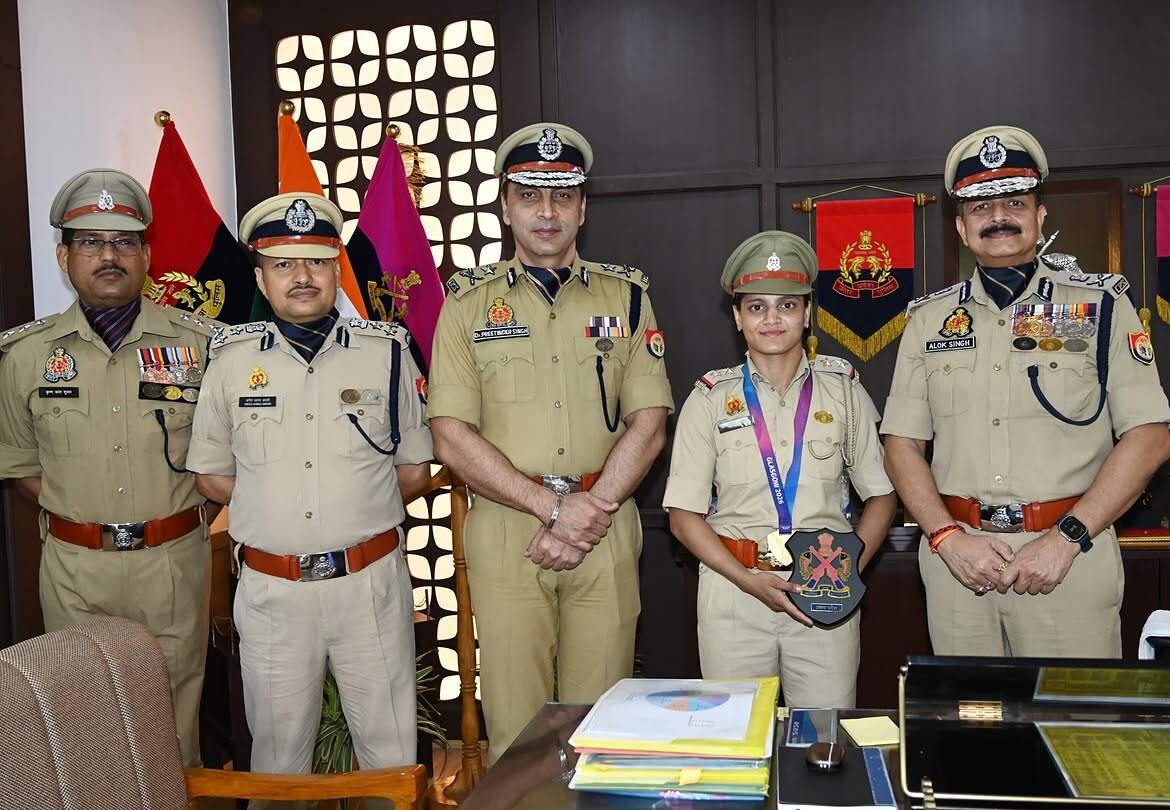
Asmita Dey has been promoted to DSP in UP Police
“I was so worried that I did so much in between. I have faced so much financially, but now I don’t have to think much about that; I can [train with a] free mind. Now I can do better. I will do better.”The house, though, remains on her mind.“I always wanted to build a house. I had to do something. I had to do something big. Only if I do this, I can build a house. I always used to think like this. Finally, I can build a house now.”A tough Asian Games testNow comes the Asian Games, where Asmita will face a field led by several of Asia’s established names in the women’s -48kg category.Mongolia’s Narantsetseg Ganbaatar is the highest-ranked entrant at No. 13 in the world, followed by Kazakhstan’s Abiba Abuzhakynova at No. 19. Japan’s Mitsuki Kondo, Uzbekistan’s Laziza Haydarova, Hong Kong China’s Ka Lee Wong and South Korea’s Su Jin Jung are also in the 11-judoka field.There is another number that puts India’s task in perspective. Judo has produced only five Asian Games medals for India, all of them bronze. Four came at the sport’s debut at the 1986 Seoul Games, while Poonam Chopra won the fifth in the women’s 56kg category at Hiroshima in 1994.India has not been on the Asian Games judo podium since. Indian judokas, by comparison, have won 15 Commonwealth Games medals.Asmita is entering a field led by higher-ranked Asian judokas, while carrying an Indian judo record that has not produced an Asian Games medal for 32 years.