
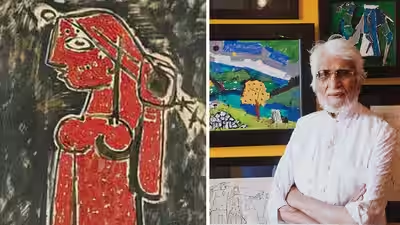
In 1952, M.F. Hussain painted ‘The Red Girl’; 74 years later, it sells for ₹65 crore at Mumbai auction: Why is the painting so expensive

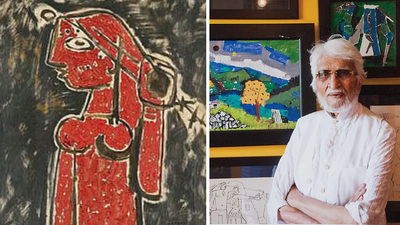
A painting M.F. Husain created more than seven decades ago has returned to the spotlight, this time under the auctioneer’s hammer. The Red Girl, a 1952 oil on canvas by the celebrated Indian modernist, sold for a hammer price of ₹65 crore at Pundole’s Fine Art Sale in Mumbai on September 24, far exceeding its pre-sale estimate of ₹3-5 crore.According to the Free Press Journal, the result meant the painting fetched 13 times the upper end of its estimate and emerged as the top-selling work at the 81-lot auction of modern and contemporary Indian art at Hamilton House. The sale also drew attention to a work whose history goes back to the formative years of Indian modernism.The painting, measuring 48 x 23 7/8 inches, had been among the highlights announced ahead of the auction. Its estimate of ₹3-5 crore had appeared modest against the eventual ₹65-crore hammer price. The result, however, was not a record for Husain: the artist’s auction record had already crossed the $13-million mark in an earlier international sale. The ₹65-crore result nevertheless places The Red Girl among the significant recent auction results for his work.
A red figure with roots in Indian sculpture
At the centre of The Red Girl is a female figure painted almost entirely in a deep, earthy red. She is shown bare-breasted, with an ornamental girdle around her waist and a distinctive chatulatika or forehead ornament.Pundole’s catalogue notes the immediate association with the yakshi figures of ancient Indian sculpture, particularly those linked with the Mathura tradition. The colour itself is significant: the red recalls the sandstone used in many early Indian sculptures.But Husain was not simply reproducing an ancient sculptural form. The catalogue reading points to deliberate departures from the conventional yakshi image. The figure is more rigidly constructed, her proportions are altered and the treatment of the body is distinctly modernist.The fragmentary treatment of the lower limbs is another important element. According to the catalogue description, it recalls the broken or incomplete appearance of ancient sculptures. The idea was connected to Husain’s encounter with Indian sculpture during a visit to the National Museum in New Delhi with fellow artist F.N. Souza.The result is a work that sits between references to India’s sculptural past and the visual language of a generation of artists trying to define what modern Indian art could look like.
The painting’s story began long before the auction
What makes The Red Girl particularly notable is that it was not a newly discovered work that suddenly appeared in the market.The archived reviews identify Peerbhoy’s book as Paintings of Husain, published by Thacker & Co., Bombay, with 17 colour plates and 10 black-and-white plates. This places the title The Red Girl in published discussion only a few years after the painting was made.The provenance is also connected to Emanuel Schlesinger, an Austrian émigré and important Bombay art patron. Pundole has previously handled works from the Schlesinger collection, and its own account of the collection describes Schlesinger as a significant supporter of artists associated with the development of modern Indian art.Schlesinger’s role is part of a larger story around the emergence of the Progressive Artists’ Group and the network of collectors, critics and patrons who supported young Indian artists in the years around Independence.
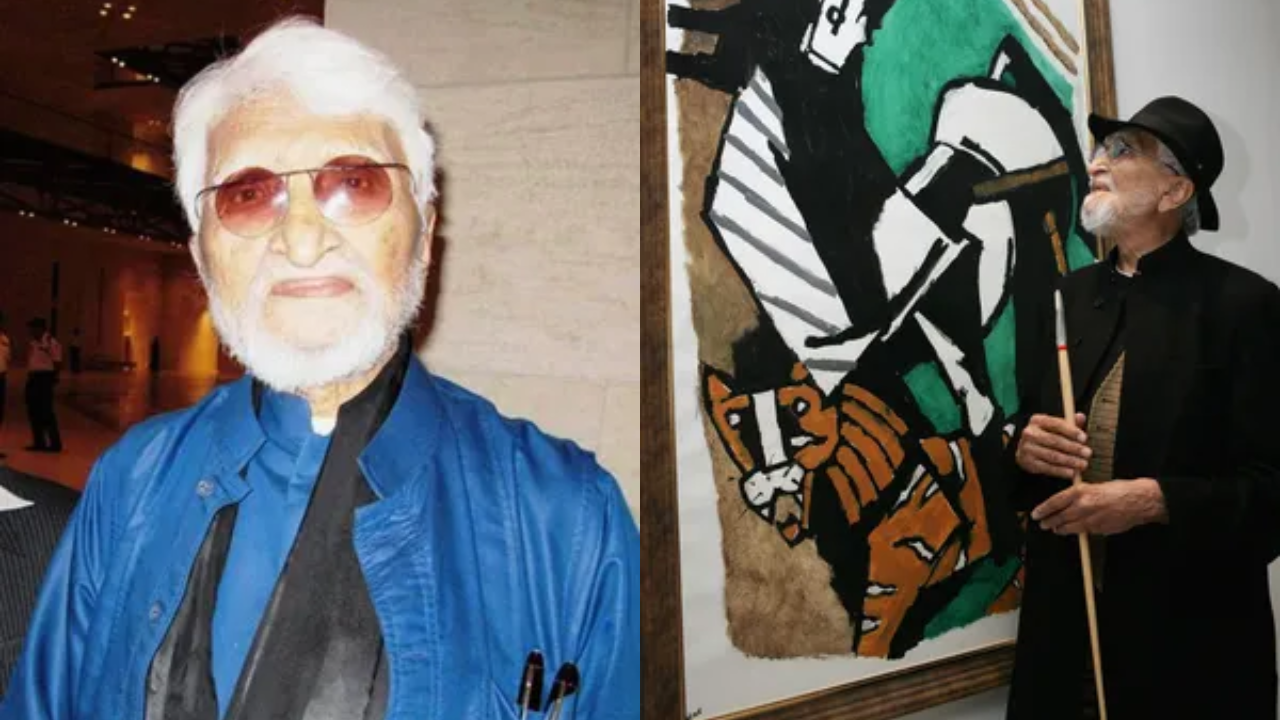
Husain’s ‘The Red Girl’ drew attention for its references to ancient Indian sculpture.
Why the ₹65-crore result stands out
The dramatic difference between the estimate and the final hammer price was not unique to The Red Girl at the September 24 sale.Other works also attracted strong bidding. Jangarh Singh Shyam’s 1999 Untitled, estimated at ₹4-6 crore, sold for a hammer price of ₹18 crore, while other works by artists including S.H. Raza, Manjit Bawa and Jagdish Swaminathan also performed strongly, reported The Free Press Journal.Art-market observers have linked the recent strength in Indian modern art auctions to a widening collector base and growing interest in works with rarity, provenance and historical significance. Mint reported earlier in September that Indian auction sales had risen sharply in the first half of 2026, with auction houses seeing greater participation and transparency in the market.Pundole’s own history also reflects the changing Indian art market. The Mumbai-based house says it has handled works from prominent collections and estates and has dealt extensively in modern and classical Indian art. Its association with artists such as Husain, Raza and F.N. Souza goes back to the gallery’s earlier history.For The Red Girl, however, the price is only one part of the story.Painted in 1952, discussed in print by 1955 and linked to the early history of Indian modernism, the work carries a documented trajectory that stretches from the formative years of post-Independence Indian art to the increasingly international market for it today.More than 70 years after Husain put brush to canvas, The Red Girl has therefore acquired a very different kind of audience. Once part of the emerging vocabulary of modern Indian painting, it is now a ₹65-crore work – a striking example of how the history, rarity and provenance surrounding an artwork can become as closely watched as the image itself.