‘Left’ in existential crisis: From CPI-CPM rift in Kerala to Delhi rout, old fault lines deepen | India News

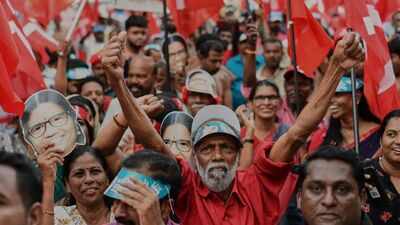
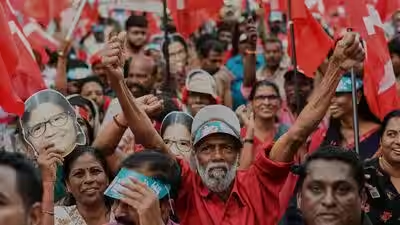
There was a time when the Left’s political footprint stretched from West Bengal to Tripura and Kerala. Its influence travelled further still, through trade unions, university campuses, farmers’ movements and a cadre network that kept the red flag visible even where Communist parties were not in power. That map has steadily grown smaller.For India’s Left, the question is no longer only about shrinking electoral numbers. It is increasingly about where the Communist movement still has the political space, organisational confidence and social influence to assert itself. In Delhi, the SFI-AISA alliance has struggled to translate visible participation in student mobilisations into votes. In Kerala, the two principal constituents of the Left Democratic Front, the CPM and CPI, have found themselves publicly at odds over even the distribution of positions within the opposition, and that too after a heavy defeat in the assembly elections.These may appear to be separate battles, but they have come at a particularly difficult moment for the Left. The Kerala defeat has left it without a state government, the CPM and CPI are publicly disagreeing over the way forward, former chief minister Pinarayi Vijayan is facing a probe, and the Delhi university results have again exposed the gap between the Left’s visibility in student movements and its electoral reach.The timing makes these developments particularly significant. The Left’s retreat has been a long process. The fall of the Left Front in West Bengal in 2011, the loss of Tripura in 2018 and the steady decline in its parliamentary strength had already reduced the Communist parties’ national footprint. Kerala had remained the exception, a state where the Left retained a durable organisational network and, in 2021, even broke the state’s established cycle of alternating between the LDF and UDF governments. Its defeat in 2026 means that India currently has no state government led by a Communist party.But the more revealing question may be what is happening beneath the election results. Is the Left merely going through another electoral trough, particularly after a decade in power in Kerala, or are the latest developments exposing older fault lines, from leadership and alliance tensions to the difficulty of converting traditional political mobilisation into electoral support?
Pinarayi probe: Another challenge after Kerala defeat
On September 22, the UDF government ordered a police inquiry based on an Enforcement Directorate report concerning allegations involving former chief minister and current leader of opposition Pinarayi Vijayan, his daughter Veena T and son-in-law PA Mohammed Riyas in the CMRL-Exalogic case. The state government said the inquiry would be entrusted to the state police; reports said it would initially be conducted by the Crime Branch without registration of an FIR.The underlying allegations are already part of an ED investigation. The agency has alleged financial irregularities involving payments made by Cochin Minerals and Rutile Ltd to Veena’s now-defunct company Exalogic Solutions, and has sought action against Vijayan and others. The Kerala government’s decision followed legal advice on whether the information and material supplied by the ED warranted a preliminary inquiry.For the CPM, however, the political dimension is inseparable from the legal one. Party general secretary MA Baby has said the party will fight the matter “legally and politically”, while accusing central agencies of having been used against opposition leaders.That places the Left in an unfamiliar position in Kerala. For a decade, Vijayan and the CPM were operating from government. Now the former chief minister is leading the opposition while facing a probe ordered by the government that replaced him.The probe comes only months after the LDF lost power following a decade in government, at a time when the CPM is already examining what went wrong and trying to regroup in opposition. The question is therefore not simply whether the allegations withstand investigation. The episode also puts Vijayan and the record of the previous government back under scrutiny at a particularly difficult moment for the party.
DUSU polls: Why isn’t Left mobilisation becoming votes?
The Delhi University Students’ Union election offers a different window into the Left’s problem, particularly its ability to convert activism and issue-based mobilisation into electoral support.The SFI-AISA alliance had been visible in campaigns around issues including student housing, examinations and accountability, and had participated prominently in the CJP mobilisation. Yet its electoral numbers declined in three of the four central-panel contests compared with 2025. Its presidential candidate Ananya Raturi received 5,377 votes, almost identical to the 5,385 polled by the alliance’s candidate last year. But its vice-presidential tally fell from 4,163 to 2,383, the secretary vote from 9,535 to 8,734 and the joint-secretary vote from 8,425 to 5,837.The results also showed that student politics cannot simply be read as a binary contest between the major national parties and the Left. ABVP won three of the four central-panel positions, while Independent candidate Deepanshu Shokeen won the vice-president’s post with 30,615 votes. He had previously been associated with Congress-affiliated NSUI but contested independently after not receiving its ticket.For the Left, the striking element is the gap between mobilisation and electoral conversion. A political organisation can be prominent in protests, articulate grievances on campuses and participate in wider movements, but that visibility does not automatically translate into votes.The presidential contest is particularly revealing. The Left candidate finished with 5,377 votes, while ABVP’s Yash Dabas won with 24,576 and NSUI’s Vijay Shankar Meena polled 22,523. The result does not erase the Left’s presence on campus, but it does expose the difficulty of turning that presence into control of student institutions.And that is why the DUSU result matters beyond one university election. Student politics has historically been an important space for the Left to recruit, organise and build its next generation of political workers. Sitaram Yechury, for instance, rose through student politics at JNU before eventually becoming CPI(M) general secretary.The question for the Left now is simpler: if it can still bring young people to protests and movements, why is it struggling to bring them to the ballot box?
CPI vs CPM: When opposition itself becomes a battlefield
The strain is also visible inside Kerala’s Left alliance. After the LDF’s assembly defeat, the CPI demanded the post of deputy leader of the opposition in the assembly, arguing for a larger role within the alliance. The CPM, however, rejected the demand, with Vijayan publicly opposing it.On the surface, the disagreement is about a post. But underneath it is a larger debate about how the LDF should function after its election defeat. The CPI has argued for greater sharing of responsibilities and “collective leadership”, while the CPM has maintained that the alliance should follow its established conventions.The disagreement soon spilled into public. CPI state secretary Binoy Viswam criticised Vijayan’s stand, while senior CPI leader C Divakaran went further and questioned Vijayan’s authority to dismiss the demand. Divakaran also argued that Vijayan should have taken responsibility for the election defeat rather than becoming leader of the opposition.The CPM pushed back too. CPM state secretariat member C N Mohanan questioned the CPI’s electoral strength and accused it of using pressure tactics against the larger ally.The dispute may appear procedural because the deputy leader’s post is largely an organisational and parliamentary position. But its political significance lies elsewhere. The CPI has sought greater recognition after the LDF’s defeat, while the CPM, as the dominant force in the alliance, remains the principal party responsible for its direction.The two parties have since tried to prevent the dispute from escalating further. But the episode illustrates a problem that often becomes sharper after an electoral defeat: who takes responsibility for the loss, and who gets to decide the course correction?
From Bengal to Kerala: How did the Left reach here?
Kerala’s 2026 verdict completed a long retreat. West Bengal’s Left Front had ruled continuously from 1977 until 2011, while Tripura remained under Left Front rule for 25 years before the BJP ended that run in 2018. Kerala subsequently became the Left’s last major governing base.But the story of the Left’s decline has not been the same everywhere. In West Bengal, the 2011 defeat ended 34 years of uninterrupted Left Front rule and the Communist parties have since struggled to recover their old electoral space. In Tripura, the BJP displaced the Left after 25 years in power and emerged as its principal rival. Kerala followed a different trajectory, with power traditionally alternating between the LDF and Congress-led UDF.That is what made the LDF’s 2021 victory particularly significant. The Vijayan government returned for a second consecutive term, breaking Kerala’s four-decade pattern of alternating governments and giving the Left something it no longer had elsewhere: a state where it could demonstrate that it remained capable not only of surviving, but of retaining power.The 2026 defeat is therefore different from Bengal and Tripura and cannot automatically be equated with the organisational collapse witnessed elsewhere. Yet the scale of the setback raises questions beyond normal anti-incumbency. The LDF was reduced from 94 seats to 35, while the UDF won 102. The CPI(M) also suffered defeats in areas traditionally associated with its organisation, including parts of Kannur. BJP candidates won three seats, Chathannoor, Nemom and Kazhakoottam, including constituencies that had been held by LDF leaders.The larger national trajectory has been just as stark. At its parliamentary peak in 2004, the Left parties together had 59 Lok Sabha MPs and provided crucial outside support to the first UPA government. Twenty-two years later, their presence in Parliament and across state governments is a fraction of what it was.The decline cannot be traced to a single election or a single cause. The Left has had to contend with the loss of old strongholds, changes in the nature of work and organised labour, the rise of powerful regional parties, the BJP’s expansion into states where the Left once had substantial space, and the challenge of reaching a generation of voters with little memory of the Communist parties at the height of their political influence.
How pivotal is the recent defeat in Kerala for the future of the Left in India?
3k+ users shared opinion today
5k+ users already voted today
3k+ users shared opinion today
Kerala had, for years, stood apart from that national decline. The 2026 result does not mean the Left’s organisational base in the state has disappeared, but it has removed its last seat of state power and made the problems elsewhere much harder to ignore.
Share your thoughts in the comments
Be respectful · TOI community guidelines
What next for the Left?
With no Communist-led state government left, a diminished parliamentary presence, weaker conversion of student mobilisation into votes and visible friction among its own principal parties, the Left finds itself at one of its most difficult political moments.The challenge is no longer simply how to win the next election. It is whether the political space that once made the Communist movement a national force can still be reconstructed, and whether the Left can address its old fault lines while finding its place in a changing political landscape.