
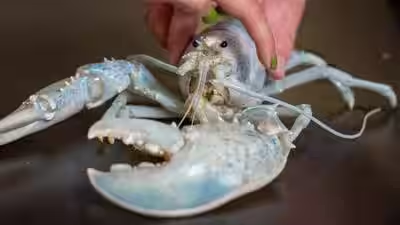
Meet Casper: The rare white ‘ghost’ lobster found in 1 in 100 million now has a new home in Maine; scientists are studying its unusual color by analyzing more than 15,000 genes

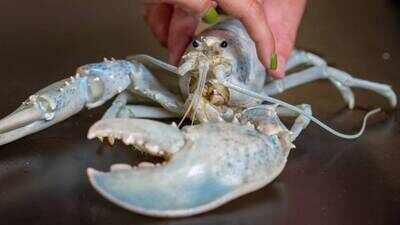
A lobster with a shell so rare that the odds of finding one are estimated at 1 in 100 million has found a new home in Maine, and researchers have given it a name that seems almost made for its unusual appearance, Casper.The rare white lobster, sometimes called a “ghost” lobster, has arrived at the University of New England’s Arthur P. Girard Marine Science Center in Biddeford after being donated by the Maine State Aquarium in Boothbay, according to a release published on the university’s official website.Casper is now part of a unique research project examining why some American lobsters develop unusual shell colors and how those traits may be passed from one generation to the next.
Why Casper’s white shell is so unusual
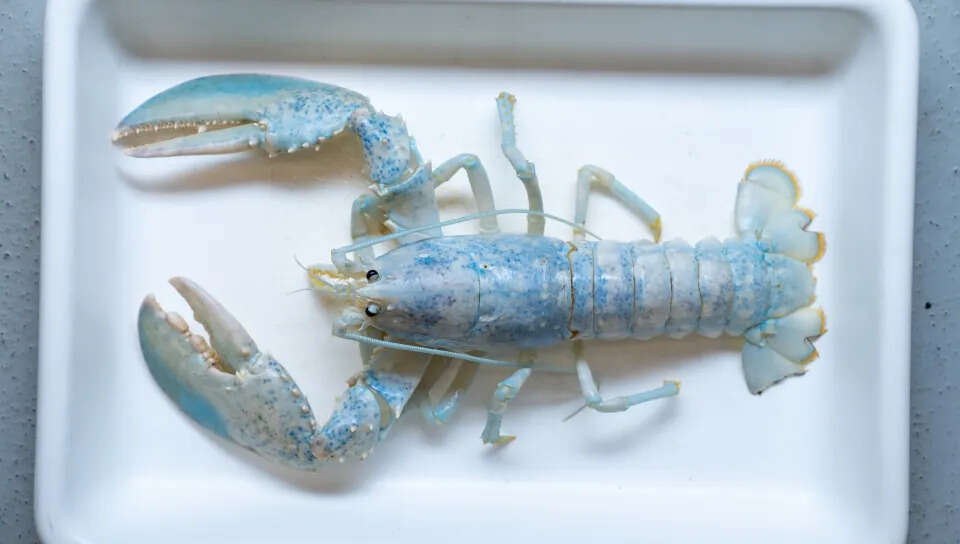
Scientists estimate that white lobsters like Casper occur only once in 100 million. (Photo: University of New England)
American lobsters are typically mottled brown, but rare genetic variations can produce striking colors, including blue, orange, yellow, purple, calico and split-colored patterns.White lobsters are considered the rarest of these unusual color variations, making Casper particularly valuable to UNE researchers.The lobster joins a colorful group already living at the research center, including Peaches, an orange lobster, as well as Currant and Fig, a blue-and-purple pair.
Scientists are investigating the genetics behind rare lobster colors
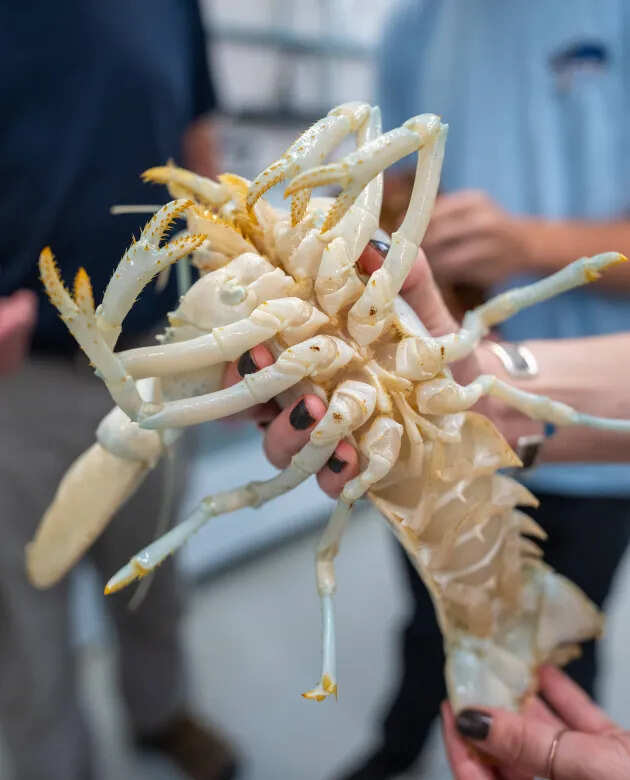
Researchers are analyzing more than 15,000 genes to study Casper’s unusual shell color. (Photo: University of New England)
The research is led by Markus Frederich, Ph.D., a professor of marine sciences at UNE and director of the Invertebrate Physiology Lab.Rather than simply documenting the unusual appearances, researchers are trying to understand the molecular mechanisms responsible for the different shell colors.“Animals like Casper capture people’s attention because they are so rare and beautiful,” Frederich said. “But, for us, they also provide an amazing opportunity to ask fundamental biological questions.”The research program, launched in 2024, uses noninvasive methods to collect and analyze genetic material without harming the lobsters.
Another rare lobster named Peaches helped expand the study
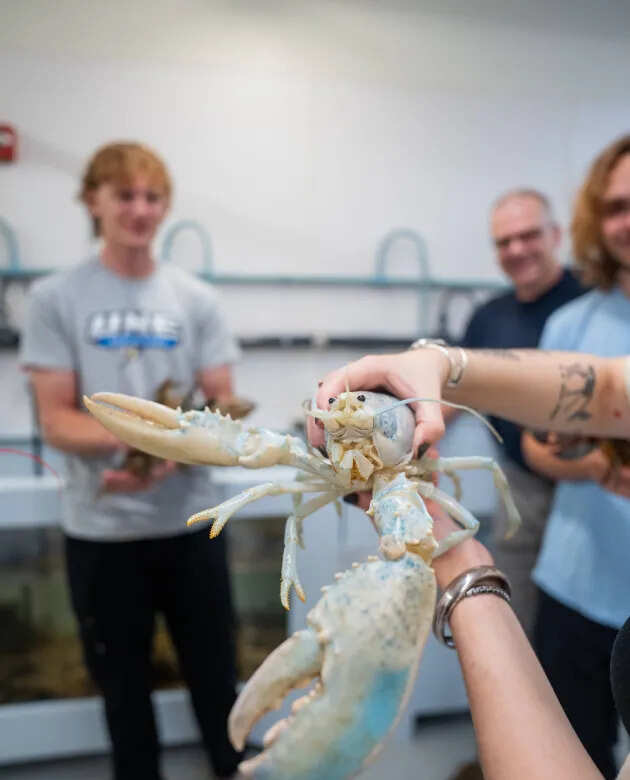
Casper joins other rare-colored lobsters as scientists investigate the genetics behind their striking colors. (Photo: University of New England)
Before Casper arrived, Peaches had already given researchers an unusual opportunity to investigate lobster coloration.The orange lobster is estimated to occur in approximately one in 30 million lobsters. Peaches later produced offspring whose shell colors ranged from the typical brown to orange and blue.Researchers collected genetic samples from the juvenile lobsters and are now analyzing more than 15,000 genes in an effort to identify genetic differences associated with shell color.The findings could help scientists better understand how these rare color variations occur and whether they can be inherited.
Casper becomes the rarest lobster in the research collection
Casper’s arrival expands the project to what researchers say is the rarest coloration represented in the study so far.The donation was coordinated by UNE alum Rue Motulsky, whose earlier work on the DNA project as a student contributed to the university’s research into lobster coloration.Frederich also highlighted the role of undergraduate students, who participate throughout the project.“What makes this research especially rewarding is that our undergraduate students are involved in every step of the process, from working with these incredible animals to analyzing their genes and helping uncover the mechanisms behind their unusual colors,” he said.“That combination of discovery, hands-on research, and student mentorship is really at the heart of what we do at UNE,” he added.