Iran denies link to Houthi attacks in Yemen & Saudi Arabia; warns US as Trump rejects peace offer

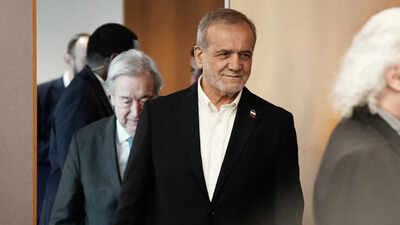
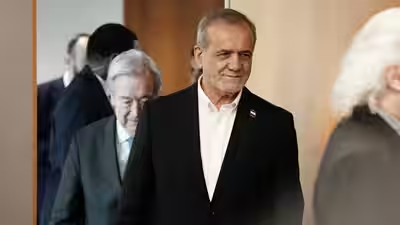
Iranian President Masoud Pezeshkian on Saturday denied any involvement of Iran in the re-escalated Houthi-Saudi conflict, offering to help resolve the conflict.“What is happening in Yemen is not linked to Iran,” Pezeshkian told Al Jazeera, adding that both countries must resolve their conflict through diplomacy.Pezeshkian accused the United States and Israel of making the Gulf countries fight each other, so that they can control the region’s wealth. He said Iran was attacked “from the airspace of Muslim countries”They are “pitting Muslim countries against one another”, he said, while highlighting that a “brother” should not fight another.Pezeshkian said that his country will not be a warmonger and has offered to “help resolve the dispute” that escalated in the past few weeks.This statement follows weeks of intensifying violence between Saudi Arabia and the Houthis, during which the Iran-backed group has launched barrages of missiles and drones at the kingdom, prompting Saudi airstrikes in response.Between September 10 and 11, Houthi fighters seized the strategically important port city of Mocha. Following this gain, they pushed into the Bab al-Mandeb Strait, taking control of Perim (Mayun) Island before advancing further north to seize the Hanish Islands archipelago.Yemen’s Saudi-backed government forces subsequently lost control of the critical Bab el-Mandeb waterway, dealing a significant setback to the kingdom.
US rejects seven-day peace proposal
Pezeshkian also told Al Jazeera that Iran “no longer trusts talks with Washington,” citing “repeated attacks and sanctions following every negotiation.”According to unnamed US officials cited by The Wall Street Journal, US President Donald Trump has reportedly rejected an Iranian proposal to reopen the Strait of Hormuz within a week, keeping the possibility of further strikes open.Iran’s military has cautioned that all US deployment centres and interests in the region will become targets if Washington “makes a mistake” against the country, according to the semi-official Mehr news agency.