A Pennsylvania flea-market buyer paid $4 for a framed painting; hidden behind it was a rare 1776 Declaration of Independence copy worth $8.14 million | World News

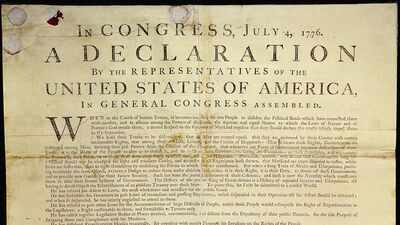
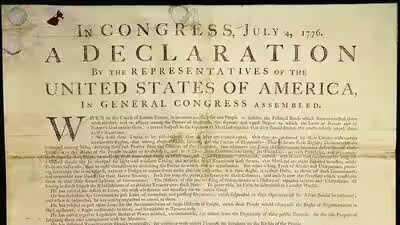
A $4 flea-market purchase in Pennsylvania turned into one of the most remarkable discoveries in American history. In 1989, a man bought a framed painting mainly because he wanted the frame. When he later took it apart, he found a folded document hidden behind the canvas. The paper appeared to be a copy of the Declaration of Independence, but its true importance was not immediately understood. Years later, experts identified it as one of the rare surviving copies from the document’s first printing, eventually leading to an $8.14 million sale in 2000.
$4 flea-market painting revealed a Declaration of Independence copy
The discovery began at a flea market in Adamstown, Pennsylvania, in 1989. According to HISTORY, the buyer paid just $4 for a framed painting and was primarily interested in making use of its frame. The painting itself was old and torn, and once he took it apart at home, the frame turned out to be unusable.Behind the canvas, however, was something far more significant. A folded sheet of paper had been tucked away inside the frame. The buyer recognised it as the Declaration of Independence but initially believed it was simply a reproduction with little monetary value. Antiques and the Arts reported that he kept the document before eventually being persuaded by a friend to have it examined by Sotheby’s.The discovery was not immediately treated as a major historical find. For several years, the sheet remained with its new owner while its real identity was still unknown.
The document came from the first printing in 1776
The significance of the paper became clear when Sotheby’s examined it. The document was identified as one of the copies produced by Philadelphia printer John Dunlap on the night of July 4, 1776, shortly after the Declaration was adopted.According to CBS News, Dunlap produced hundreds of copies and sent them to the 13 colonies so that news of independence could be circulated. Only 25 of those copies were known to survive. The copy found behind the painting was therefore not a later reproduction but an exceptionally rare surviving example from the first printing.Antiques and the Arts reported that of the only 25 surviving copies, just 4 were held by private collectors at the time. Most of the others were in museums and public institutions.One small detail also helped reveal the circumstances of its printing. HISTORY reported that the ink had still been wet when the sheet was printed, leaving the first line of the Declaration appearing in reverse at the bottom of the page. It was a physical trace of the hurried printing process surrounding one of the most important documents in American history.
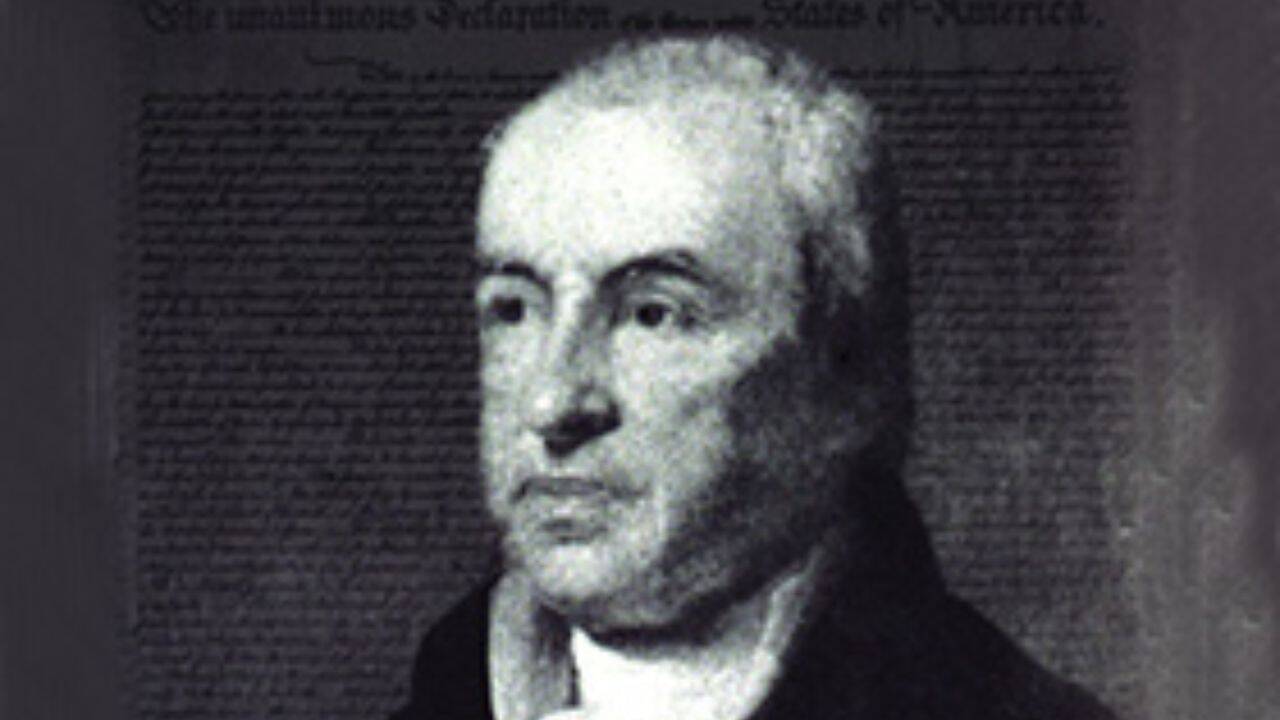
John Dunlap. Image Credit: Georgia National Gaurd/Pennsylvania Center for the Book
Sotheby’s authentication changed the value of the discovery
The document was taken to Sotheby’s for a professional evaluation several years after it was found. David Redden, then Sotheby’s executive vice president, travelled to Pennsylvania to authenticate it.Antiques and the Arts reported that Redden immediately recognised that the document was genuine and described its condition as exceptionally impressive. The authentication transformed what had seemed to be an ordinary piece of paper into a rare historical object with enormous value.The document eventually entered the auction world. CBS News reported that Sotheby’s had sold it in 1991 for $2.4 million to Visual Equities, a fine-art investment firm based in Atlanta. It was offered again in 1993 but failed to sell at auction.Its journey did not end there. By 2000, the document was back on the market, where its value would rise dramatically.
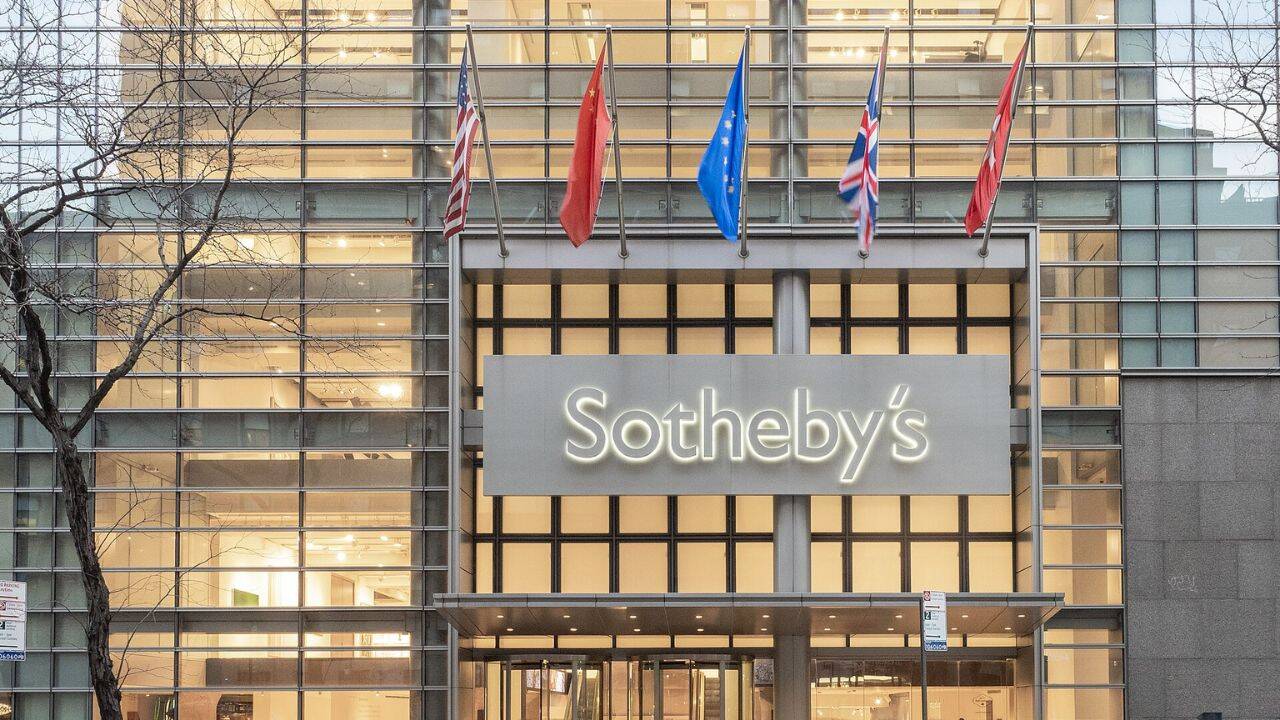
Sotheby’s worldwide headquarters on York Avenue, on the Upper East Side of Manhattan. Image Credit: Wikipedia
The auction held in 2000 pushed the price to $8.14 million
The final stage of the story came in June 2000, when television producer Norman Lear and internet entrepreneur David Hayden bought the Declaration of Independence copy through Sotheby’s.CBS News reported that bidding began at $4 million. Lear and Hayden competed against another prospective buyer, placing 29 separate bids before the bidding reached $7.4 million. After Sotheby’s commission was added, the final price came to $8.14 million.Antiques and the Arts reported that the bidding had been expected to settle at around $6 million, but a late burst of competition pushed the final price beyond $8 million. The sale established a new record for an American historical document at the time.
Norman Lear planned to take the historic document across America
Lear and Hayden did not describe their purchase simply as a private collecting opportunity. CBS News reported that they planned to put the Declaration on a national tour, allowing people in different parts of the United States to see the document.Antiques and the Arts also reported that the pair intended to loan the Declaration to People for the American Way Foundation, an organisation founded by Lear. Their stated aim was to make the document accessible to a much wider public instead of keeping it solely in a private collection.