‘When they ask why you are unhappy, I…’: Behind Vaikom Vijayalakshmi’s National Award is a journey through blindness, insensitive questions and choosing freedom on her own terms

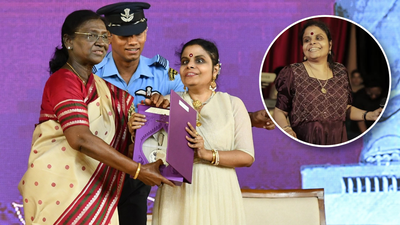
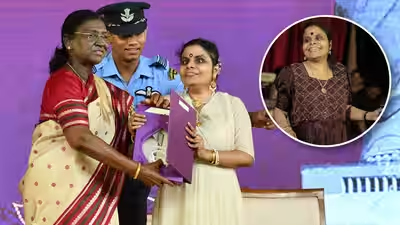
When Vaikom Vijayalakshmi walked up to receive the National Award for Best Female Playback Singer, the moment marked recognition for a voice that millions have heard. But behind that voice is a woman who has spent much of her life negotiating something far more personal: how the world sees a person who cannot see it.Vijayalakshmi received the National Award for Best Female Playback Singer for “Angu Vaana Konilu” from Ajayante Randam Moshanam at the 72nd National Film Awards. The recognition came years after she entered the playback singing industry, but the award is only one part of a journey that has included professional success, repeated attempts to find a treatment for her blindness, insensitive encounters with strangers and a marriage she eventually chose to leave.
13 Jul 2026 | 13:11
What’s one stereotype about women that you’re tired of hearing?
Speaking to TOI after the national award was announced, Vijayalakshmi said the song’s words had particular meaning for her. “The lyrics ‘Uyarnnu Vaa… Uyarnnu Vaa… Break every barrier and rise… Conquer the world and rise…’ always fill me with the strength to move forward. I, too, have overcome countless obstacles to reach where I am today,” she said. Those obstacles have not always been visible to those around her.
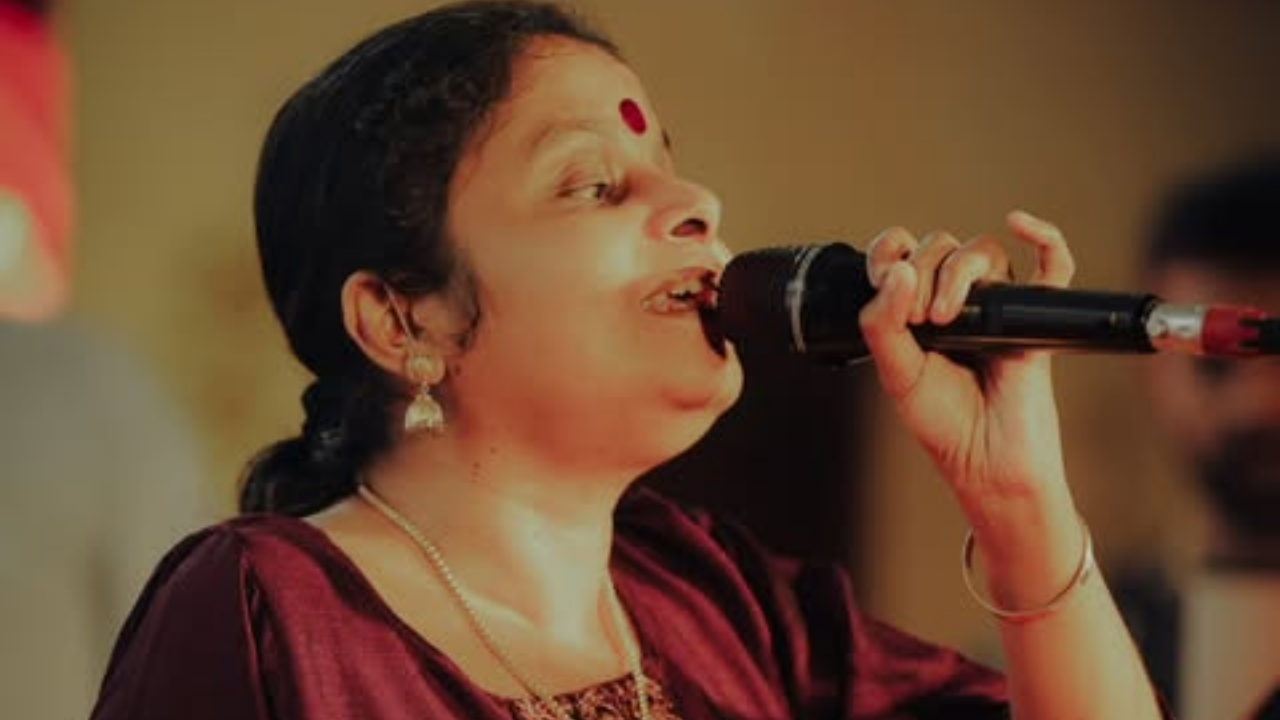
Vaikom Vijayalakshmi received the National Award for Best Female Playback Singer for ‘Angu Vaana Konilu’
‘I get angry when people treat me differently because I am blind’
Vijayalakshmi was born visually impaired and has lived with very limited perception of light. She has often spoken about how differently people behave around her once they realise she cannot see.In an interview with Cineulagam Tamil Channel, she described one particular behaviour that frustrates her: people trying to test whether she can recognise them by their voice.“I get angry when I see the way some people treat me as I am blind,” she said. She does not appreciate being asked questions such as whether she knows who someone is or being made to identify people by their voices.“I hate questions such as do you understand who I am, who hand is this and testing me like who the person is that by listening to their voice,” she said. “What is the use of recognizing people like that?”For her, the problem is not that she cannot answer. It is the assumption behind the question- that her blindness makes her someone who needs to be tested. “When they ask why you are unhappy, I will say I don’t like to answer such questions,” she said.Vijayalakshmi has previously said that she can perceive only a little light and distinguish between night and day.Yet the absence of sight has not meant an absence of awareness. Much of Vijayalakshmi’s understanding of the world has been built through sound- something that eventually became the foundation of her career.
Music became a way of experiencing the world
Vijayalakshmi began singing when she was very young. Her parents, Muraleedharan and Vimala, supported her musical training and remained closely involved in her journey.She grew up listening to musicians such as K J Yesudas, M S Subbulakshmi, Balamuralikrishna and Chembai Swamikal. She eventually became a professional singer and went on to work in several Indian languages.But music, for Vijayalakshmi, is not simply a profession. It is also one of the ways through which she experiences things she cannot see.That is why ordinary moments involving sight can sometimes affect her deeply. “If someone buys something and doesn’t show it to me I will feel sad. I feel like I am being ignored because I am blind,” she said.It is a small example, but it reveals something larger about what she has wanted from people around her: not special treatment, but inclusion. Her parents have remained an important part of that support system.“Father and mother will be always there with me,” she said. She has also continued to hope that one day she will be able to see.
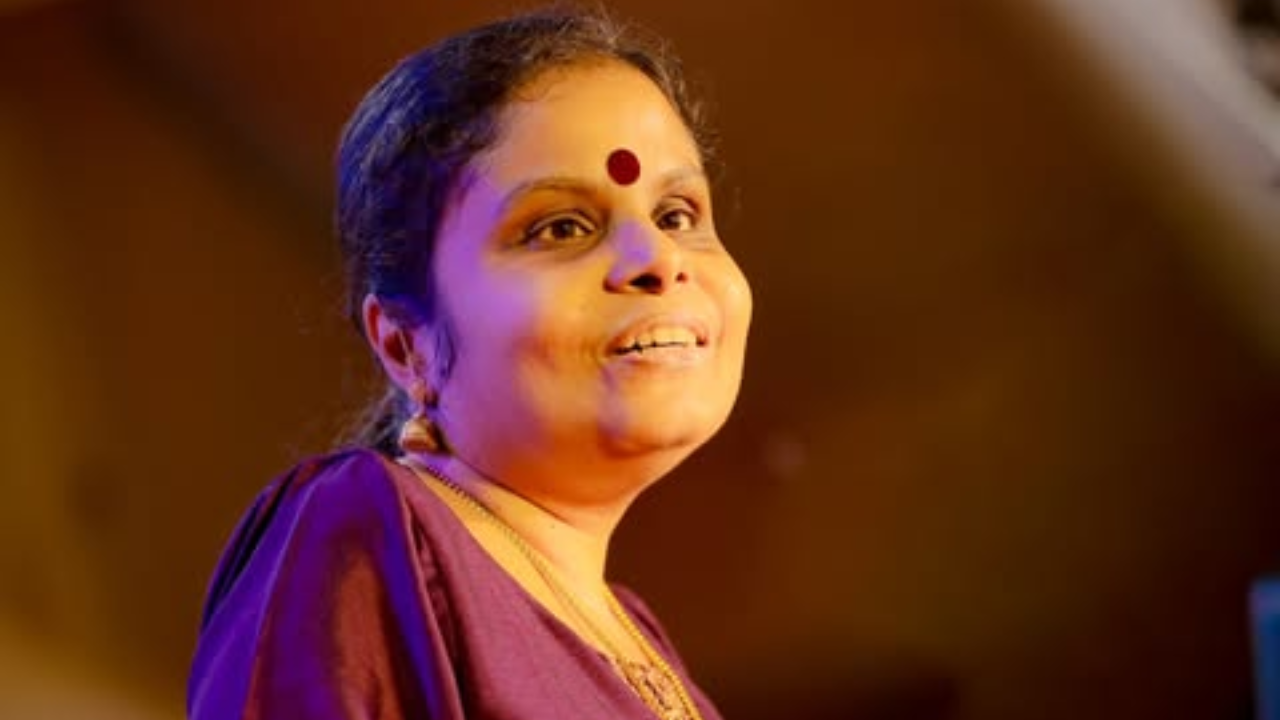
The singer says she feels hurt when people exclude her from ordinary experiences because she cannot see
The hope of seeing the world
For years, Vijayalakshmi has explored possible treatments for her condition. She travelled to the US for treatment in 2019, but the process was interrupted by the Covid-19 pandemic and questions over whether the treatment could actually restore her sight.Doctors, she has said, have differed over whether the problem lies with her retina or her brain. Despite the uncertainty, the desire has remained.She has spoken about wanting to see the world she has known primarily through voices, sounds and touch. That hope exists alongside an acceptance of the life she has built without sight. Her career has not waited for a cure, nor has she put her ambitions on hold.The National Award is the latest recognition of that life. But there was another part of her personal journey in which she also had to decide what she wanted- and what she would no longer accept.
‘I don’t have to tolerate all this’
Vijayalakshmi has spoken candidly about the end of her marriage and described it as one of the saddest periods of her life. She said her former husband did not support her music and restricted the hours during which she could sing.“He didn’t even agree to give rhythm for my music,” she said. “He even restricted my singing to some hours.” For someone whose independence had been built around music, the restrictions became increasingly difficult.Eventually, she chose to leave. “But I realized that I don’t have to love tolerating all this and separated,” she said. Importantly, she described the decision as her own. “I made that decision. Neither father nor mother said to do so. Life decisions are in their own hands and cannot be given to anyone else.”
A National Award, but not the end of the journey
Vijayalakshmi’s National Award brings her career into focus, but her story is not simply about overcoming blindness to become a successful singer.It is also about the everyday negotiations that come with being a person with a disability- the frustration of being tested, the hurt of being excluded from ordinary experiences, the uncertainty surrounding treatment and the determination to make personal decisions independently.Her award-winning song tells people to rise, break barriers and conquer the world. For Vijayalakshmi, those words are not merely lyrics.“I, too, have overcome countless obstacles to reach where I am today,” she said.