
‘It is defensive, nothing aggressive’: Pak scrambles to define Mecca pact after Houthi attack

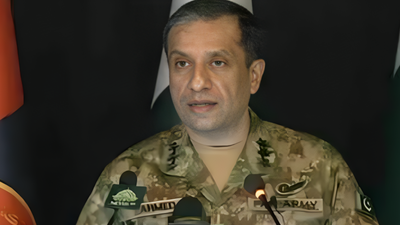
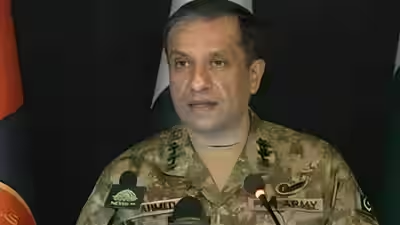
Pakistan’s military has rushed to give a definition to the newly formed Mecca Defence Alliance, saying the pact with Saudi Arabia and Turkey is meant for collective deterrence and has “no regional aspirations”, even as questions grow over how the agreement would work if one of its members comes under attack.Pakistan’s inter-services public relations (ISPR) director general Lt Gen Ahmed Sharif Chaudhry, speaking to Al Arabiya, said the agreement was “defensive” and “complementary” to the three countries’ existing alliances and relationships.“It is defensive. There’s nothing aggressive. There are no regional aspirations. It is collective deterrence,” Chaudhry said.The comments come as the pact faces questions over its first potential test. The alliance has been put under scrutiny amid the conflict involving Saudi Arabia and Houthi forces, with uncertainty over whether Riyadh has sought military assistance from Islamabad and how Pakistan would respond if it did.The pact was signed on August 7 and says an attack on one member would be treated as an attack on all. Pakistan is to initially head its secretariat for three years.Also read: Mecca Pact, but no troops yet: Pakistan expresses ‘solidarity’ with Saudi Arabia after Houthi attacks on kingdom
What happens if Saudi Arabia is attacked?
Chaudhry was pressed on precisely that question during the Al Arabiya interview: whether Pakistan had a mutual defence obligation under the agreement and what it would actually do if one of the members came under attack.He said the publicly released text made the mutual defence commitment clear, but stressed that the operational details of how such a commitment would be implemented were classified.“What you’re asking is the how part — how we are going to defend Pakistan against any aggression,” he said, adding that such decisions would be for the three countries to make.The distinction is significant because the pact has not yet been tested in an actual conflict. The first major test could become the escalating Houthi-Saudi confrontation, with questions remaining over when an attack would trigger the alliance and what form military assistance would take.The uncertainty is also not entirely new. Pakistan’s parliament had unanimously rejected a request in 2015 to send troops to join the Saudi-led coalition against the Houthis. Pakistan also shares a long border with Iran, giving Islamabad an additional security consideration as it navigates its relationship with Riyadh and Tehran.
Not a Muslim military bloc
Chaudhry also rejected the idea that the Mecca Defence Alliance was being designed as a broader Muslim military bloc.“There is nothing in the pact that says that it is a Muslim alliance,” he said, describing it instead as an arrangement aimed at regional stability.He said other countries could potentially join if they shared the principles of non-aggression, non-interference and collective deterrence, but stressed that any expansion would be a decision for the leaders of Pakistan, Saudi Arabia and Turkey.The comments come amid speculation about possible expansion of the grouping. Turkey had previously suggested Egypt could join, although Cairo has not confirmed any such move. Pakistan’s foreign office has meanwhile said the immediate priority was to consolidate the new organisation before considering expansion.
Pakistan says pact does not compete with China ties
Chaudhry also sought to reassure Beijing that the new arrangement was not aimed at competing with Pakistan’s relationship with China.Asked whether the alliance complemented or competed with Islamabad’s ties with Beijing, he said it was complementary.He argued that Pakistan’s relationships with Saudi Arabia and Turkey were longstanding and that the three countries also maintained good relations with China.“Everyone understands that this is defensive,” Chaudhry said, adding that the pact was intended to maintain “stability and peace in the region”.
Why Pakistan is walking a diplomatic tightrope
The military spokesperson was also asked whether the defence pact complicated Pakistan’s efforts to mediate between the US and Iran amid the ongoing Middle East conflict.Chaudhry rejected that suggestion, saying the pact formalised longstanding relationships rather than creating a new strategic alignment against another country.He described Pakistan as being in a “unique position” because of its engagement with different countries and said Islamabad could therefore act as an “objective arbiter of peace” and an “honest broker”.Pakistan, he said, wanted a negotiated and peaceful resolution rather than a military solution.That position is particularly relevant as Islamabad balances its strategic relationship with Saudi Arabia with its geographic proximity to Iran.Chaudhry said Pakistan’s decision to mediate was driven by a desire for regional peace and that the country would continue engaging the parties involved.