
As Elon Musk plans to shake up mobile industry with Starlink, T-Mobile CEO Peter Osvaldik says that its strategy should be laughed out of the room

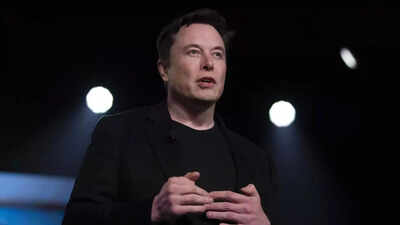
Elon Musk wants to shake up the mobile industry with Starlink satellite connectivity. However, one of America’s biggest telecom companies, T-Mobile, isn’t convinced his plan can seriously challenge traditional telecom operators. T-Mobile CFO Peter Osvaldik has dismissed Starlink Mobile as a competitive threat and went further, saying parts of SpaceX‘s strategy should effectively be laughed out of the room.Musk and SpaceX president Gwynne Shotwell have said Starlink could take customers from major carriers by using satellites to eliminate mobile dead zones, particularly in remote areas. But Osvaldik argues that satellites face basic physical limitations in cities, while SpaceX’s proposed solution of deploying huge numbers of small cell stations could require an impractical scale of infrastructure.
T-Mobile says Starlink is not a threat
Speaking at Citi’s 2026 Global TMT Conference, Osvaldik said T-Mobile does not see Starlink Mobile as a serious wireless threat.“It’s not a competitive threat from a wireless perspective at all,” T-Mobile CFO Peter Osvaldik said Wednesday at Citi’s 2026 Global TMT Conference. He also criticised the changing nature of SpaceX’s plans.“If we, as a management team, over the course of two months, changed the strategy to how we’re going to roll out a wireless network like a dozen times, it would laugh us out of the room and kick me out of the management team appropriately,” he added.
SpaceX wants Starlink to enter mobile market
SpaceX outlined its plans for Starlink Mobile during its first earnings call in August. The company believes its satellite network could help eliminate mobile dead zones and provide connectivity in remote areas where traditional cell towers are difficult to deploy.Starlink currently has around 650 direct-to-cell satellites in orbit, alongside its larger broadband constellation of more than 10,000 satellites. SpaceX president Gwynne Shotwell has said the company expects to compete for customers of major telecom operators.“I anticipate us to be able to acquire quite a few of their customers because I think our service will be better,” Shotwell said.
But cities are a different challenge
Osvaldik’s biggest argument is that satellite connectivity works better in remote areas than in cities. Starlink’s direct-to-cell satellites operate in low Earth orbit. While this allows signals to reach phones relatively quickly, buildings and other structures can block them.“You can’t get through buildings, walls. You can’t even get through a Tesla windscreen,” Osvaldik said. “You can have 1 million satellites up there with all the spectrum in the world, you can’t break the fundamental laws of physics.”
Starlink has another plan
SpaceX does not plan to depend entirely on satellites for Starlink Mobile. Musk has proposed deploying a large number of small cell stations, known as femtocells. These would essentially use Starlink equipment installed on buildings to provide mobile connectivity to phones on the ground.“Essentially, they’re really just Starlink dishes that also provide connectivity in the mobile spectrum bands, and have them be all over the place,” Musk told investors. “The Starlink antennas are located on the roofs of houses and businesses, so they’ve got a clear view for providing connectivity directly to cellphones on the ground.”However, Osvaldik believes the scale required would make the idea difficult to implement. “Everybody in the know” is “laughing at” the proposal, he said, arguing that SpaceX could potentially need around 1 billion femtocells to match the coverage provided by existing cellular networks.“I mean, it’s just not fathomable,” he added.For now, Starlink may have an advantage in places where traditional mobile networks struggle. But T-Mobile argues that replacing a nationwide cellular network is a very different challenge, especially when the solution depends on deploying potentially billions of small stations across the country.