
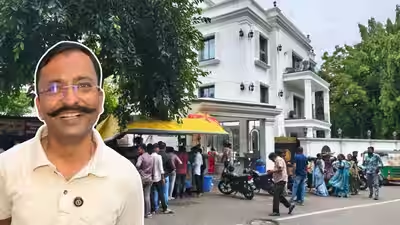
In 1997, this man quit his job and started selling vada pav for just ₹2.5 in Surat, nearly three decades later ‘Anilbhai’ owns a huge, posh white bungalow which stands next to his cart

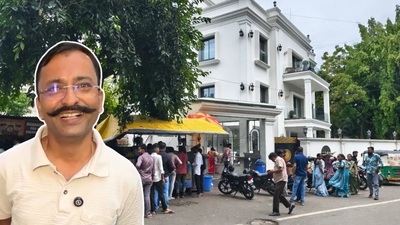
A vada pav cart standing beside a white bungalow in Surat, Gujarat has caught attention on social media for a long time now. The bungalow belongs to the man who runs the cart itself, known as Anilbhai. He has been selling vada pav since 1997, when one cost just ₹2.50. Today, the cart remains part of his daily routine, even though he owns the bungalow next to it.In an Instagram video with food vlogger Harry Uppal, Anilbhai spoke about his journey from working with his mother and leaving a job at ONGC to building a vada pav business.
“I didn’t build that bungalow, Mataji did”
During the conversation, Harry Uppal told Anilbhai that he had seen news about a man from Surat who had made a bungalow by selling vada pav. “That’s me,” Anilbhai replied. “But I didn’t build that bungalow. Mataji (goddess) made it. It’s made by her blessings,” he said. The bungalow is located next to his vada pav cart. A small standing area has also been set up in the bungalow premises where customers can enjoy their vada pav. However, owning the house has not meant giving up the cart. Anilbhai said he still takes it out himself. “Even today, I take the cart out myself. If I don’t have a worker, I do it myself. I start at 6 in the morning. If I have guests, I take them out,” he told Harry.
Before vada pav, he worked with his family
Anilbhai said he started selling vada pav in 1997. Before that, he and his family had worked in different jobs, including looking after footwear and parking cars near Ambikani Ketanpe Temple. “Before that, we used to work near Ambikani Ketanpe Temple. We took care of the shoes. And we used to park the car,” he said. “We used to work from home with my mother. We have also sold vegetables. All of us. My mother, me, brother and sister have worked together.”His next job was at ONGC, where he worked as a peon. “I used to work with my mother in ONGC. I worked as a peon for 17 months in ONGC. After that, I left ONGC and I started this business.” That business was vada pav.
How he started selling vada pav for ₹2.50
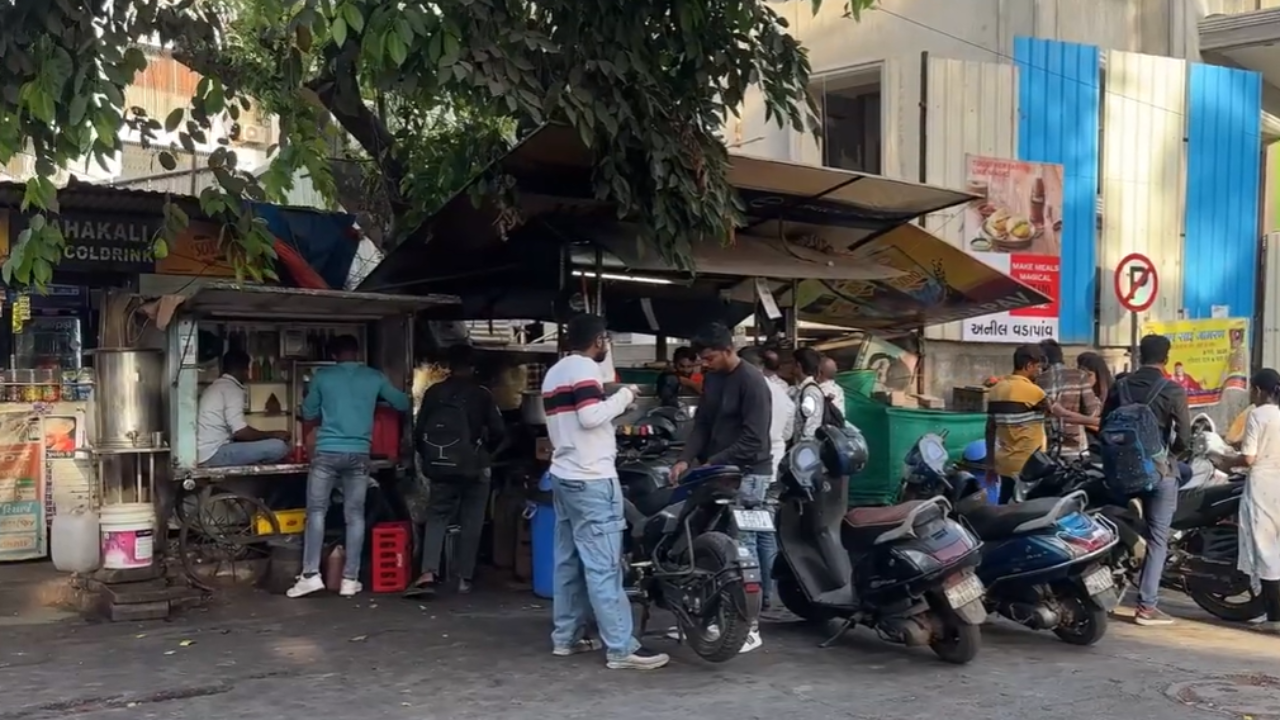
Currently, the vada pav is priced at ₹25 there.
Anilbhai said his mother already knew how to make vada pav. The family took inspiration from the popular street food in Mumbai and began selling it in Surat. “ My mother used to make Vada Pav. We used to get raw Vada Pav from Dabeli.” He added, “Vada Pav was famous in Bombay. We copied it and started it.”When asked about the price at that time, Anilbhai said, “We used to sell Vada Pav for 2.5 rupees.” He confirmed that this was in 1997, when his mother prepared the vada pav and he helped serve it. “I used to bring Vada Pav from the market,” he said. The early days were not easy. Anilbhai recalled facing problems while bringing the vada pav home and running his business on the road.Anilbhai told Harry that his stall was initially located on the main road. It was later moved to the spot next to the bungalow. “First, it was on the main road. Then it was here. Then it came here.” Harry asked if the cart had been moved from the main road. Anilbhai confirmed that it had. “Yes,” he said, explaining that there used to be a dispute at the earlier location.
“Mom makes the masala”
When Harry asked what made his vada pav special, Anilbhai gave credit to his mother. “Mom makes the masala. Mom has magic in her hands. She makes it and we sell it.” Anilbhai said his family has remained connected to the vada pav business. His son-in-law works with him, and his brother was also involved. “My son-in-law is with me. My son-in-law is also with me. My brother was also with me.” He added that his brother had a vada pav shop at Navy College. “My brother had a shop at Navy College. Vada Pav is still there.” Harry pointed out that the shop sold only one item. “Only one item,” Anilbhai confirmed.
“It was my brother’s and my mother’s dream”
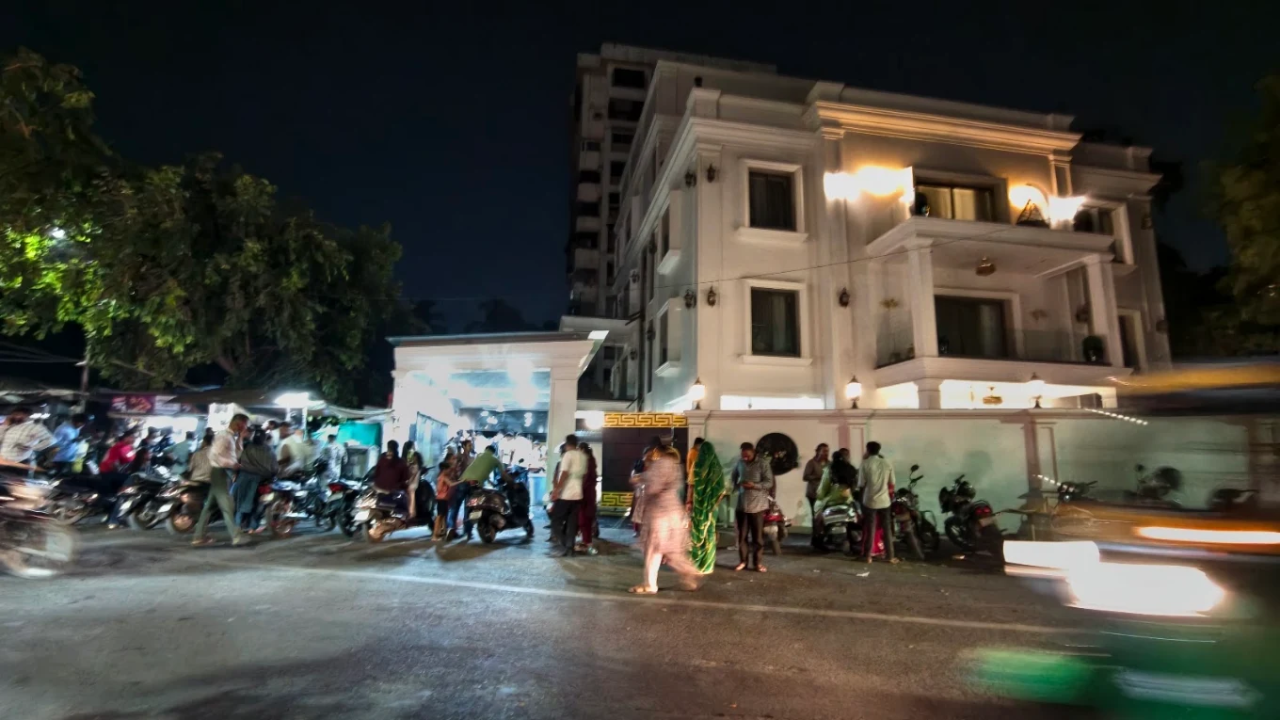
Anilbhai said he had previously visited the same bungalow to sell vegetables.
The bungalow next to the cart became one of the main points of the conversation. When asked whether owning such a house had been his dream, Anilbhai said it was not something he had imagined for himself. “It wasn’t my dream. It was my brother’s and my mother’s dream. I never thought that I would live in a bungalow. I never thought that.”He also spoke about the bungalow’s earlier owner. “First, there was a bungalow here. Hitesh Parek was the owner. We bought it.” Anilbhai said he had previously visited the same bungalow to sell vegetables. “I used to come to this bungalow to sell vegetables.” Today, the bungalow is his home, and the vada pav cart remains outside it.
“Any person who works hard will get a reward like this”
Anilbhai also spoke about the importance of working hard. He said people often assume that those who sell food on the road are poor. “People keep saying that we are poor.” He then added, “But by working hard, any person who works hard, young or old, will get a reward like this.”For Anilbhai, the cart and the bungalow are part of the same journey. He started selling vada pav in 1997 for ₹2.50. Nearly three decades later, he lives in the bungalow next to his cart.