
Spanish cave remains reveal repeated cannibalism in prehistoric Europe, from violent deaths to human skulls turned into cups | World News

Ancient human remains from three caves in southern Spain are revealing a disturbing but complex chapter in Europe’s prehistoric past. Researchers examined nearly 1,000 human bones from Malalmuerzo, Carigüela and Majolicas caves in Granada, finding evidence that people cut, fractured, chewed and deliberately modified human remains during different periods of the Neolithic. The findings suggest cannibalism was not one continuous tradition, but a practice that appeared repeatedly in different contexts over thousands of years, offering clues about prehistoric violence, death and ritual.
Ancient Spanish caves preserve evidence of repeated cannibalism
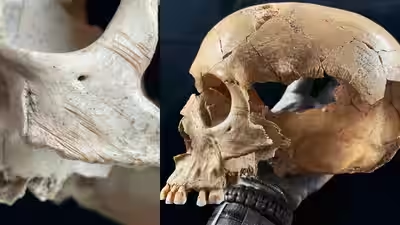
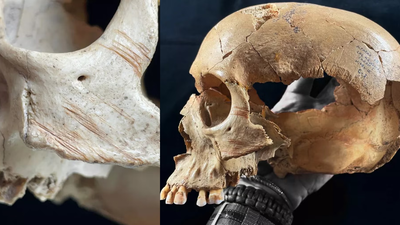
The remains come from three caves in Granada that have provided archaeologists with evidence of prehistoric human activity for decades. Researchers in ‘Multiphase human cannibalism in Neolithic southern Iberia: Chronological and taphonomic evidence from Malalmuerzo, Carigüela, and Majolicas Caves,’ published in Journal of Archaeological Science examined the bones for microscopic traces including cut marks, fractures, impact damage and tooth marks, while also studying how and when the damage occurred. Their analysis found evidence consistent with deliberate processing of human remains at all three sites, although the circumstances varied considerably. At Malalmuerzo, some remains appear connected with violent deaths, while Carigüela contained deliberately modified human skulls. At Majolicas, the treatment of human remains appears to have had a different cultural context, showing that the discovery cannot be reduced to one explanation for prehistoric cannibalism.
Cannibalism appeared during several distinct prehistoric periods
Rather than suggesting that Neolithic Europeans regularly consumed human flesh, the evidence indicates several separate episodes spread across thousands of years. The researchers identified concentrations around the end of the sixth millennium BC, the middle of the fifth millennium BC and the end of the third millennium BC. At Carigüela, evidence indicates several episodes of cannibalism during the Neolithic, including the deliberate modification of two human skulls into cup-like objects. At Majolicas, the most recent evidence dates to approximately 3800 BC. The pattern suggests that cannibalism repeatedly emerged under particular circumstances rather than representing a permanent or universal feature of prehistoric communities.
Some remains reveal possible episodes of prehistoric violence
One of the most striking sets of evidence comes from Malalmuerzo, where fractures and other damage to the bones indicate that some individuals may have died violently. The remains belonged to people of different ages, leading researchers to consider whether a group could have been attacked, killed and subsequently consumed. This interpretation potentially connects cannibalism with conflict between prehistoric communities. However, the researchers do not treat every damaged bone as proof of warfare. The contrasting evidence from the three caves demonstrates that human remains could be processed in different ways and for different reasons, including possible conflict, consumption and cultural or ritual practices.
Human skulls were transformed into objects after death
The discoveries at Carigüela offer some of the clearest evidence that the treatment of human remains was not necessarily motivated by hunger alone. Two skulls were deliberately modified into cups, suggesting that parts of the human body could acquire a new symbolic or practical purpose after death. The researchers therefore argue against viewing “Neolithic cannibalism” as one uniform practice. Similar marks on human bones can emerge from very different circumstances, and the archaeological record points towards a complicated relationship between death, the body and community life. These recurring episodes provide a rare glimpse into how prehistoric societies dealt with violence, the dead and relationships between groups.