

In 1973, Montana released a gall fly to control spotted knapweed; decades later, the biocontrol program was linked to over 3 times more hantavirus-positive deer mice

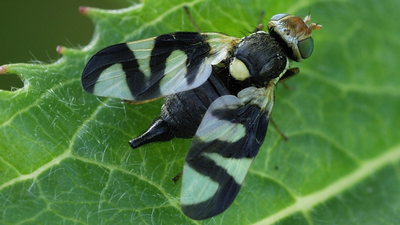
A biological control project started half a century ago to destroy a stubborn invasive weed accidentally set off an ecological chain reaction that increased human exposure to a deadly virus. In 1973, wildlife officials and agricultural scientists in Montana released two species of European gall flies, Urophora affinis and Urophora quadrifasciata, to control the spread of spotted knapweed (Centaurea stoebe). Decades later, major research published in Ecology Letters and archived by the US Forest Service Treesearch database found that the flies became a common winter food source for native deer mice (Peromyscus maniculatus). The extra food helped mouse populations grow and increased the spread of Sin Nombre hantavirus. As a result, knapweed-infested areas had more than three times as many hantavirus-positive deer mice as areas of native grassland without knapweed.
A well-intentioned biocontrol intervention
Spotted knapweed, an aggressive Eurasian perennial plant introduced to North America in the late 19th century, had spread across millions of acres of western rangeland by the middle of the 20th century. The weed takes over pastures, competes with native grasses, increases soil erosion and greatly reduces the amount of land available for livestock grazing. To control the weed without relying heavily on costly chemical herbicides, agricultural managers turned to classical biological control. According to an early study published in Environmental Entomology by Jim Story and Robert Nowak of the Montana Agricultural Experiment Station, Urophora affinis was introduced into Montana in 1973. Field trials had shown that the fly’s larvae create galls inside knapweed seed heads, using the plant’s nutrients and reducing the number of viable seeds produced. A second species, Urophora quadrifasciata, soon spread across the region. Entomologists initially considered the flies a success because large numbers of knapweed seed heads were being attacked in Western Montana.
An unintended winter food source
Although the gall flies became very common, they did not eliminate or greatly reduce the overall amount of spotted knapweed across the Northern Rockies. Instead, the large number of larvae created a rich and reliable winter food source for local wildlife. Research led by ecologist Dean E. Pearson of the US Department of Agriculture Forest Service Rocky Mountain Research Station, together with researchers from the University of Montana, showed how deer mice changed their winter feeding habits to take advantage of the introduced insects. During the cold autumn and winter months, when native seeds and insects are harder to find, deer mice spend more time feeding in knapweed patches. The mice open the dry seed heads and eat the gall fly larvae that remain inside through winter. Pearson’s research team found that the larvae could make up as much as 85 per cent of a deer mouse’s winter diet in heavily infested areas. This effectively removed the seasonal shortage of food that had previously helped keep mouse numbers under control.
Rising rodent numbers and hantavirus risk
The extra winter food changed the local mouse population. With a steady food supply, deer mice in areas dominated by knapweed survived the winter at much higher rates. They also entered the spring breeding season in better physical condition than mice living in areas of native bunchgrass prairie. The increase in mice also created a public health concern. Deer mice are the main natural hosts of Sin Nombre virus, a hantavirus that can spread to people when they breathe in tiny particles from the urine, droppings or saliva of infected rodents. In humans, the virus can cause Hantavirus Pulmonary Syndrome (HPS), a serious respiratory disease with a mortality rate of about 36 per cent, according to the US Centers for Disease Control and Prevention. In field studies examining this chain of effects, Pearson and his colleagues found that deer mouse numbers were twice as high in knapweed-infested areas. More importantly, the higher mouse density and increased contact between mice during aggressive winter feeding led to more virus transmission. Blood tests showed that knapweed sites had more than three times as many hantavirus-infected deer mice per hectare as native grassland sites.
Implications for future invasive species management
The connection between Urophora gall flies, spotted knapweed and hantavirus transmission is a well-known example of the unexpected effects that can follow biological control programmes. Instead of controlling the target weed, the introduced flies unintentionally provided extra food for a native disease-carrying animal. Later management guidance from the US Forest Service and state agriculture departments stressed the importance of studying possible effects across entire food webs before releasing non-native biological control agents. Modern approaches require scientists to consider not only whether an agent will attack its target weed, but also how it could affect local food chains and predator-prey relationships over many years. Across Montana, weed control efforts have increasingly moved towards combining several methods. These include reseeding native plants, planting competitive species and using host-specific root weevils such as Cyphocleonus achates to reduce knapweed without creating large populations of larvae that can become food for rodents.