
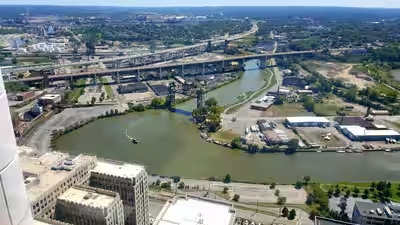
In 2020, Ohio removed a dam from the once-polluted Cuyahoga River; it reopened 39 km of habitat, and scientists later detected 15 additional fish taxa

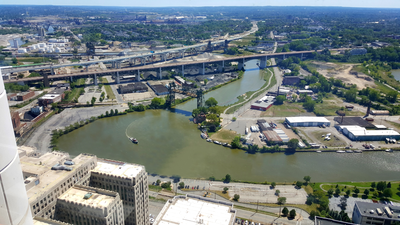
An 18-metre concrete dam on Ohio’s Cuyahoga River once stopped migrating fish from reaching important spawning areas for more than a century. Today, aquatic life is quickly returning to the river. Researchers from the US Geological Survey, working with state biological agencies, have released new long-term monitoring data showing a major ecological recovery. After the Brecksville Diversion Dam was removed in 2020, scientists found 15 fish species that had not previously been detected in the lower Cuyahoga River, a major tributary that flows into Lake Erie.The study, titled “Beyond barriers: Fish assemblage recovery following dam removal on the Cuyahoga River, a Lake Erie tributary”, was published in the journal Restoration Ecology (DOI: 10.1111/rec.70436) and is available through the USGS Publications Warehouse. Lead author Matthew Ross Acre and a research team from several agencies studied fish populations using four decades of survey data collected from 1984 to 2024. Removing the Brecksville Dam immediately reopened 39 kilometres of connected, free-flowing river habitat linked directly to Lake Erie. Removing the barrier more than doubled the amount of open river available to migrating fish below the Gorge Plant Dam, a large 18-metre structure farther upstream.
Biological monitoring across four decades
The research team studied changes in fish communities across different locations and periods by comparing survey sites downstream, inside and upstream of the Gorge Plant Dam’s impounded area. Using statistical methods, scientists tracked changes in the mix of fish species over different time periods. The results showed a clear difference between areas above and below the remaining dams. Sections downstream of the former Brecksville site showed a clear ecological change over time, with native species arriving and establishing themselves. Fish communities upstream of the 18-metre Gorge Plant Dam, however, showed very little overall change. Researchers said the changes seen there were mainly caused by existing resident fish moving around within the area rather than new migratory species arriving. Statistical models showed that a site’s position in relation to the Gorge Plant Dam, along with the rate of dam removal across the river basin, was the strongest factor affecting the makeup of fish communities. Local conditions, including water depth, flow speed, turbidity and forest cover above the river, also influenced how individual species spread through the river.
Balancing native recovery and nonnative spread
While the return of native fish shows the immediate benefits of reconnecting the river, the USGS study also found possible ecological risks linked to removing barriers. Of the 15 newly recorded fish taxa found in the lower Cuyahoga after the 2020 dam removal, 12 were native species. They were either using newly available seasonal spawning areas or expanding their range from Lake Erie. Three of the newly recorded taxa, however, were nonnative species. Biologists noted that removing dams restores natural river flows and allows native fish to return to historic migration routes. But open river corridors can also give invasive and nonnative aquatic species new ways to move upstream. Managing these two outcomes remains a major challenge for river restoration projects across the Great Lakes basin. The Cuyahoga River is famous for catching fire in 1969 after decades of severe industrial pollution. Since then, it has undergone extensive environmental cleanup under the Great Lakes Water Quality Agreement. Removing old industrial dams is now seen as an important final step in restoring the river’s natural habitat.
Future barrier removals along the river system
The findings come as state and federal agencies prepare for another major step in restoring the Cuyahoga River basin. According to the Ohio Environmental Protection Agency and the US Army Corps of Engineers, plans are being developed to breach and remove the 18-metre Gorge Plant Dam. The structure currently blocks fish from reaching the upper sections of the river. The USGS research team said long-term biological data collected over several decades provides an important baseline for understanding how fish and other aquatic life may respond after the Gorge Plant Dam is removed. By showing the direct link between connected river habitat and greater species diversity, the Restoration Ecology study demonstrates that removing physical barriers can be one of the most effective ways to help damaged rivers recover. Monitoring along the lower Cuyahoga River will continue as scientists track whether the newly arrived fish populations become permanently established.