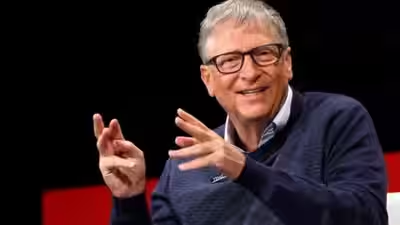
Bill Gates : Microsoft co-founder Bill Gates warns tech executives are hiding how dangerous AI really is; says: They’re now saying to each other, hey man, don’t say that, it’s… |

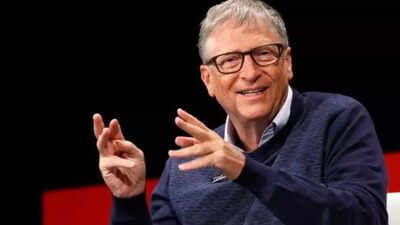
Bill Gates thinks the AI industry knows exactly how dangerous its own product is getting, and has quietly agreed among itself not to say so. In an hourlong interview with The New York Times at his Seattle-area offices, the Microsoft co-founder said executives who understand the pace of improvement are privately worried, and that the reason none of it is said out loud is money, specifically the next trillion dollars the sector is trying to raise.The interview followed a nearly 6,000-word essay Gates published on his blog, Gates Notes, arguing that easing the world into the AI era should be the planet’s top priority and that no such plan currently exists. What moved him from interested to alarmed was code. Gates says only three technologies have ever truly stunned him: the graphical user interface in 1980, the OpenAI demo in his living room in 2022, and this year, Anthropic’s Claude Code, which he now rates as better than he is at the one subject he knows best.
AI job losses will not follow the farm-to-office script that everyone keeps citing
The standard reassurance, that every technology destroys jobs and creates more, is the part Gates flatly rejects. The shift from agriculture to office work took generations and moved people into roles that still needed human thinking. AI substitutes for the thinking itself. He expects law, customer service, medicine, software and manufacturing to be hit at once, over a decade rather than three generations, with entry-level and mid-level roles going first. Young workers worry him most. They are the heaviest users, they can see the improvement curve, and they are walking into a market with fewer first rungs.
Bill Gates wants a token tax because the tax code currently pays employers to automate
His first fix is fiscal. Hire a person and you pay payroll taxes on their earnings. Buy a robot and you can usually write it off immediately as a business expense. Gates wants a levy on AI tokens and on robots, targeted narrowly enough to spare cheap medicine and education, with the revenue funding retraining and a sturdier safety net. He floated a robot tax years ago and got mostly puzzled looks. The token version has since drawn interest on Wall Street. He pairs it with what he calls Human Reserved, categories of work deliberately closed to machines. The example he keeps returning to is the team that cared for his father through Alzheimer’s, who knew he was hungry when he could no longer say it.
Voluntary safety commitments are the part of the current approach that Gates finds indefensible
The second risk is misuse. Gates argues AI collapses the distance between wanting to cause harm and being able to, and that the same model which finds a software flaw for a defender finds it for an attacker. Hospitals, power grids and benefits systems are the exposed surface. On bioterrorism he is blunt: a small group with a capable enough model could design a new pathogen, and he says he would debate anyone who opposes mandatory review of systems that can generate novel molecules. His essay calls for a national body that can set priorities across agencies, plus an international one borrowing from nuclear inspections, aviation regulation and the ozone treaties.
He is still selling the upside, from Rwandan clinics to Indian farmers
None of this makes him an AI pessimist. The essay points to Viz.ai flagging strokes in nearly 2,000 American hospitals, to the 40 million Indian farmers who got an SMS last monsoon warning that the rains would arrive early and then pause, and to Horizon 1000, the $50 million Gates Foundation and OpenAI effort to put AI tools into 1,000 African primary care clinics by 2028. His fear is sequence. If the first thing AI does in most people’s lives is take the job, nobody stays around for the rest of it.Gates lists his own disqualifications readily enough: the tech fortune, the Microsoft antitrust history, he has called his own mistake. He has decided that being an awkward messenger costs less than staying quiet, and says he will raise AI with every leader he meets.