
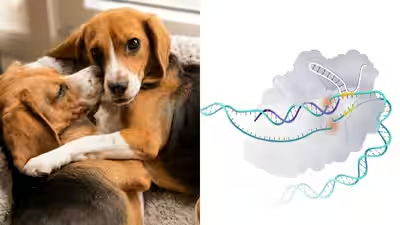
Researchers edited 25 beagle embryos to remove a major dog allergen; two pups born in 2024 produced no detectable Can f 1 and did not trigger one allergic founder’s skin-prick test

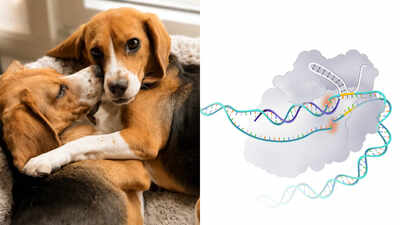
Dogs are often called humans’ best friend, but for people with dog allergies, living with a canine companion can be difficult or even impossible. Now, researchers have taken a step toward creating dogs that may be easier for some allergy sufferers to live with. According to online reports, scientists at Kindred Companion Sciences have used CRISPR, the Nobel Prize-winning gene-editing technology, to remove a gene responsible for producing Can f 1, one of the major proteins associated with dog allergies. The work, published August 5 in the CRISPR Journal, resulted in two female beagles, Alfie and Bailey, born in September 2024. The dogs look like ordinary beagles, but testing suggests they lack detectable levels of the targeted allergen. The project has a personal connection for Kindred co-founder and CEO Matt Walker, a geneticist who has lived with dog allergies throughout his life. According to a report by Smithsonian magazine, Walker’s allergies prevented his family from owning a dog, while his wife, Maggie, had always wanted one. Bailey eventually became part of their family, and Walker says she has not caused him to experience allergic reactions. To create the dogs, researchers first took skin cells from a beagle and edited the cells’ Can f 1 genes. They then cloned the modified cells and transferred their altered DNA into donated egg cells. The resulting 25 reconstructed embryos were implanted into a surrogate beagle, which eventually gave birth to Alfie and Bailey.
No detectable Can f 1
Researchers tested saliva and dander from the gene-edited dogs and found no detectable Can f 1 protein. By comparison, the protein was detected in samples from a conventional beagle, as well as a poodle and goldendoodle—two breeds often marketed as hypoallergenic. The researchers also conducted skin-prick testing using samples from the dogs. Extracts from the conventional beagle, poodle and goldendoodle produced allergic reactions in Walker. Samples from Alfie and Bailey, however, did not trigger a reaction. However, that does not mean the dogs are guaranteed to be allergy-free for everyone. Other dog proteins, including Can f 2, can also cause allergic responses, states the online journal report.
Health and ethical questions remains same
So far, the gene editing does not appear to have affected Alfie and Bailey’s health. Still, researchers say the animals will be monitored closely throughout their lives. The research has also raised ethical questions about genetically modifying companion animals. Some experts note that gene editing could potentially expand pet ownership, while others worry that demand for engineered dogs could reduce interest in adopting stray or unwanted animals. Animal genetics experts have also pointed out that humans have long altered animals through selective breeding. The ethical debate, they argue, is therefore not simply about the technology itself, but about how humans choose to create and use animals.
A potential new generation of dogs
Kindred ultimately hopes to develop “founder animals” that can reproduce naturally and pass the edited gene to their offspring. If successful, the trait could eventually become established in future generations. For now, however, dogs like Alfie and Bailey are not available for purchase. The gene alteration has not been approved by the U.S. Food and Drug Administration, and much more research will be needed before gene-edited, allergy-friendly dogs become a realistic option for pet owners. Still, Alfie and Bailey represent an intriguing early step toward a future in which dog allergies may no longer prevent some people from sharing their homes with a canine companion.Images Courtesy: Kindred Companion Sciences