
Nepal floods: No contact with 288 Indians in Nepal, another 200 stranded on China side – key points

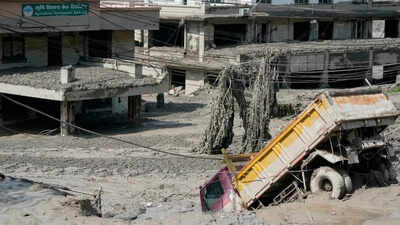
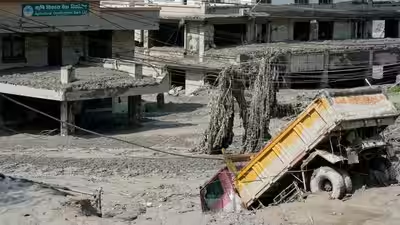
Nepal is battling the aftermath of catastrophic floods and landslides triggered by a glacier collapse, with hundreds killed and more than 1,300 people reported missing across Nepal and Tibet. Rescue teams are racing against difficult terrain, damaged roads and bridges, and the risk of further disasters as relief operations continue in the Himalayan region.India has intensified efforts to trace its nationals affected by the disaster, with external affairs minister S Jaishankar reviewing the situation with senior MEA officials and Indian ambassadors in Kathmandu and Beijing. The MEA is coordinating with Nepalese authorities, state governments, tour operators and project agencies to establish the status and well-being of Indians in the affected areas.
288 Indians remain unaccountable: MEA
Two hundred and eighty-eight Indian nationals remain unaccounted for following the devastating flash floods in Nepal, the ministry of external affairs (MEA) said.MEA spokesperson Randhir Jaiswal said the missing Indians included people working on hydropower projects as well as members of tourist groups. Of the 288, 73 are employees of the Trishuli One Power Project, with the Indian embassy in Kathmandu in touch with the project’s head to gather more information.Jaiswal also said 21 Indians from Tamil Nadu had been rescued following the floods, while around 200 Indians in Tibet had sought assistance from India.“There are 288 Indian nationals who remain unaccountable. These include 73 Indian nationals who are working on the Trishuli One Power Project. Our embassy in Kathmandu is in touch with the project head to get more details about these people,” Jaiswal said.“India is standing shoulder-to-shoulder with Nepal in this difficult time and we are ready to provide all assistance as per requirements of that country,” he added.
Jaishankar reviews flood situation
Jaishankar held a review meeting with foreign secretary Vikram Misri, MEA spokesperson Randhir Jaiswal and other officials, as well as India’s ambassadors in Kathmandu and Beijing.“Held a review meeting with foreign secretary, Team MEA and our ambassadors in Kathmandu & Beijing on the Nepal flood disaster. Urgent efforts are underway to ascertain the status and well-being of all Indians in the flood-affected areas,” Jaishankar said in a post on X/“MEA is coordinating with various ministries, state governments, tour operators and project authorities in this regard. We are working closely with the Nepali side, both on this aspect and on the relief efforts,” he added.
India sends second relief consignment
India has dispatched a second tranche of humanitarian assistance to Nepal. Jaishankar said a flight carrying 37.5 tonnes of humanitarian assistance and disaster relief material, medicines and food packets had departed for Nepal.This followed an initial 10-tonne consignment of relief material, including essential medicines, sent on Wednesday. Indian ambassador to Nepal Naveen Srivastava handed over the supplies to Nepal’s minister for culture, tourism and civil aviation Khadak Raj Paudel in Kathmandu.Prime Minister Narendra Modi had also spoken with Nepal’s Prime Minister Balendra Shah on Wednesday and offered India’s support for rescue and relief operations.
Hundreds killed, more than 1,300 missing
The disaster has killed at least 332 people in Nepal and left 826 missing, while three people have died and 558 remain missing in Tibet, according to authorities cited in reports.Nepal’s army has rescued more than 100 people through helicopter operations, while at least eight foreign nationals were airlifted to Kathmandu. Dozens of bridges and nearly 40 km of roads were damaged, complicating rescue operations.
Glacier collapse behind deadly floods
The US geological survey later determined that the event initially reported as an earthquake was a magnitude 5.2 glacier collapse that sent a destructive torrent downstream.Experts at the International Centre for Integrated Mountain Development said an avalanche from a glacier likely triggered the flash flood. Water levels in the Trishuli river rose by as much as 9 metres within half an hour, underscoring the speed and scale of the disaster.