
Donald Trump: Raids & kidnapping drills: How Chinese students are preparing for college in Trump’s USA

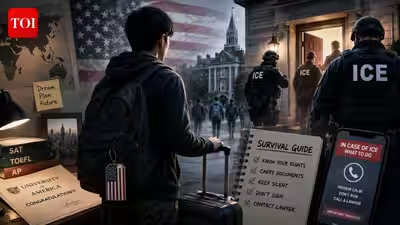
For most Chinese teenagers preparing to leave for American universities, the final months before departure are all about packing clothes, buying the right laptop and saying goodbye to family.But some are being taught what to do if armed men burst into their rooms.According to a report by South China Morning Post, private summer camps in China are simulating encounters with US immigration authorities, including fake Immigration and Customs Enforcement (ICE) raids.The message to students is stark: once they arrive in America, they must be prepared not only for academic pressure and culture shock, but also for an immigration system that has become unpredictable and hostile.The unusual training reflects a much broader shift in the way some Chinese families are thinking about American higher education.For decades, admission to a US university represented the culmination of an intensely competitive academic journey. Now, amid President Donald Trump‘s sweeping immigration crackdown, some parents are treating the journey as a potential security risk as well.
Surviving in the USA
Report of such summer camps have emerged against a backdrop of rapidly changing US immigration rules and a heightened political focus on foreign students.The Trump administration has tightened scrutiny of international students, expanded visa vetting and taken steps to make it easier for immigration authorities to act against people whose status is questioned.In 2025, the administration moved to terminate thousands of student records in the Student and Exchange Visitor Information System (SEVIS), triggering lawsuits and widespread anxiety on US campuses. The government subsequently restored access for many students whose records had been terminated, while maintaining that it had not reversed individual visa revocations.
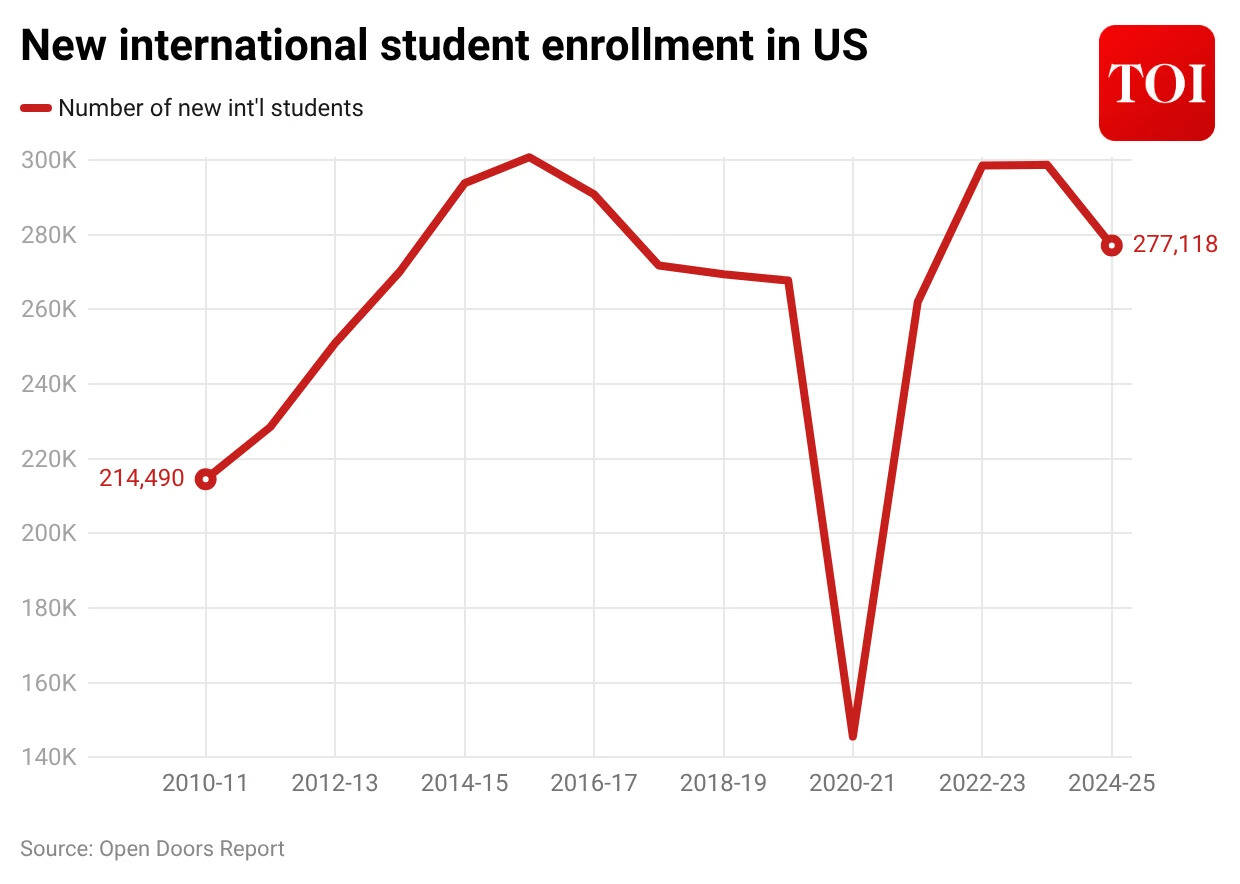
The Trump administration has tightened scrutiny of international students.
The administration also announced a tougher approach to Chinese student visas, saying it would aggressively revoke visas for some Chinese students and increase scrutiny of future applications from China and Hong Kong. Student and exchange-visitor applicants were also subjected to expanded vetting, including scrutiny of their social media presence.This has created a new calculation for Chinese families sending their children to the US.A student who has spent years preparing for university can now find that admission is only one hurdle.Getting a visa, passing security checks, maintaining legal status and avoiding behaviour that could attract immigration scrutiny have become equally important concerns.The psychological effect is significant.Students are being encouraged to understand their rights, carry documentation, think carefully about their digital footprint and know what to do if approached by immigration officers.For some families, however, the precautions have gone much further.
Why Chinese parents are especially anxious
Chinese students occupy a unique position in the American higher-education system.According to data cited in recent reporting, 265,919 Chinese students were enrolled at US institutions during the 2024-25 academic year. Together, Chinese and Indian students accounted for 53% of all international students in US higher education.
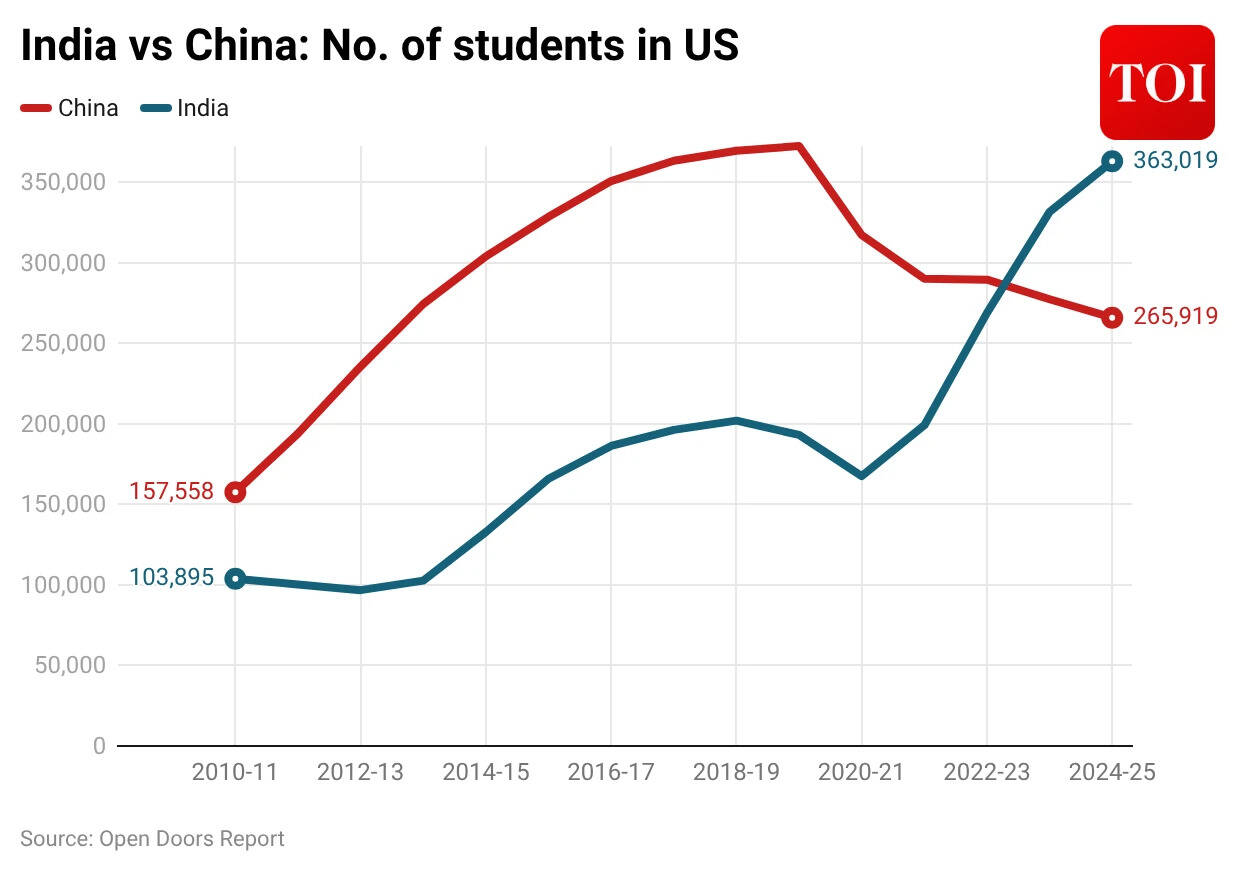
Chinese and Indian students accounted for 53% of all international students in US higher education
But Chinese students also sit at the intersection of two increasingly sensitive issues: immigration and US-China national security competition.Washington has repeatedly raised concerns about technology transfer, espionage, intellectual property and China’s military-civil fusion strategy. Beijing, meanwhile, has accused Washington of discriminating against Chinese students and restricting normal academic exchanges.
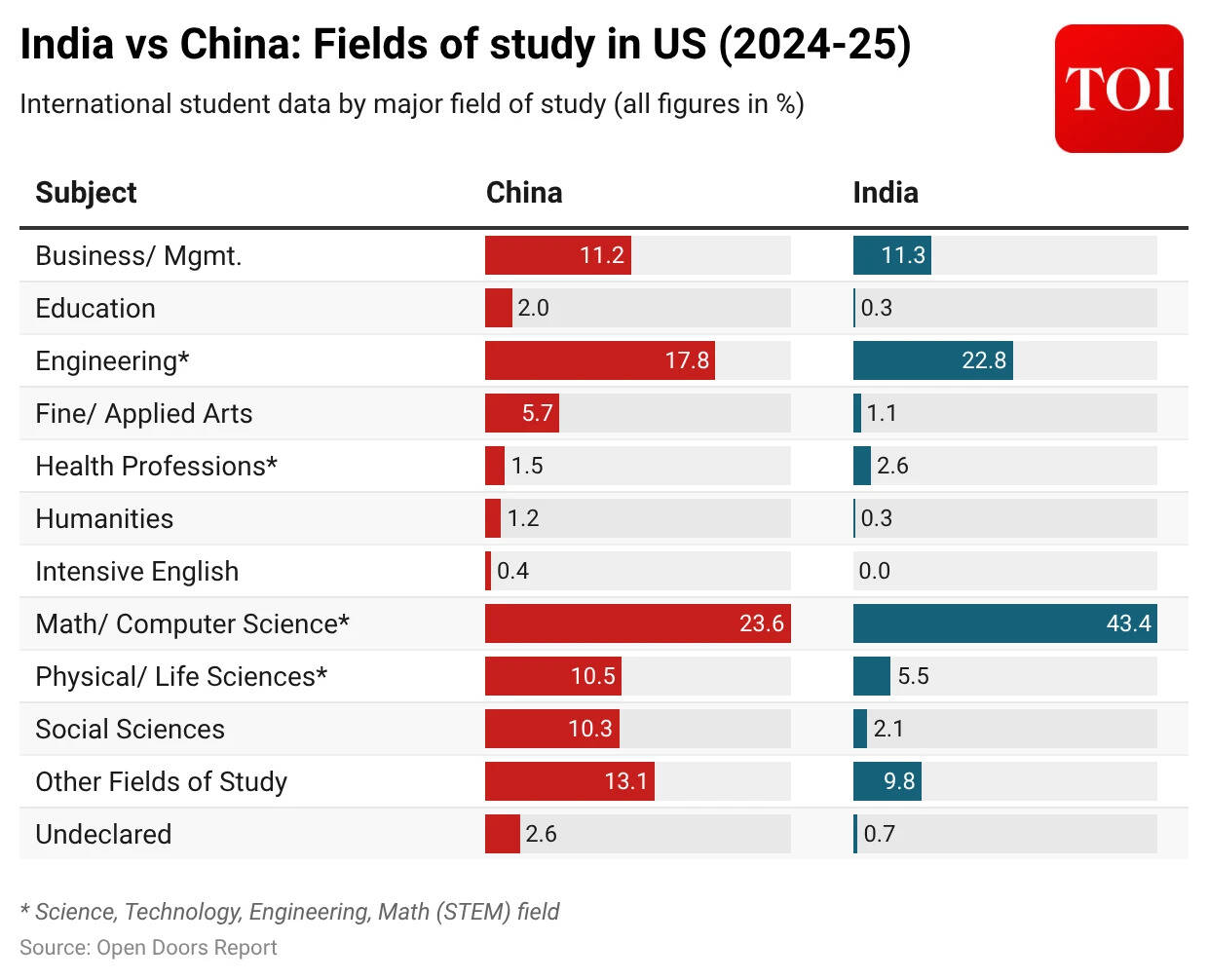
Washington has repeatedly raised concerns about technology transfer and espionage.
For an ordinary teenager heading to college, the geopolitical confrontation can feel distant. But the consequences can become personal when visa decisions, social media checks or immigration enforcement enter the picture.In 2025, the number of F-1 student visas issued to Chinese applicants fell sharply. One analysis cited by US media estimated that visas issued to Chinese applicants between May and August 2025 were 46% lower than during the comparable period in 2017.That decline has reinforced fears that studying in America is becoming less predictable.China’s government has itself objected to the new restrictions. After the US announced its latest student-visa changes in July 2026, Chinese foreign ministry spokesman Lin Jian called them discriminatory and said Beijing reserved the right to take reciprocal measures.
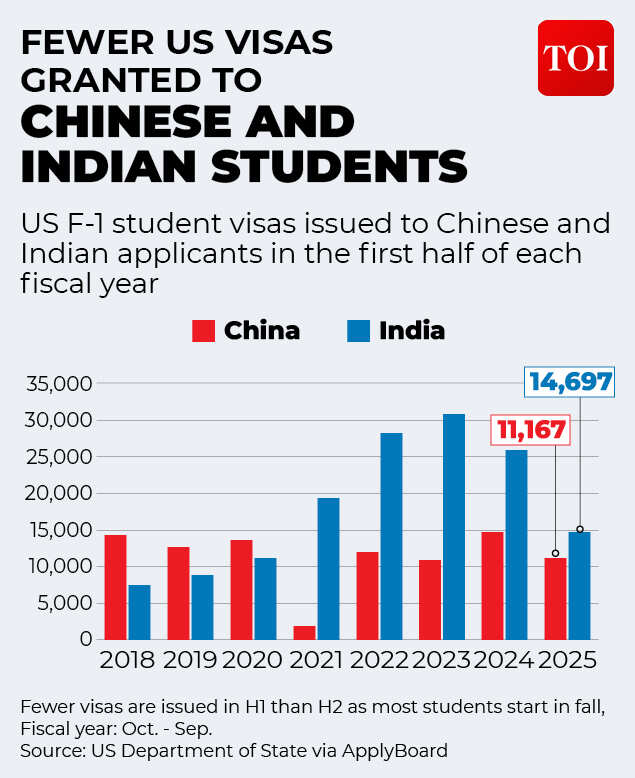
In 2025, the number of F-1 student visas issued to Chinese applicants fell sharply.
For families who have already paid large sums for American education, the question is no longer simply whether their child can get into a US university.It is whether the child can safely and legally remain there long enough to graduate.
The four-year clock
The latest change could make that anxiety even more acute.In July, the Department of Homeland Security announced a final rule ending the decades-old “duration of status” system for international students.Previously, students on F-1 visas could generally remain in the United States for the duration of their academic programme as long as they maintained their status.Under the new system, international students will generally receive a fixed period of admission of no more than four years, subject to extensions. The rule is scheduled to take effect in September.The administration says the change is designed to combat visa abuse and strengthen national-security oversight. DHS has argued that the old system allowed foreign students to remain in the country without sufficiently regular government review.Universities and immigration advocates see it differently.They point out that many doctoral, medical and research programmes routinely last longer than four years. Students could therefore face additional applications and uncertainty in the middle of their academic careers. The new rules also restrict some changes of academic programme or institution.For Chinese parents, the implication is straightforward: getting their child into an American university may no longer mean the child is secure there for the duration of the degree.There is now another deadline to worry about.
And then comes the question of staying
For many international students, the attraction of an American education has never been limited to the classroom.The possibility of gaining professional experience after graduation through Optional Practical Training, or OPT, has been an important part of the calculation.But even that pathway is now facing uncertainty.The Trump administration has considered imposing a $100,000 fee on international students seeking to work in the United States after graduation through OPT, according to a Wall Street Journal report. The proposal remains under discussion and is not established policy, but its emergence has added another layer of uncertainty for prospective students.The cumulative effect is powerful.A Chinese student planning to attend a US university may now have to think about admission, visa approval, social-media screening, immigration status, the four-year limit, possible extensions and the rules governing post-graduation employment.That is a very different proposition from the one presented to previous generations.
The fear goes beyond ICE
Perhaps the most striking aspect of the reported training camps is that some of the exercises are not even directly about immigration law.The kidnapping drills point to a deeper anxiety: the belief among some parents that their children will be entering an unfamiliar country where they may be vulnerable and far from home.This fear is amplified by China’s enormous distance from the US and by the fact that many students leaving for American colleges are teenagers or young adults experiencing independent life abroad for the first time.The drills therefore combine several anxieties into one: immigration enforcement, crime, political instability, unfamiliar laws and the fear that a young student may not know how to respond in a crisis.It is important, however, not to confuse these fears with evidence that Chinese students routinely face kidnapping or that ICE is conducting indiscriminate raids on foreign students.There is no evidence that such dangers are a normal part of student life in the United States.What the drills reveal is something different: how the perception of risk has changed.Parents do not necessarily need to believe that a kidnapping will happen to decide that their child should know what to do if it does.Likewise, a student does not need to expect an ICE encounter to feel anxious about what would happen if immigration officers questioned their status.
The social media problem
The atmosphere surrounding visa screening has also changed how international students behave online.In 2025, international students told the Washington Post that they were deleting posts, unfollowing political accounts and scrutinising years of social-media activity because they feared that jokes, memes, political opinions or other online activity could jeopardise their visa applications.The State Department’s expanded vetting policy has made digital behaviour an increasingly important part of the immigration process.For Chinese students, that creates a particularly sensitive environment because virtually every aspect of US-China relations can become politically charged.A student can be academically exceptional and have no connection to politics or national security issues, yet still worry that something posted years earlier could be misunderstood.That produces a form of self-censorship that begins before the student ever boards an aircraft.
A new generation arrives in America differently
The result is a striking transformation in the psychology of studying abroad.Previous generations of Chinese students often arrived in America with one overriding objective: succeed academically.Today’s students may arrive with a second mission: avoid becoming entangled in America’s increasingly aggressive immigration and national security machinery.That does not mean Chinese students are abandoning the United States.American universities remain enormously attractive because of their academic reputation, research opportunities and global career networks.But the decision is becoming more complicated.
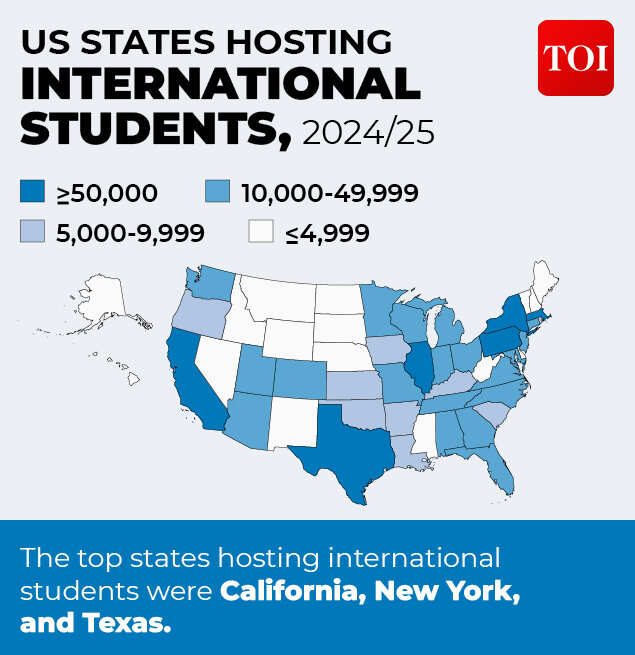
California, New York and Texas hosted the most int’l students in 2024-25.
For parents paying tens of thousands of dollars in tuition and sending their children thousands of kilometres away, uncertainty carries a price of its own.The kidnapping drills may therefore be less about preparing students for a specific threat than about preparing them for a world in which the rules appear to be changing faster than families can keep up.The irony is hard to miss.America’s universities have long marketed themselves as places where young people from around the world can come to learn, experiment and build their futures.Now, some Chinese teenagers are arriving at those same campuses after being taught what to do if someone breaks into their room, takes their phone or threatens to deport them.That is the real significance of the drills.They are not evidence that America has suddenly become a war zone for Chinese students.They are evidence that the psychological border between immigration enforcement and everyday student life has become much thinner.And as Trump’s immigration policies continue to tighten the rules around who can enter, how long they can stay and what they can do after graduation, some Chinese families are responding in the most dramatic way possible: by training their children not just to study in America, but to survive the uncertainty of studying there.