
Skip to content
-
Subscribe to our newsletter & never miss our best posts. Subscribe Now!
  • ଦେଶ ବିଦେଶ
  • ଜିଲ୍ଲା
  • ରାଜ୍ୟ
  • ଓଡିଶା
  • ରାଜନୀତି
  • ଅର୍ଥନୀତି
  • ବାଣିଜ୍ୟ
  • ଅପରାଧ
  • ଖେଳ
  • ଦେଶ ବିଦେଶ
  • ଜିଲ୍ଲା
  • ରାଜ୍ୟ
  • ଓଡିଶା
  • ରାଜନୀତି
  • ଅର୍ଥନୀତି
  • ବାଣିଜ୍ୟ
  • ଅପରାଧ
  • ଖେଳ

Archives

  • August 2026
  • July 2026

Categories

  • Uncategorized
  • ଓଡିଶା
  • ଜିଲ୍ଲା
  • ଦେଶ ବିଦେଶ
  • ଦେଶ ବିଦେଶ
  • ଜିଲ୍ଲା
  • ରାଜ୍ୟ
  • ଓଡିଶା
  • ରାଜନୀତି
  • ଅର୍ଥନୀତି
  • ବାଣିଜ୍ୟ
  • ଅପରାଧ
  • ଖେଳ
Subscribe
Close

Search

ଦେଶ ବିଦେଶ

Researchers developed custom 3D-printed replacements for missing sections of ancient pottery and embedded sensors inside them, allowing conservators to monitor temperature, strain and environmental damage

By admin
August 24, 2026 2 Min Read
0
Spread the love


Researchers developed custom 3D-printed replacements for missing sections of ancient pottery and embedded sensors inside them, allowing conservators to monitor temperature, strain and environmental damage
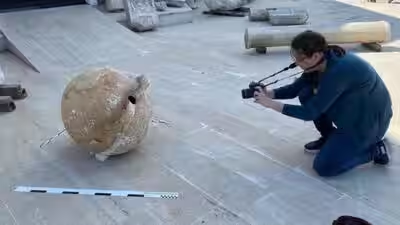
Dr. Savannah Ulalian Bishop photographs an archaeological amphora (Picture: KOC University)

Imagine an ancient amphora recovered from the seabed after centuries underwater. It may be cracked, covered with deposits or missing large sections. Restoring such an object is difficult without causing further damage.To overcome this problem, researchers at Koc University in Turkiye have developed a conservation method that combines photogrammetry, digital modelling, 3D printing and embedded sensors, Phys.org reported. It is designed to replace missing parts of archaeological ceramic objects while also helping conservators monitor changes that could affect their condition.The approach was described in a study published in the Journal of Cultural Heritage. It was developed by archaeologists and engineers from Koc University’s Mustafa V Koc Maritime Archaeology Research Center (KUDAR) and Manufacturing and Automation Research Center (MARC).

3D repairing of pottery

The process begins by photographing the archaeological amphora. Researchers take hundreds of overlapping photographs of the object. These images are then processed using photogrammetry software to create a detailed three-dimensional digital model.Once the model is created, researchers can digitally reconstruct the missing section of the ceramic object. The replacement can then be produced using 3D-printing technology and customised to fit the damaged amphora.The researchers developed what they describe as customised ‘smart’ fills. Sensors can be integrated directly into the 3D-printed replacement section. These sensors are designed to detect changes in temperature, humidity, pH and physical stress.

Sensors track artefacts

Temperature, humidity and physical stress can affect the stability of archaeological objects. The researchers noted that such changes can contribute to salt migration, deformation and microfractures, among other forms of deterioration.The researchers tested the methodology using maritime amphorae from two collections. One group consisted of Günsenin IV amphorae recovered from the late Byzantine Camaltı Burnu I shipwreck. These amphorae are displayed at the Bandırma Archaeology Museum in Turkiye.The second collection consisted of a mixed group of amphorae from the Amalfi coast. These objects are held at the Minori Villa Romana e Antiquarium in Italy.Initial measurements taken in museums showed that the integrated sensors could record daily changes in temperature and humidity. A stress sensor also detected patterns of force affecting the objects.The method could be particularly useful for maritime archaeological objects. Artefacts recovered from underwater environments can experience mechanical, chemical and biological deterioration.The researchers said further work will examine the results, practical applications and cost-effectiveness of the approach.



Source link

Author

admin

Follow Me
Other Articles
Previous

‘Hindu baiter’: CM Himanta slams Rahul Gandhi over Manusmriti row | India News

Next

Some stars repeatedly skim past supermassive black holes, lose material and survive; scientists now think their unusually rapid spin explains why each returning flare becomes progressively dimmer

No Comment! Be the first one.

Leave a Reply Cancel reply

Your email address will not be published. Required fields are marked *

‘Iran tried to murder my son’: Netanyahu makes big claim against Tehran

‘Iran tried to murder my son’: Netanyahu makes big claim against Tehran

August 24, 2026
5 sectors and a warning for world: US launches ‘Operation Economic Outcast’ against Iran

5 sectors and a warning for world: US launches ‘Operation Economic Outcast’ against Iran

August 24, 2026
Gasping for breath, running for their lives: Inside Nagpur’s chlorine gas leak horror that hospitalised 56 | Nagpur News

Gasping for breath, running for their lives: Inside Nagpur’s chlorine gas leak horror that hospitalised 56 | Nagpur News

August 24, 2026
US unleashes ‘Malice’: F-35C gets a 463-km air-to-air strike reach

US unleashes ‘Malice’: F-35C gets a 463-km air-to-air strike reach

August 24, 2026

About Us

We love WordPress and are here to provide you with professional-looking WordPress themes so you can take your website one step ahead. We focus on simplicity, elegant design, and clean code.

TG: Ads

About Us

Lorem ipsum dolor sit amet, consectetur adipiscing elit, sed do eiusmod tempor incididunt ut labore et dolore magna aliqua.

We love WordPress and we are here to provide you with professional-looking WordPress themes so that you can take your website one step ahead. We focus on simplicity, elegant design, and clean code.

Category

  • ଦେଶ ବିଦେଶ
  • ଜିଲ୍ଲା
  • ରାଜ୍ୟ
  • ଓଡିଶା
  • ରାଜନୀତି
  • ଅର୍ଥନୀତି
  • ବାଣିଜ୍ୟ
  • ଅପରାଧ
  • ଖେଳ

Useful Links

  • ରାଜ୍ୟ
  • ଦେଶ ବିଦେଶ
  • ଜିଲ୍ଲା
  • ଓଡିଶା
  • ରାଜନୀତି
  • ଅର୍ଥନୀତି
  • ବାଣିଜ୍ୟ
  • ଅପରାଧ
  • ଖେଳ
  • Privacy Policy
  • Contact Us
  • About Us
  • Terms of Use
Copyright 2026 — Koshal Sambad. All rights reserved. SSWPL