
America is ‘getting ready’ to send letter to dozens of countries telling them: You can go with us or China, it cannot be …

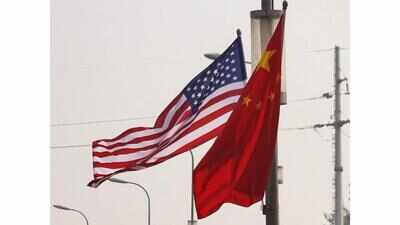
The United States is preparing to send a letter to dozens of countries, telling them that they must choose sides in the global AI race, according to a report by Reuters. As per a US official and a draft reviewed by Reuters, nations that join China’s competing framework will be excluded from Washington’s coalition, known as Pax Silica. For the uninitiated, launched last year, Pax Silica is designed to secure supply chains for AI models, semiconductors and critical minerals. Around two dozen countries have signed on, including Japan, Australia, South Korea, and Kazakhstan. But Kazakhstan has also joined China’s newly announced World Artificial Intelligence Cooperation Organization, raising concerns in Washington. The draft letter warns: “To be part of everything is to be part of nothing. Signature of the Pax Silica Declaration is not merely a membership subscription, but a commitment.”
America to send letter to dozens of countries
As per the report, The draft letter, prepared by the State Department, is addressed to the 35 signatories of a US. “AI Opportunity Statement” signed in June. Those signatories include members of the non-binding Pax Silica framework, an initiative Washington launched last year aimed at securing supply chains for AI models, semiconductors and critical minerals amid its intensifying rivalry with Beijing, as well as other countries that have expressed interest in aligning their AI cooperation with the US.Roughly two dozen countries have already joined Pax Silica, including close US. allies such as Japan, Australia and South Korea, along with Kazakhstan, a key potential source of critical minerals. Kazakhstan’s involvement has drawn particular attention in Washington because it is also the only country known to have joined China’s rival coalition, a dual membership that Reuters reports has set off alarm bells among US officials.
‘To be part of everything is to be part of nothing’
The draft letter makes the case that AI alignment cannot be treated as a flexible, à la carte arrangement. It states that “to be part of everything is to be part of nothing,” framing signature on the Pax Silica declaration as a genuine commitment rather than a simple membership subscription, and urging countries to choose deliberately rather than trying to straddle both camps. Without naming China explicitly, the letter argues that Pax Silica membership cannot be held alongside participation in duplicative initiatives whose expectations conflict with Washington’s own. Reuters was unable to determine when the letter might actually be sent, or whether its language could still change beforehand, since the draft reviewed was undated.
The Chinese alternative
The letter is a direct response to a rival framework China has been building. In July, Chinese President Xi Jinping launched the World Artificial Intelligence Cooperation Organization, positioning the country’s open-weight AI technology as a challenge to US. dominance in the sector. The move reflects a broader shift in the global AI landscape, as Chinese open-weight models have made rapid gains against proprietary systems built by US. companies like OpenAI and Anthropic, intensifying the stakes of the broader technological rivalry.
Why Washington is pushing this now
By pressing allied and partner countries to pick a side, the US. is aiming to limit China’s access to resources in the broader race to build the most advanced AI systems, technology that could carry significant military and economic weight. Pax Silica itself is designed to push US. allies toward joint projects and coordinated export controls while reducing collective reliance on adversaries for critical minerals, AI models and the semiconductor chips that power them.The critical minerals dimension adds further weight to the standoff. China has previously used its near-monopoly over several critical minerals as leverage in a tariff dispute launched last year by President Donald Trump, who has since pushed to expand domestic and allied sourcing of those materials. Kazakhstan’s June entry into Pax Silica was touted by Washington as a milestone, marking the first Central Asian country to join the framework and bringing with it substantial reserves of critical minerals central to advanced technology supply chains.Under the current structure, Pax Silica members gain access to shared investment opportunities in AI-related projects, while countries that have simply signed the AI Opportunity Statement have made a more symbolic commitment to a shared vision and common purpose with the US, according to the statement posted on the State Department’s website. A US official told Reuters that the letter was drafted specifically to make clear that countries can’t have it both ways, arguing that it is difficult for any nation to credibly present itself as a trusted partner within one technology ecosystem while simultaneously joining an initiative built by China to advance a competing vision for AI.