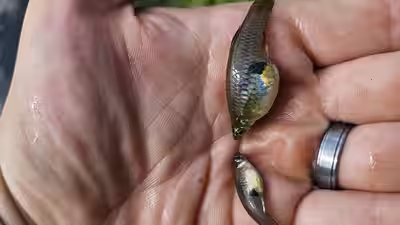
In 1905, Hawaii introduced mosquitofish to control mosquitoes; the tiny fish later became linked to declines of native damselflies and other threatened species

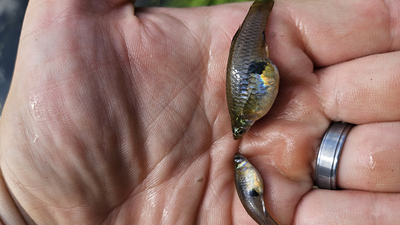
Introduced to Hawaii in 1905 to control disease-carrying mosquitoes, the eastern mosquitofish (Gambusia affinis) has caused major declines in native aquatic insects, including several threatened species of Hawaiian damselflies. Conservation reports from the United States Fish and Wildlife Service (USFWS) show that the small, non-native fish has had a serious impact on Hawaii’s freshwater ecosystems because of its aggressive and flexible feeding habits. The fish was originally brought from the southeastern United States during a period of agricultural expansion. It was then widely released into streams, drainage ditches and taro fields. Instead of eating only mosquito larvae, however, mosquitofish began feeding on many types of native aquatic animals. This changed local food webs and reduced populations of native species.
Predation causes major declines in native Damselflies
USFWS assessments of Hawaii’s native damselflies (Megalagrion species) identify predation by introduced fish as one of the major causes of population decline. Before non-native fish were introduced, Hawaii had few native freshwater predators in high-elevation streams. As a result, many native aquatic insects evolved without defenses against fast-moving fish. When mosquitofish spread into lower- and middle-elevation streams, they began feeding on young Hawaiian damselflies, known as naiads. These young insects live in calm pools and along the edges of streams. The USFWS Ecological Risk Screening Summary for Eastern Mosquitofish describes Gambusia affinis as a species with high ecological risk. The fish reproduces quickly, can survive in different water temperatures and tolerates low levels of oxygen. Native species such as the crimson Hawaiian damselfly (Megalagrion xanthe) and the flying-earlobe Hawaiian damselfly (Megalagrion nigrohamatum) have disappeared from large parts of their former ranges on Oahu, Molokai, Maui and Hawaii Island in areas where mosquitofish are found.
Disrupting Hawaii’s freshwater ecosystems
The effects of mosquitofish extend beyond damselflies. The fish also compete with native stream fish, including Hawaii’s endemic freshwater gobies, commonly called o’opu, for the small aquatic animals they both depend on for food. Mosquitofish also eat native freshwater crustaceans, including endemic shrimp known as o’pae kala’ole. Their feeding can also affect algae on streambeds by removing organisms that normally help control plant growth. USFWS biologists point out that mosquitofish are especially difficult to manage because they do not depend only on mosquito larvae for food. When mosquito numbers fall, the fish can quickly switch to other small aquatic animals. This allows them to survive while continuing to reduce populations of native species. Their reproductive ability makes the problem even harder to control. Female mosquitofish give birth to live young instead of laying eggs. As a result, even one pregnant female introduced into an isolated stream pool can potentially establish a population within a short time.
Difficulties in controlling the fish
Removing established mosquitofish from Hawaii’s streams is challenging because the islands have complex and connected waterways. Streams can connect with groundwater springs, mountain taro fields and coastal areas. This makes trapping or using chemicals difficult because control methods could also harm native species. Current conservation efforts by the USFWS and state wildlife agencies focus on protecting high-elevation streams where natural waterfalls can prevent invasive fish from moving upstream. Wildlife managers are also installing barriers designed to keep invasive fish out of protected habitats. In some areas, captive-bred Hawaiian damselflies are being released into safer headwater streams to rebuild populations. Federal environmental assessments also stress the importance of preventing people from moving mosquitofish into remote, high-elevation streams. More than a century after the fish was introduced to control mosquitoes, Hawaii’s experience shows how a species brought in for one purpose can create much larger ecological problems. Protecting the remaining native aquatic species now depends on controlling the spread of mosquitofish and keeping vulnerable freshwater habitats free of invasive predators.