India cooks up LPG safety net: Govt fixes refinery-wise output targets; Reliance gets biggest quota

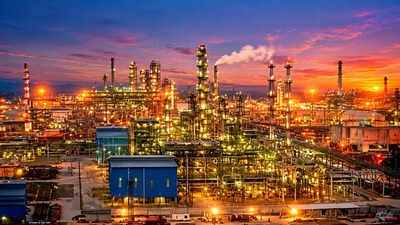
India, for the first time, has set production targets for individual public and private-sector refineries and upstream companies as it looks to build a stronger domestic supply system after the Middle East chaos disrupted imports.In an order issued earlier this week, the petroleum and natural gas ministry set maximum LPG production levels for 21 refineries and upstream companies.Together, they can produce up to 63,810 tonnes of LPG a day, which is more than twice India’s domestic LPG production in 2025-26 and about 70% of the country’s daily consumption.The targets will apply whenever there is a shortage or disruption in supply.
Reliance gets highest target
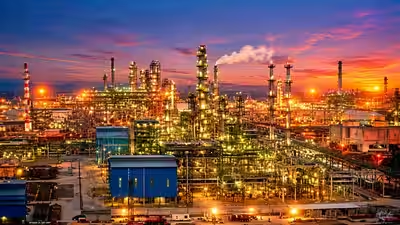
Reliance Industries’ older refinery has been given the highest target, at up to 18,000 tonnes of LPG a day.Eighteen refineries owned and operated by public-sector oil companies have been asked to produce a total of 31,470 tonnes a day.Reliance’s 33-million-tonne-a-year domestic-tariff area (DTA) refinery at Jamnagar in Gujarat, whose products are sold in India, has been given a target of 18,000 tonnes a day. No target has been fixed for its 35.2-million-tonne-a-year refinery at the same site that is meant only for exports.Nayara Energy’s 20-million-tonne-a-year refinery at Vadinar has been given a target of 4,480 tonnes a day.Gas producers and processors such as ONGC and GAIL, which make LPG from natural gas, have been given a combined target of 6,460 tonnes a day.
India’s heavy reliance on LPG imports
India used 33.2 million tonnes of LPG in 2025-26, or about 91,000 tonnes a day.Domestic production was 13.1 million tonnes for the year, or around 35,900 tonnes a day. Imports made up the remaining 21.3 million tonnes, or about 58,400 tonnes a day.This meant more than 64% of India’s LPG requirement came from imports.The dependence became a problem when the Iran war effectively shut the Strait of Hormuz, the sea route through which India received 90% of its imports from countries such as Saudi Arabia.
Emergency measures raised domestic production
After imports were hit, the government in March asked refineries to divert some streams used for petrochemicals towards LPG production.It also initially stopped sales to industrial and commercial users and later increased supplies gradually. For households, the time between LPG refill bookings was increased. Consumers were also encouraged to shift to piped natural gas, whose supplies were not as badly affected by the war.Domestic LPG production rose to around 55,000 tonnes a day at the height of the crisis. The emergency orders asking refineries to maximise production were gradually withdrawn after supplies improved from mid-June.The new order now sets facility-wise production levels instead of relying only on emergency directions.
Refineries told to improve LPG storage and transport
The new rules require refineries and upstream companies to maintain enough infrastructure to store, move and transport LPG. They must also take technically and economically possible steps to increase production.The order said, “It is hereby ordered that all public sector, joint venture and private sector oil refining companies, and upstream oil companies shall develop, augment and at all times maintain adequate infrastructure for storage, evacuation and transport of Liquefied Petroleum Gas (LPG) either by itself or through other entities viz railways or road tankers adequate for the specified quantities.”Companies have also been asked to “implement all technically and economically feasible measures and technologies such as naphtha-to-LPG conversion, gasoline-based fluid catalytic cracking unit to petro-fluid catalytic cracking unit, or other upgrades, to maximise LPG production beyond current minimum producible quantities as specified in the Schedule, with intimation to Centre for High Technology or any other authorised agency, whenever such an upgrade is undertaken.“This includes converting naphtha into LPG and upgrading fluid catalytic cracking units wherever possible.The government can direct refineries, oil marketing companies and upstream companies to increase LPG production to a specified level for a specified period if it feels this is needed to ensure enough domestic LPG and fair prices.The ministry said “if Central Government is of the opinion that it is necessary in public interest to ensure adequate availability, equitable distribution and availability at fair prices of domestic LPG, it may by itself or through Centre for High Technology or any other authorised agency, by order in writing, issue direction to oil refining companies, oil marketing companies and upstream oil companies to ramp up the LPG production levels for such quantity and period specified therein, including compliance with any restrictions on alternative uses of input streams required to produce the LPG.“Companies will have to increase production within the time set by the government.
Targets to be reviewed every six months
The government will update the production schedule on January 1 and July 1 every year.The changes can include LPG production from new refineries and upstream companies, as well as extra production from existing facilities after changes in infrastructure, technology, evacuation, supply, transport or distribution.The framework comes after the emergency steps taken during the Middle East crisis, when household LPG supplies were prioritised and supplies to some commercial and industrial users were restricted. The government has now put in place a system under which refineries and upstream companies can be asked to maintain or increase LPG production when supplies are disrupted.