
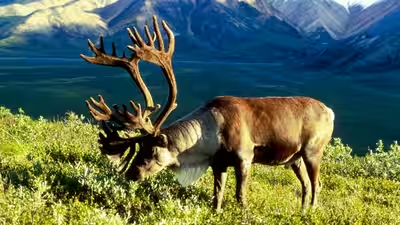
In 1958, the US moved 25 caribou to an Alaska island as emergency food for military personnel; by 2005, their herd had grown to 2,750

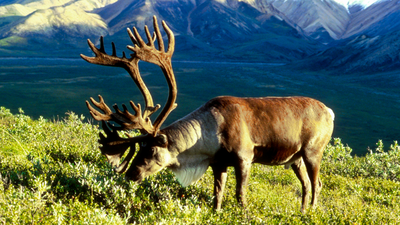
A herd of just 25 caribou calves released on a remote Alaskan island in 1958 to provide emergency meat for US military personnel eventually grew to 2,750 animals by 2005. The rapid growth placed heavy pressure on the fragile ecosystem of the Aleutian Islands. The story of the herd has since become an example of how introducing animals for a short-term purpose can create serious environmental problems when conditions change. The population history has been documented in wildlife management reports from the Alaska Department of Fish and Game (ADF&G), along with studies by the US Fish and Wildlife Service and the US Geological Survey (USGS). Historical records show that the original transplant was a joint project involving the US Navy, Air Force, Marines and wildlife experts. During the Cold War, military planners were concerned that remote bases could be cut off from normal supply routes. To prepare for such a situation, officials decided to create a self-sustaining source of meat on Adak Island, in the central Aleutian Islands.
A Cold War food reserve
The caribou calves came from the Nelchina herd on mainland Alaska. In 1958, they were flown to Unalga Bight on Adak Island. Marine personnel cared for the young animals after their arrival. They bottle-fed them and provided bedding until the calves were strong enough to find food on their own. The plan had two purposes. The main goal was to create an emergency food supply for military personnel stationed at Naval Air Station Adak. The animals would also provide hunting opportunities for servicemen during their free time. The island turned out to be an unusually good environment for the caribou. Adak had no wolves or bears to hunt them. Its maritime climate was relatively mild, and the island did not have the large numbers of biting insects found in many parts of mainland Alaska. The caribou also had plenty of lichens and mosses to eat.
Hunting kept the herd under control
For several decades, the population remained relatively stable. From 1958 until the early 1990s, military personnel regularly hunted the caribou. This hunting effectively took the place of the natural predation that would normally help control a herd. ADF&G records indicate that hunting kept the population at around 300 to 600 animals for more than 30 years. During this period, researchers found that the Adak caribou were doing particularly well. They grew larger, produced more calves and began reproducing at younger ages than the original herd on mainland Alaska. The system worked because the number of animals removed through hunting helped balance their high survival and reproduction rates. But that balance depended heavily on the presence of the military.
The military leaves and the population explodes
Everything changed in 1994, when the US Department of Defense closed Naval Air Station Adak. The closure greatly reduced the number of people living on the island. With far fewer military personnel around, hunting dropped sharply. The caribou were suddenly facing almost no hunting and had no natural predators. Their numbers began to rise rapidly. By 2005, an aerial and ground survey by ADF&G and the US Fish and Wildlife Service counted about 2,750 caribou on Adak. Later surveys showed that the population remained high. A joint census in 2012 estimated that between 2,500 and 2,800 animals were still living on the island. The herd had gone from being a carefully managed military food reserve to a major ecological problem.
Overgrazing damages the island
The growing population placed increasing pressure on Adak’s limited vegetation. Wildlife experts documented serious damage, particularly in the southern parts of the island. The caribou ate large amounts of native vegetation, including slow-growing lichens. Lichen can take many years, sometimes decades, to recover after heavy grazing. Once the vegetation was removed, the animals also damaged the soil by creating large numbers of trails. These trails contributed to erosion along coastal ridges and around lakes and other low-lying areas. The problem became more serious as the herd grew. With less food available in some areas, the caribou began looking for new places to feed. This eventually led them beyond Adak Island.
Caribou begin moving to other islands
Adak is separated from nearby Kagalaska Island by a relatively narrow stretch of water. As the herd expanded, some caribou managed to cross the channel. USGS researchers later found evidence that caribou had established a presence on Kagalaska. Field surveys between 2010 and 2015 recorded both caribou signs and live animals on the neighbouring island. Wildlife managers became concerned that the animals could establish a permanent breeding population there and eventually spread to other islands in the Aleutian chain. In 2015, refuge managers began targeted efforts to control the animals on Kagalaska and prevent further expansion.
A difficult problem to manage
Controlling the Adak herd remains difficult. The island is extremely remote, lying almost 1,200 miles southwest of Anchorage. Bringing hunters or professional teams to the area can be expensive and logistically challenging. After the military base closed, hunting rules were changed to allow larger harvests. However, the number of animals removed through hunting has not always been enough to keep pace with the herd’s natural growth. The island’s isolation makes large-scale control operations particularly complicated. The Adak caribou story also shows how strongly an ecosystem can depend on human activity. While military hunting was taking place, the population remained within a relatively manageable range. Once that hunting stopped, the same animals rapidly multiplied because there were no wolves, bears or other major predators to control them.
A lesson in unintended consequences
The caribou were introduced to Adak for a practical reason. During the Cold War, military planners wanted a reliable source of food in case supply lines to the remote base were interrupted. At first, the plan appeared to work. The herd survived, reproduced and provided both emergency food and hunting opportunities. But the conditions that allowed the herd to thrive also created the problem. The absence of natural predators, plentiful vegetation and a mild climate allowed the population to grow rapidly once human hunting declined. The resulting overgrazing damaged fragile island habitats and eventually pushed some animals towards neighbouring islands. The Adak herd is now a well-known example of the risks involved in introducing animals to isolated environments. It demonstrates that a species introduced for a specific human need can become difficult to control when the circumstances that originally kept its population in check disappear. What began as a Cold War plan to protect military food supplies ultimately became a long-term wildlife management challenge for Alaska.