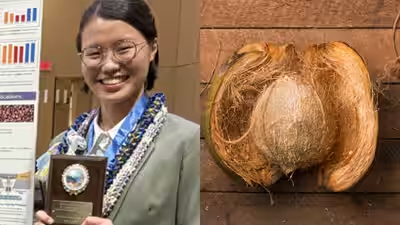
Meet Vera Wang, the Hawaii high school senior who built a coconut-based ocean filter as a sophomore; two years later, she found fungi in coconut husks that can biodegrade plastic and sunscreen

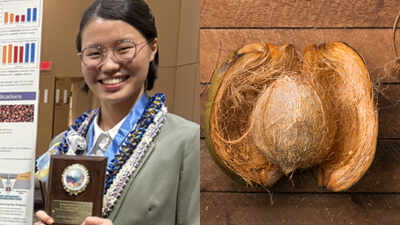
What started as a high school project to clean polluted ocean water has turned into a promising scientific discovery. Hawaii’s Kaiser High School senior Vera Wang was the first to look into using coconut waste to filter microplastics and sunscreen from seawater, states a news report by University of Hawai’i News. Two years later, her research has taken an interesting turn, with naturally occurring fungi in coconut husks that can break down plastic and sunscreen. Wang’s work, done in the lab of Anthony Amend at the University of Hawaiʻi at Mānoa, was recognized at the 2026 Hawaiʻi State Science & Engineering Fair and could lead to new ways to tackle some of the most stubborn pollutants plaguing marine environments, adds the report. Scroll down to read the details of innovation.
A new scientific question from a coconut-based filter
In the 10th grade of schooling, Wang began the project, developing an ocean filter that took inspiration from Polynesian weaving traditions. The filter used coconut byproducts to remove microplastics and sunscreen from the surface water. The idea coupled traditional knowledge with modern environmental science. Coconut fibers provided a natural material that could physically trap pollutants, as well as an agricultural by-product that would otherwise go to waste.But, Wang soon realized that filtering pollutants out of the water was only part of the problem. Once plastic particles and sunscreen compounds are trapped, they still need to be responsibly disposed of. That question sent her research in a whole new direction.
Why the attention to coconut husks?
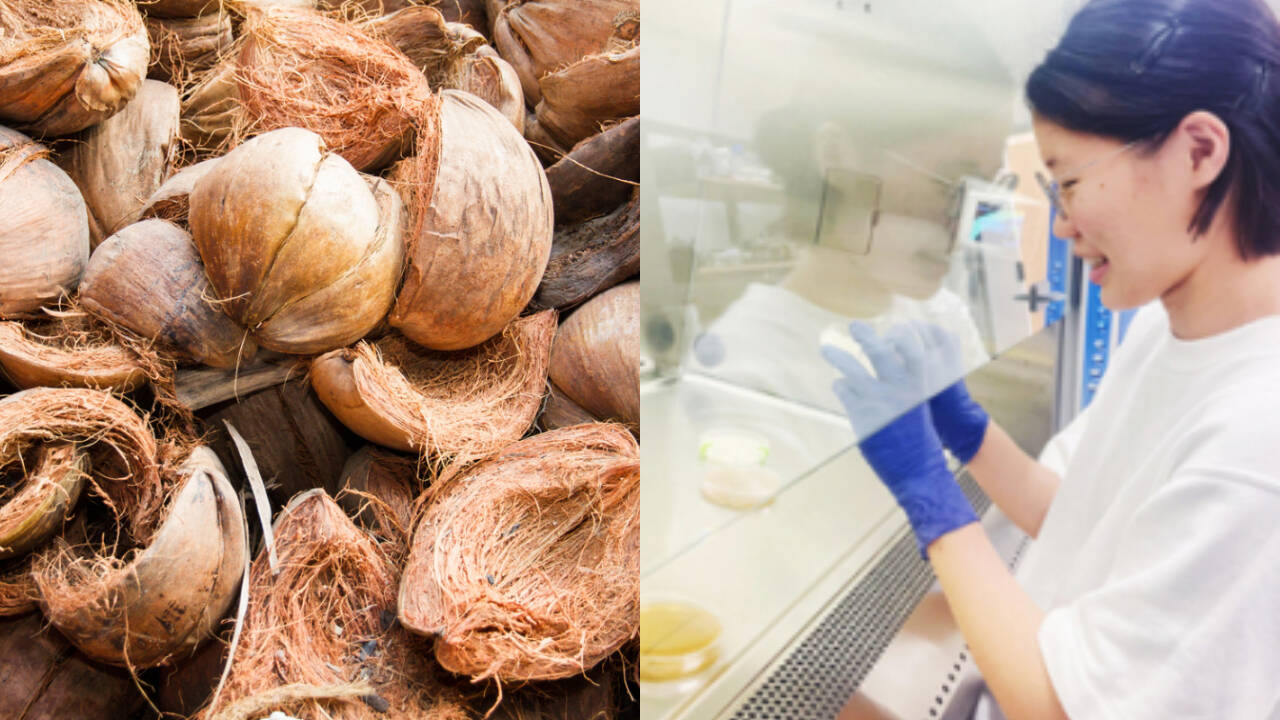
Her research looked at their ability to grow with sunscreen and plastic and possibly break down those materials.
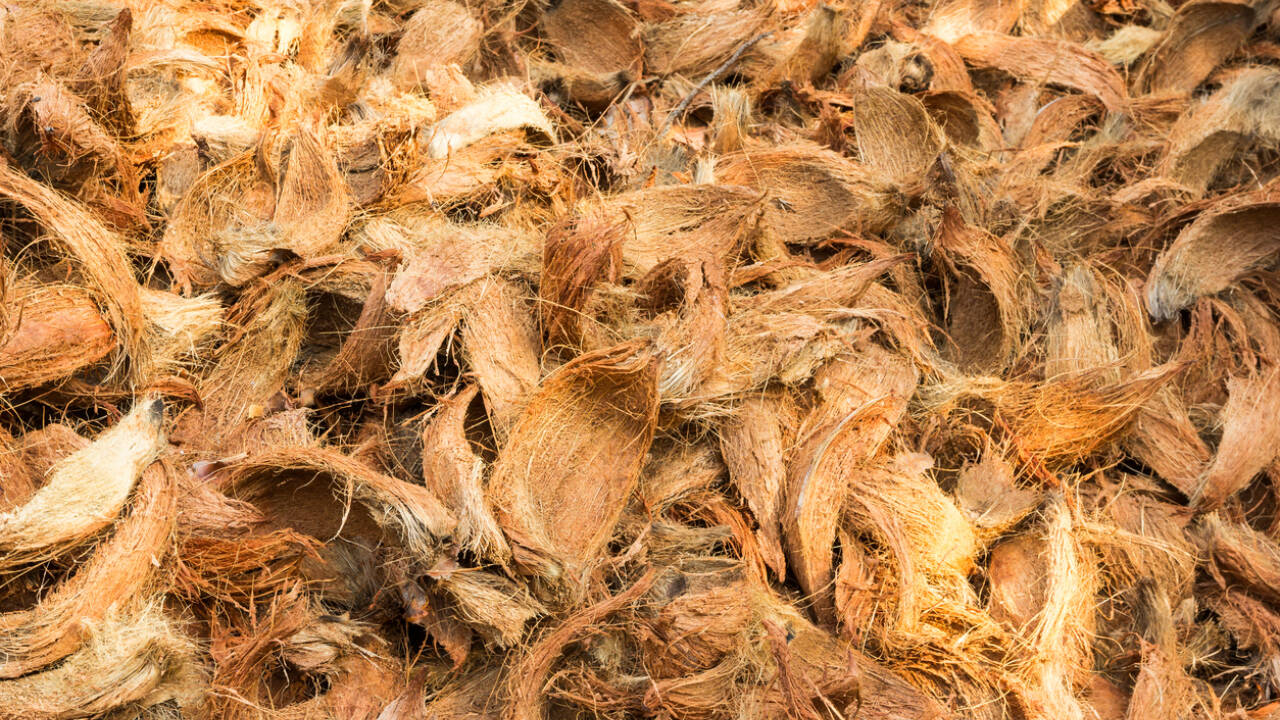
According to the report, Wang found that coconut fiber has a porous structure that allows air and water to move through the material. Such an environment can sustain microbial communities. This made her wonder if coconut husks could do more than just trap the pollutants. Maybe the microbes living inside them could also help break down some of the stuff that’s being captured.In the lab of Amend, Wang started to explore the naturally occurring fungal communities in coconut husks. Her research looked at their ability to grow with sunscreen and plastic and possibly break down those materials. Also, it effectively connected two phases of environmental cleanup: capturing pollutants and finding biological ways to degrade them.
Fungi that can degrade plastic and sunscreen
The most interesting part is that the study showed how naturally-occurring fungi on coconut husks can biodegrade sunscreen and plastic. For the uninitiated, biodegradation is the chemical breakdown of materials into simpler substances by micro-organisms.The finding is especially interesting since plastic pollution is notoriously difficult to control. Traditional methods often include the collection, transportation and processing of plastic waste. Sunscreen compounds that enter marine environments can also be difficult to remove once they disperse thru the water. Therefore, the isolation of naturally occurring fungi able to degrade these pollutants may provide interesting information for future environmental research.Researchers also discovered that a compound in tannins could be used to identify the fungi that can break down sunscreen and plastic. “The tannins in coconut fibers may be helping to support the growth of these specialized fungi,” said Kaylee Christensen, a graduate student in the Marine Biology Graduate Program who worked closely with Wang.
A potential new fungal discovery
Further research is needed to determine exactly what these fungi are, how they break down pollutants, and whether their powers might one day be harnessed outside of the lab.
If reports are to be believed, one of the most interesting parts of Wang’s research might have been the genetic testing. Some fungal species identified in the coconut husks were not found in the world’s largest reference database of known genes and genomes. This suggests some of the organisms may be previously uncharacterised species.This finding adds an extra dimension to the project. What began as a study of a naturally occurring filtration material has also become a study of the largely unseen microbial communities dwelling within coconut husks.However, further research is needed to determine exactly what these fungi are, how they break down pollutants, and whether their powers might one day be harnessed outside of the lab.
Awards at the Hawaiʻi State Science & Engineering Fair
The proud moment have been when Wang’s work won awards at the 2026 Hawaiʻi State Science & Engineering Fair. Her project was awarded first place Best in Category for Microbiology and third place Best in Fair.She was presented with a special award by the Friends of Hanauma Bay, was given another award by the Association for Women Geoscientists and received a scholarship award from the McInerny Foundation. Her project also earned her a spot at the International Science & Engineering Fair. The recognition highlights not just the scientific promise of her research, but the opportunities available to students who want to take on the environmental issues thru hands-on experimentation.
A simple thought that sparked a change
Wang’s project illustrates the way one scientific question leads to another. Her initial aim was to use a sustainable material to filter out pollutants from ocean water. She started thinking about what happens to the pollutants after filtration, and began to research the organisms that live in the filter itself. That shift in perspective eventually led her to fungi with potentially valuable abilities for biodegradation. She began with coconut husks and an effort to clean ocean water. It has opened the door to a much larger scientific question – could nature itself hold some of the tools needed to tackle the growing problem of plastic and chemical pollution.Images Courtesy: istock and University of Hawai’i News