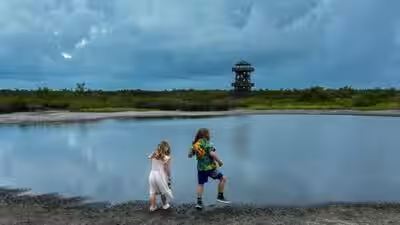
Florida spent about $17 million transforming degraded farmland near Tampa Bay into Robinson Preserve, a 700-acre coastal refuge that now draws about 240,000 visitors annually

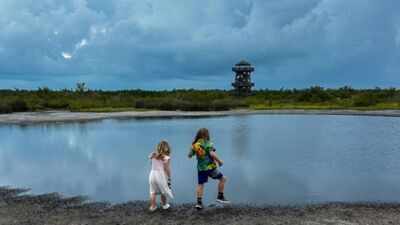
On the edge of Tampa Bay, where mangrove forests meet open water and birds call from the treetops, lies a place that was never meant to exist. Robinson Preserve, a 700-acre coastal refuge in Manatee County, Florida, was once degraded farmland slated for development. Today, it is a thriving haven for fish, wildlife and people, a testament to what can happen when a community chooses to invest in the environment, according to the National Oceanic and Atmospheric Administration (NOAA) Fisheries.The transformation began in 2003, when Manatee County acquired the 482-acre property with support from state and federal partners. Over the next two decades, about $17 million was spent restoring wetlands, planting native vegetation, removing invasive species and building recreational amenities. The result is a preserve that now supports a healthy sportfish population, attracts about 240,000 visitors each year and generates millions of dollars in economic activity for the local community.From farmland to fish habitatThe original 482-acre farmland property had been approved for a 400-home waterfront golf course community, according to the report. But instead of making way for new homes, the site underwent a different kind of transformation. Manatee County led an effort to restore wetland habitat, remove invasive species and plant native vegetation. NOAA Fisheries supported the restoration through its Community-based Restoration Program, alongside other partners. The first phase of restoration was completed in 2008, and the area was opened to the public.Robinson Preserve quickly became a favourite destination for wildlife and people alike. A few years later, an additional donation of land expanded the preserve by 150 acres. With funding from the RESTORE Council, NOAA’s Office of Habitat Conservation and its partners restored nearly 135 acres of coastal habitat, including shellfish habitat, seagrasses, mangroves, and salt and freshwater wetlands. The project was one of five NOAA has supported under Connecting Coastal Waters, an initiative that restores Gulf Coast wetlands under the RESTORE Act after the 2010 Deepwater Horizon oil spill.The second phase of restoration focused on creating habitat to support popular Florida sport fish, including common snook and tarpon. Juvenile snook need the calm, protected waters found in coastal wetlands and mangrove forests to survive. Fisheries biologists, restoration ecologists and civil engineers designed features to protect juvenile fish from predators, as per the report.To make it more challenging for larger fish to reach juveniles, the project team created water features with restricted access. This mimicked natural coastal ponds and creeks used by snook and tarpon as nursery habitat. They also planted mangroves in strategic locations to act as barriers. By minimizing the number of large fish predators entering the nursery, juveniles could eat and grow in relative safety.Measuring successNOAA Fisheries funded a three-year monitoring study at Robinson Preserve to determine whether the restored habitats were functioning as intended. Researchers monitored water levels, sampled fish communities and tagged fish to track their movement through the preserve and into the surrounding estuary.Surveys found high numbers of juvenile sport fish, including snook, sheepshead and red drum, using the restored wetlands. Scientists also noted that snook in Robinson Preserve were growing as fast, or faster, than those in other restored or natural habitats in the region.“We found that the restoration created high-quality nursery habitat,” said Kris Kaufman, a NOAA marine habitat restoration specialist who has managed the project since 2017, in the report. “The protected areas helped reduce predation on young fish, and the habitats also provided abundant prey so the fish could grow.”Monitoring also showed that the nursery habitat contributes to the broader fish population in Tampa Bay. Tagged snook were observed leaving the preserve during summer spawning season and returning later in the year, suggesting they successfully reproduced.Economic benefitsA new economic study funded by NOAA found that the restoration project supported 239 jobs, generated $12.7 million in income for workers and produced $32.7 million in total economic activity. But the economic benefits didn’t stop when construction ended. Researchers also learned that outdoor recreation at Robinson Preserve supports an additional 25 jobs and generates more than $3 million in economic activity each year.All told, the restoration supported about 16 jobs for every $1 million invested, as per the report.“Recreation continues long after the backhoes and shovels leave the site,” said economist James Maples, co-author of the study. “When restored places are open to the public, visitors keep coming for years, and that activity supports local businesses.”Survey results show that both local residents and tourists visit Robinson Preserve, with many returning repeatedly. Most visitors come to use the preserve’s walking and biking trails, while others cite kayaking, birdwatching and fishing as reasons for their visit.“This project shows what’s possible when a community chooses to invest in the environment,” said Mike Elswick, division manager for Manatee County’s Natural Resources Department. “Beyond conservation, Robinson Preserve delivers massive public health benefits. It gives people a reason to get up, get outside and experience the natural world.”A model for restorationRobinson Preserve is more than just a park. It is a model for how degraded land can be transformed into a thriving ecosystem that benefits both people and nature. The project involved many partners, including the RESTORE Council, Manatee County, the National Fish and Wildlife Foundation, the Florida Fish and Wildlife Conservation Commission, Mote Marine Laboratory & Aquarium, the Tampa Bay Estuary Program, the Southwest Florida Water Management District and Oyster River Ecology, Inc.Today, the preserve features wetlands and mangrove forests, along with recreational amenities such as walking and paddling trails and wildlife observation towers. It is a place where children can learn about nature, where families can spend time together outdoors and where fish can grow and thrive.For the people of Manatee County, Robinson Preserve is a source of pride. It is a reminder that even land that has been degraded can be restored, that even a small investment can yield big returns and that even a single community can make a difference.As the sun sets over Tampa Bay and the birds return to the trees, Robinson Preserve stands as a living symbol of what is possible when we choose to restore rather than develop, to protect rather than exploit and to invest in the future rather than the short term.